
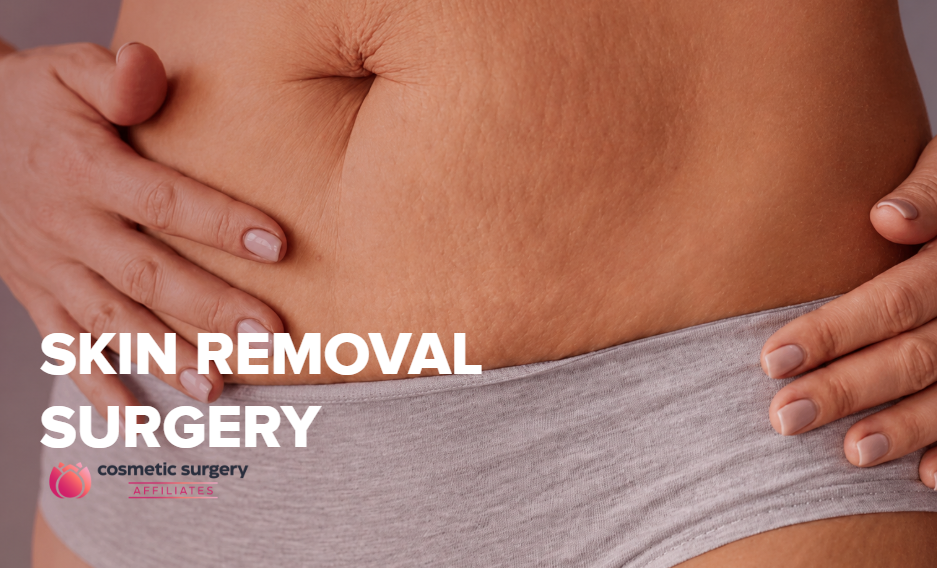
Loose skin after major weight loss is a mechanical problem, not a discipline problem. Skin that has been stretched for years loses the elasticity it needs to retract, and no amount of training can restore it. Surgery is the only way to remove it.
That is a common enough situation to show up in the global numbers. According to ISAPS, surgeons performed more than 1 million abdominoplasty procedures worldwide in 2024, alongside roughly 772,000 breast lifts and 212,000 arm lifts.
At Cosmetic Surgery Affiliates in Oklahoma City, our board-certified cosmetic surgeons work with post-weight-loss patients regularly. This guide covers what the procedures involve, how they’re often combined, and what to sort out before your first consultation.
Key takeaways
Short on time? Here are the most important things this guide covers about skin removal surgery, from candidacy to cost.
- Skin removal surgery is an umbrella term for several procedures, including tummy tuck, lower body lift, arm lift, thigh lift, and breast lift. Many patients combine more than one to address skin from multiple regions in a single recovery.
- Stable weight matters more than how you lost it. Most surgeons want you to hold your goal weight within a few pounds for 6 to 12 months before surgery, whether weight came off through bariatric surgery, medication, or diet and exercise.
- Recovery is gradual rather than linear. Most patients return to a desk job within 2 to 4 weeks, resume gentle exercise around 6 weeks, and see swelling fully settle between 3 and 6 months.
- The most common concerns are wound-healing issues and seromas, which are small fluid pockets that often resolve on their own. Stable weight, no nicotine, and following post-op instructions are the biggest levers you control.
- Insurance rarely covers cosmetic body contouring, but a panniculectomy may qualify when documented rashes, infections, or mobility limits show medical necessity.
What types of skin removal surgery are available and which one do you need?
When people say “skin removal surgery,” they usually mean a family of related procedures. The right one (or combination) depends on where your loose skin sits and how much there is to address. Our board-certified cosmetic surgeons at Cosmetic Surgery Affiliates routinely remove excess skin from the neck, breasts, arms, abdomen, buttocks, and upper thighs. Many patients address two or three areas in one surgery.
Here’s a quick overview of the main procedures and what each one targets.
| Procedure | What it addresses | Body area |
|---|---|---|
| Tummy tuck (abdominoplasty) | Excess skin and fat across the abdomen, plus repair of separated muscles | Stomach, lower belly |
| Panniculectomy | Removal of the overhanging “apron” of skin only (no muscle repair) | Lower abdomen |
| Lower body lift | 360-degree skin and fat removal around the torso | Abdomen, hips, flanks, buttocks, outer thighs |
| Arm lift (brachioplasty) | Loose skin from underarm to elbow | Upper arms |
| Thigh lift | Sagging skin on inner or outer thighs | Thigh region |
| Breast lift (mastopexy) | Repositioning and tightening of breast tissue and skin | Breasts |
Tummy tuck versus panniculectomy
These two get confused because they both work on the lower abdomen. They are not the same surgery. A tummy tuck removes excess skin and fat from the entire abdomen, tightens any separated muscles, and typically repositions the belly button. A panniculectomy, one of the post bariatric body lift procedures, removes only the overhanging “apron” of skin below the waistline.
The difference matters because the goals differ. A tummy tuck is a contouring procedure. A panniculectomy is often performed for medical reasons, like rashes or mobility problems caused by hanging tissue. For many post-weight-loss patients, abdominal plastic surgery does more of what they’re hoping for.
Lower body lift and arm lift
A lower body lift plastic surgery uses a continuous 360-degree incision around the torso. It removes skin and fat from the abdomen, flanks, hips, buttocks, and outer thighs at once.
It’s a bigger surgery than a tummy tuck. It makes sense when loose skin wraps all the way around. According to ISAPS, nearly 120,000 lower body lifts were performed globally in 2024.
An arm lift, also called brachioplasty, is a plastic surgery for arms that targets the loose skin that hangs from the underarm down to the elbow. Your surgeon places the incision along the inner arm so the scar is less visible from the front.
Thigh lift and breast lift
A cosmetic surgery thigh lift targets sagging skin on the inner or outer thighs. Incisions sit along the groin or down the inner leg, depending on how much skin needs to come off. Weight loss patients often notice thigh skin first when walking starts to feel different.
A breast lift, or sagging breast correction surgery, reshapes the breasts when weight loss leaves them flatter and lower. The procedure removes excess skin, repositions the nipple higher, and reshapes the underlying tissue. Some patients combine the lift with OKC breast augmentation options or fat transfer surgery to restore lost volume.
Combining procedures
Many post-weight-loss patients have loose skin in more than one place. The question becomes whether to address everything at once or stage the surgeries. Combining can be efficient. You only go through anesthesia and the initial recovery once, and there’s often a cost savings.
Alta, who had a lower body lift and breast lift combined, described the experience:
“I cannot say enough wonderful things about Dr. Tessa Meyer and the entire team at Cosmetic Surgery Affiliates. Dr. Meyer is a true artist, she understands the form, lines, and natural balance of the human body, and that expertise is evident in her results. I had a full lower body lift, breast lift,”
Combined procedures take longer in the operating room and carry slightly more risk. Your surgeon will balance what’s anatomically reasonable against your overall health. The next question for most patients is whether you’re actually ready for surgery.
Are you a good candidate for skin removal surgery?
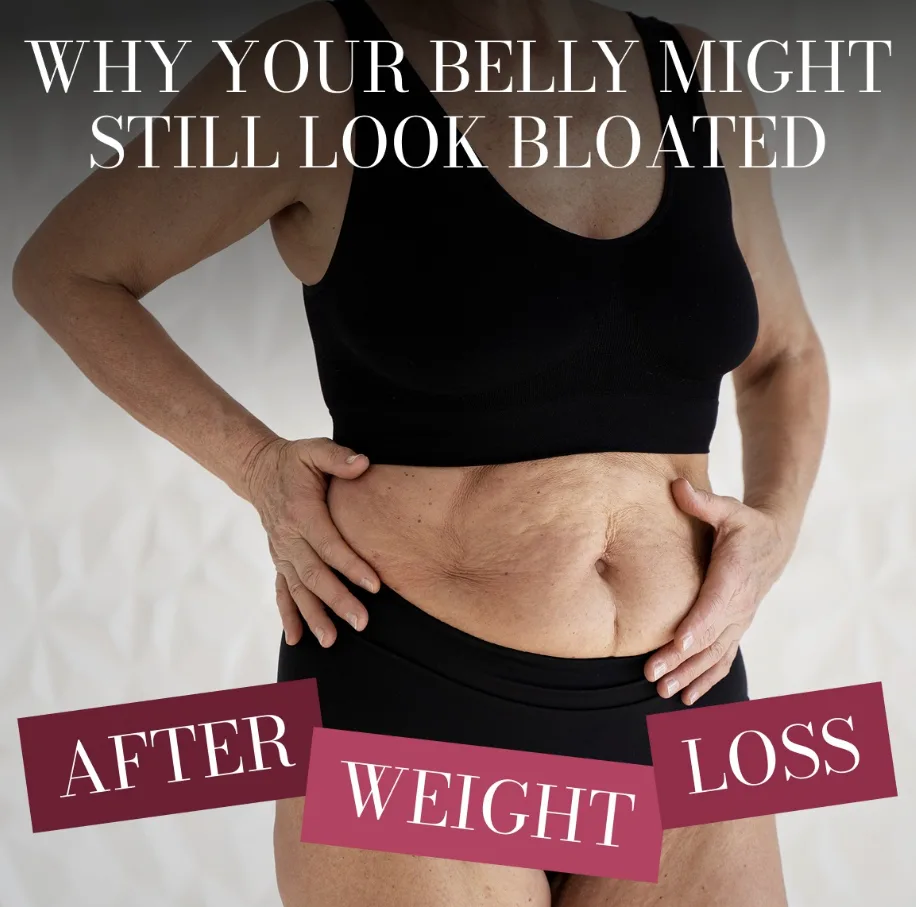
Skin removal surgery isn’t a small operation. An experienced surgeon will spend real time figuring out whether it’s the right next step. Most of what surgeons look for is straightforward to self-check. Triple board-certified, fellowship-trained cosmetic surgeon Dr. Erik Nuveen has performed more than 26,000 major cosmetic surgeries, with massive weight loss management as one of his two focus areas.
The main factors are weight stability, overall health, nicotine use, and a clear sense of what surgery can and cannot do.
Stable weight first
The biggest factor is whether your weight has settled. Surgeons generally want you to hold your goal weight within a few pounds for at least 6 months before surgery, with 12 months even better. The American Society of Plastic Surgeons 2017 practice guideline calls for 2 to 6 months of weight stability as a minimum. For post-bariatric patients, that typically lands 12 to 18 months after weight loss surgery.
The reason is practical. If you lose more weight afterward, the newly tightened skin can sag again. If you gain weight, the contour can stretch out.
Overall health and BMI
Surgeons want patients who are healthy enough to handle anesthesia and heal well. That means no uncontrolled chronic conditions, stable medications, and an overall medical picture that supports recovery.
Many surgeons look for a stable BMI, often around 32 or lower, before body-contouring surgery, and patients in the 32 to 35 range are usually considered on a case-by-case basis. This isn’t about a number on a chart, it’s about how your body will heal incisions in skin that was recently stretched.
Nicotine and other dealbreakers
Smoking is the single biggest issue surgeons flag, and it’s not a soft preference. Nicotine narrows the small blood vessels that bring oxygen to healing tissue. That dramatically raises the risk of wound problems and tissue death. Most surgeons require you to stop all nicotine (including vapes and patches) for 6 weeks before and after surgery.
Other conditions that can affect candidacy include uncontrolled diabetes, bleeding disorders, certain clotting risks, and active eating disorders. None are automatic disqualifiers, but they need to be in the conversation early. Certain factors, including type 2 diabetes, smoking, and a high preoperative BMI, are associated with higher complication rates after post-bariatric tummy tuck surgery.
What skin removal can and can’t do
It helps to be clear-eyed about what this surgery is built to do before you commit. Skin removal does three things very well: it removes excess skin, it tightens what’s left, and it can refine the underlying contour when paired with liposuction. What it won’t do is restore your skin’s natural elasticity, erase every scar, or keep your weight stable for you. That part stays in your hands.
The people who feel best about their results a year later usually come in with a specific target in mind, whether that’s the apron of skin at the belly, the upper arms, or the inner thighs, rather than picturing a full head-to-toe makeover. And scars come with the territory. They settle and fade over months and years, and your surgeon will plan the incisions so everyday clothing keeps them out of sight.
You don’t have to have had bariatric surgery to qualify. The American Board of Cosmetic Surgery defines post-weight-loss body contouring around the amount of weight lost and the resulting excess skin, not the method that got you there. Diet, exercise, GLP-1 medications, or pregnancy can all leave you with loose skin worth addressing.
If reading through this feels like a yes, the next step is finding out for sure. Schedule a consultation to walk through your weight history, health profile, and goals with a board-certified cosmetic surgeon. Once your candidacy is clear, you can turn your attention to what the surgery itself looks like.
What happens during skin removal surgery?
Walking into the surgery you’ve been researching for months can feel surreal. Knowing the basic flow of the day helps the unknown feel smaller. Most skin removal procedures share a common rhythm.
The surgery is performed under general anesthesia, the standard of care for these longer operations. You’re fully asleep, you won’t feel or remember anything from the procedure, and a board-certified anesthesia provider monitors you closely the entire time.
Incision planning and placement
Your surgeon plans the incisions to fall in places that clothing covers. That’s why skin removal scars usually sit along natural skin lines: the bikini line, the inner arm, the groin, or the breast crease.
For a tummy tuck, the main incision typically runs hip to hip just above the pubic area, with a small one around the belly button. For a lower body lift, the incision wraps fully around the torso. For an arm lift, it runs along the inner arm.
Incision design is where surgical skill shows up most. A well-placed incision means a scar that everyday clothing hides and that fades steadily over the first year.
Removing the skin
Once the incisions are open, your surgeon lifts the skin away from the tissue beneath, removes the excess, and re-drapes what remains. For a tummy tuck, the surgeon also tightens any separated abdominal muscles and creates a new opening for the belly button.
Liposuction, a form of minimally invasive fat elimination, is often performed at the same time. It refines the contour in areas where stubborn fat would otherwise leave a slight bulge against the newly tightened skin. The combination is what gives you a smoothed result.
Drains and closing up
Most major skin removal procedures use small surgical drains. These soft tubes sit under the skin near the incision to collect fluid that builds up as the area heals. They stay in for about 1 to 2 weeks, and your nurse will show you how to empty them at home. Drains aren’t comfortable, but they reduce the risk of fluid pockets.
Your surgeon then closes the incisions in layers, often with dissolvable sutures underneath. A compression garment goes on before you leave the operating room.
Surgical time and overnight stays
Total procedure time depends on which surgery you’re having and whether you’re combining procedures. A standalone tummy tuck usually takes 2 to 4 hours. A lower body lift can run 4 to 6 hours. Combined surgeries can stretch longer.
Simpler procedures may allow you to go home the same day with someone to drive you and stay with you overnight. Bigger combined surgeries often include an overnight stay so the team can monitor your fluids, pain, and mobility. Your surgeon will tell you exactly what to expect.
With surgery day mapped, recovery is its own chapter.
What does recovery from skin removal surgery look like week by week?
Recovery is where patience becomes the most useful skill. The full healing process is gradual rather than dramatic. Knowing what each phase looks like helps you plan your time off, your support system, and your expectations. For patients specifically pursuing a tummy tuck, our week-by-week tummy tuck recovery timeline drills into what each phase looks like for that procedure.
Keith, who had excess skin removed from his stomach, shared his experience:
“I had an absolutely amazing experience with Cosmetic Surgery Affiliates in Oklahoma City. I had a procedure to remove excess skin from my stomach, and from the very first consultation through recovery, the entire team made the process smooth, comfortable, and reassuring.”
The general arc is the same for most skin removal procedures. The specifics vary by how much surgery you had and how your body heals.
The first 1 to 2 weeks
This is the most uncomfortable stretch, and it’s also when you’ll have the most support. Swelling peaks around days 3 to 5. You’ll have bruising in the area. Your surgeon will manage your pain with prescribed medication.
You’ll move slowly, sleep slightly propped up, and follow specific instructions about not standing fully upright after a tummy tuck or lower body lift. The biggest job in this stretch is rest, drain care, and frequent gentle walking to keep blood flow moving.
Weeks 2 to 6
Most patients return to a desk job between weeks 2 and 4. The American Board of Cosmetic Surgery puts that range at 2 to 4 weeks for most skin removal procedures. Physical jobs that involve lifting, bending, or extended standing usually require 4 to 6 weeks off.
You’ll still wear your compression garment around the clock during this phase. The garment helps the skin re-drape against the tissue underneath and reduces swelling. Most patients describe it as snug but reassuring once they’re used to it.
Compression and exercise return
Compression garments are typically worn 24 hours a day for the first 4 weeks, then transitioned to a lighter stage 2 garment from week 5. By weeks 6 to 8, many patients switch to wearing them only during the day or during activity.
Light cardio like walking usually starts around week 4. Full exercise (heavy lifting, ab work, high-impact sports) is typically cleared at 6 to 8 weeks. Pushing this timeline doesn’t speed healing, it just risks the result you’re working toward.
Months 3 to 12
The final shape of your result isn’t visible right away. Swelling continues to settle over the first 3 to 6 months. The contour you saw at week 8 will keep refining for the rest of the year. Scars fade most actively during this same period, going from raised and pink to flat and pale over 6 to 12 months.
Around the one-year mark, most patients see their truly final result. If a touch-up procedure makes sense to refine a specific area, this is typically the earliest a surgeon will consider one.
With the recovery rhythm in mind, it’s worth understanding the risks that recovery is designed to prevent.
What are the risks and complications of skin removal surgery?
Reading through a list of surgical risks can feel scary. Understanding them is actually one of the most empowering things you can do before surgery. Most concerns are manageable, many resolve on their own, and a surgeon’s training is largely about preventing and catching these issues early.
The overall concern rate for post-bariatric body contouring can sound high in published reviews, but that is largely because the number includes everything from minor wound issues that heal in a week to rare serious events. Major concerns are less common.
Wound healing and seromas
The two most common concerns are wound-healing issues and seromas. Wound-healing problems include things like slow closure at the incision line. They happen most often at points where the incision is under the most tension. Your surgeon manages these with attentive wound care, sometimes a brief return to the office, and patient compliance with activity limits.
A seroma is a small pocket of fluid that collects under the skin as the area heals. Most resolve on their own as the body reabsorbs the fluid. When a seroma is large enough to need intervention, your surgeon can drain it with a thin needle during a quick office visit. No additional surgery required.
Less common concerns
Other issues surgeons watch for include:
- Infection at the incision, generally managed with antibiotics if it occurs
- Small areas of slow healing near the incision
- Numbness or altered sensation, which usually settles over several months
- Bruising that resolves in the first few weeks
- Blood clots, which is why early walking after surgery is emphasized
Your surgical team gives you specific signs to watch for: fever, increasing pain that isn’t improving, redness spreading from the incision, or sudden swelling. Calling early is always the right move.
Levers that lower your risk
The factors most strongly tied to fewer concerns are within your control. Stable weight before surgery, no nicotine, following pre-op instructions about medications and supplements, and respecting activity limits in the first 6 weeks all matter. Combining procedures raises risk somewhat compared to staging them. Your surgeon will help you decide whether the trade-off makes sense for you.
A board-certified cosmetic surgeon with significant experience in post-weight-loss body contouring is the other big factor. As a cosmetic surgery facility in Oklahoma City, CSA treats those experience-based risk factors as the foundation of the surgical plan rather than an afterthought. The next practical question most patients ask is what the whole process costs.
How much does skin removal surgery cost and will insurance cover it?

Cost is one of the most common reasons patients delay surgery they’re otherwise ready for. The financial side can feel stressful, especially after the months of effort you put into losing the weight. Knowing the actual numbers takes the stress down a notch.
At Cosmetic Surgery Affiliates, pricing is structured as a single all-inclusive fee that covers anesthesia, the facility, supplies, and your surgeon’s professional fee. We’ve kept this single-fee approach for more than 24 years. Here are the current approved ranges for the most common skin removal procedures.
| Procedure | Approved range |
|---|---|
| Mini abdominoplasty | $4,500 to $9,500 |
| Full tummy tuck (abdominoplasty) | $11,000 to $14,000 |
| Maxi tummy tuck | $9,000 to $12,000 |
| Lower body lift / circumferential tummy tuck | $20,000 to $23,000 |
| Maxi body lift | $16,000 to $19,000 |
| Arm lift (brachioplasty) | $12,500 to $15,500 |
| Arm lift with liposuction | $5,000 to $12,000 |
| Thigh lift | $14,000 to $17,000 |
| Upper back lift | $7,700 to $10,700 |
| Breast lift | $9,500 to $13,500 |
| Mommy makeover | $9,000 |
| Spiral thigh and butt lift | $19,000 to $22,000 |
The range covers a procedure performed as a standalone surgery. Combining procedures (a tummy tuck and arm lift together, for instance) raises the total but typically costs less than the two procedures done separately, because operating room time is shared.
Insurance and panniculectomy
Most skin removal surgery is considered cosmetic and isn’t covered by insurance. The one consistent exception is panniculectomy, when documentation supports it as medically necessary. Insurance typically wants to see:
- Documented rashes, skin infections, or ulcers under the pannus that haven’t responded to conservative treatment
- Evidence that the tissue is interfering with daily activities or hygiene
- Photos and physician notes supporting medical necessity
- A stable weight at the time of the request
Even when a panniculectomy is approved, insurance usually covers only the medical portion. Contouring components like muscle tightening or repositioning the belly button (the parts that turn it into a tummy tuck) are still elective. Your surgeon can structure the plan so the covered and elective portions are clearly separated for billing.
Financing through PatientFi and Alphaeon
For the parts insurance doesn’t cover, our practice partners with two medical lending companies: PatientFi and Alphaeon. Both offer payment plans without upfront costs or pre-payment penalties. Pre-qualifying with either one doesn’t impact your credit score. Many patients spread the cost over 12, 24, or longer terms, which makes a $14,000 procedure look more like a manageable monthly number than a lump sum.
If you’re weighing cost against timing, a personalized estimate based on your specific procedure mix is usually the most useful next step. That estimate comes out of your consultation, where you can see what your total cost and monthly payment would actually look like.
Francesca, who combined a breast lift and tummy tuck, shared her experience:
“I had a breast lift and tummy tuck with Cosmetic Surgery Affiliates in OKC, and I couldn’t be happier with my experience. Dr. Meyer was absolutely amazing — she made me feel comfortable and confident from day one. She’s warm, fun, and incredibly honest, always putting your best interests first.”
Once you have a clear picture of procedure mix, candidacy, recovery plan, and cost, you have what you need to decide whether this is the right time.
Conclusion
Skin removal surgery is a real next step for a lot of people who finished a hard weight loss chapter and want their body to match the work they put in. The procedures are well established, the recovery is predictable, and the path forward is honestly more about timing and fit than about whether the surgery itself works.
If this guide has you thinking seriously about what’s possible, the most useful thing you can do is talk it through with someone who does this every day. At Cosmetic Surgery Affiliates in Oklahoma City, every patient deserves to feel heard, respected, and confident in their choices. When you’re ready, book a consultation and we’ll walk through it together.
Frequently asked questions
How painful is skin removal surgery?
Pain after skin removal surgery is significant in the first few days and steadily eases over the first two weeks. Your surgeon will prescribe pain medication for the early phase, and most patients transition to over-the-counter relief by the end of week one. Soreness and tightness can linger for several weeks as everything settles.
Will I have visible scars after skin removal surgery?
Yes, every skin removal procedure leaves a scar where the incision was made. The good news is that surgeons place these incisions where everyday clothing hides them, like the bikini line and the inner arm. Scars are usually raised and pink for the first few months, then fade to flat and pale over the first year.
Can I qualify if I lost weight through diet and exercise instead of bariatric surgery?
Absolutely. The path you took to lose the weight doesn’t matter for candidacy. What matters is your stable weight, the amount of excess skin, and your overall health. Patients who lost weight through diet, exercise, or GLP-1 medications are just as many candidates as post-bariatric patients.
Can all my skin removal procedures be done in one surgery?
It depends on how many areas need work and your overall health. Many patients combine two or three procedures in a single surgery, which consolidates recovery into one window. Larger combinations spanning the upper and lower body are often staged across two surgeries several months apart for safety.
Is non-surgical skin tightening a real alternative?
For mild laxity, rf treatment for skin tightening through radiofrequency microneedling can tighten skin modestly with minimal downtime. For significant excess skin after major weight loss, non-surgical treatments aren’t an effective alternative because they can’t physically remove tissue. Your surgeon can help you assess which fits your situation.
*Disclaimer: This content is for educational purposes only and does not constitute medical advice. A consultation with a qualified board-certified surgeon is required to determine the best treatment plan for your individual needs and any questions you may have about a medical condition or procedure.