
The ads make it sound almost too easy. Freeze the fat away on your lunch break, no surgery, no downtime, back at your desk by two. If you’ve been drawn to the promise of slimming a stubborn area without ever stepping into an operating room, you’re far from alone.
That curiosity is part of a much bigger shift. There were 702,836 non-surgical fat reduction procedures performed worldwide in 2024, according to ISAPS. More people than ever want to reshape a specific spot without the recovery that comes with surgery, and the technology has raced to keep up.
So what’s real, and what’s marketing? At Cosmetic Surgery Affiliates in Oklahoma City, our board-certified cosmetic surgeons guide patients through both surgical and non-surgical paths. This article breaks down what “non-surgical liposuction” really means, the options available, how they compare to surgery, who’s a good fit, and what it all costs.
Key takeaways
- “Non-surgical liposuction” is a bit of a misnomer. These treatments don’t suction fat out. They use cold, heat, sound, radiofrequency, or injections to reduce fat cells gradually, and your body clears them over the following weeks.
- Non-surgical fat reduction is body contouring, not weight loss. Studies show modest results, often a couple of centimeters off a measured area, so it suits small, pinchable pockets in people already near their goal weight.
- The main options each work differently. CoolSculpting freezes fat, SculpSure uses laser heat, Kybella targets fullness under the chin, and devices like EmSculpt Neo reduce fat while also firming muscle.
- Surgical liposuction still removes far more fat in one session and gives a surgeon precise control over the final shape, while non-surgical options trade that power for little to no downtime.
- Loose skin changes the plan. If skin laxity is part of the picture, fat reduction alone may not be enough, and a consultation is the fastest way to find the right approach for your body.
What exactly is non-surgical liposuction, and how does it work?
Let’s clear up the name first, because it can confuse a lot of people. “Non-surgical liposuction” isn’t really liposuction at all. Understanding how liposuction surgeons perform the procedure makes the difference clear: traditional lipo uses tiny openings and a thin tube that physically suctions fat out. Non-surgical methods never remove fat directly.
Instead, they use some form of energy or an injected agent to break down fat cells where they sit. Over the following weeks, your body recognizes those cells as debris and clears them out naturally through its normal cleanup process. The change shows up gradually rather than all at once.
Most of these treatments fall into a handful of technology types cleared by the FDA. Cold-based cryolipolysis freezes fat, heat-based lasers and radiofrequency warm it, focused ultrasound disrupts it, and an injectable called deoxycholic acid dissolves it. The cleanup response tends to peak around four weeks and settle by roughly three months.
It’s important to set some expectations: this is not a weight-loss tool. A systematic review found these devices typically trim only 2 to 4 centimeters from a treated area with no real change to body weight or BMI. In plain terms, it’s contouring a small zone, not shrinking your whole frame.
| Surgical liposuction | Non-surgical fat reduction | |
|---|---|---|
| How fat leaves | Suctioned out through a thin tube | Cells broken down, then cleared by your body |
| Anesthesia | Yes | None |
| Downtime | About 1 to 2 weeks | Little to none |
| Scale of change | Large volume, dramatic | Subtle, one small area |
| Best for | Defined reshaping | Minor, stubborn pockets |
Once you see the difference in how they work, the next question is the practical one: which non-surgical treatments are actually out there?
What are your main non-surgical liposuction alternatives?
The good news is you have real choices, and each one is built for a slightly different job. It helps to know what sets them apart before you book anything, so you walk into a consultation already speaking the language. At Cosmetic Surgery Affiliates, our team offers several of these options, including EmSculpt Neo, microneedling rf, and Renuvion skin tightening, alongside surgical body contouring.
CoolSculpting (cryolipolysis)
CoolSculpting chills fat cells to a precise temperature that breaks them down while leaving your skin, muscle, and nerves unharmed. It’s FDA-cleared for several areas, including under the chin, the abdomen, the flanks, the back, and the thighs. Most studies put fat reduction around 20 to 25 percent in a treated pocket per cycle, and a single applicator session runs roughly 35 minutes to just over an hour.
Laser fat reduction (SculpSure)
SculpSure uses a diode laser to gently heat fat until those cells break down. Each applicator cycle takes about 25 minutes with no downtime, and it’s designed for localized bulges on the abdomen and flanks in people near their ideal weight.
Kybella (injection lipolysis)
Kybella is an injectable form of deoxycholic acid, a substance your body already uses to break down dietary fat. It earned FDA approval in 2015 for one specific job: improving moderate-to-severe fullness under the chin, often called a double chin. The label is clear that its safety and effectiveness outside the under-chin area haven’t been established, so be cautious about clinics promising it for the belly or flanks.
Radiofrequency and ultrasound treatments
Radiofrequency devices deliver heat deep into the tissue, while focused ultrasound uses sound energy to disrupt fat. Both tend to offer mild fat reduction plus a bonus of modest skin firming. Studies of combined ultrasound and radiofrequency have shown meaningful abdominal circumference reductions over a series of sessions.
EmSculpt Neo (fat plus muscle)
EmSculpt Neo is a bit different because it does two things at once. It pairs radiofrequency heating with high-intensity electromagnetic energy that forces muscles to contract far more than a workout could. For someone who wants more definition rather than just less fat, that combination is appealing.
Skin-tightening companions: Morpheus8 and Renuvion
Sometimes the real concern isn’t only fat, it’s a little looseness in the skin. Morpheus8 combines microneedling with radiofrequency to stimulate collagen and firm the surface. Renuvion goes deeper, using radiofrequency energy and helium plasma to tighten the support tissue beneath.
Neither is a fat-removal tool on its own, but they round out a plan when skin quality is part of the picture.
If you’re not sure which of these fits your goals, that’s exactly what a conversation is for. You can reach out to our team to talk through which option, if any, makes sense for your body.
How do non-surgical options compare to each other and to liposuction?
Seeing the options side by side is where the picture really sharpens. The honest takeaway is that each non-surgical treatment reduces fat in a modest range, while surgical liposuction operates on a completely different scale. It makes sense to feel torn here, because the right answer depends on how much change you’re after and how much downtime you can spare.
The biggest gap is volume. Non-surgical devices reduce a treated pocket by roughly 20 to 30 percent over a course of sessions. Liposuction, by contrast, can remove a large amount of fat in a single procedure.
The trade is the recovery part. Liposuction asks for a week or two of downtime, while most non-surgical options let you return to your day almost immediately.
| Option | Fat reduced | Downtime | Typical sessions | Firms skin? |
|---|---|---|---|---|
| CoolSculpting | About 20 to 25% per cycle | Minimal | 1 to 3 | No |
| SculpSure (laser) | Up to ~24% | None | 1 to 3 | No |
| Kybella (chin only) | Localized | ~1 week swelling | 2 to 4 | No |
| Radiofrequency / ultrasound | Mild | Minimal | 1 to 6 | Yes |
| EmSculpt Neo | ~20 to 30% plus muscle | None | About 4 | Firms muscle |
| Surgical liposuction | Large volume | 1 to 2 weeks | Usually 1 | Surgeon controlled |
Body area matters too. Small, pinchable spots like the chin or flanks respond well to freezing or small-applicator devices, while a surgeon can sculpt across larger or multiple zones in one go. Many patients find that comparing notes with someone who has researched widely makes the decision feel less overwhelming. Getting a chance to learn about cosmetic surgery options in okc alongside the non-surgical menu is often the fastest path to that clarity.
Katie, a patient who compared providers across Oklahoma and beyond before deciding, shared her experience:
“Dr. Courtney Caplin is truly amazing and has so much talent! CSA was the third cosmetic surgery facility I received a consult from as I had done extensive research on procedures and doctors in the OKC area and out of state. The entire process was so simple.”
Knowing how the options compare is one thing. Knowing whether any of them fits you is the next, and more personal, question.
Are you a good candidate for non-surgical fat reduction?
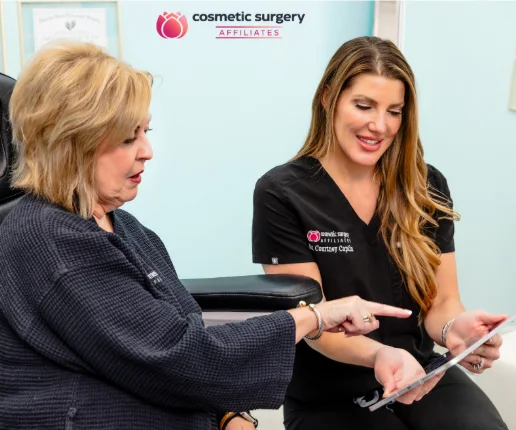
This is the part where a little honesty saves you time, money, and disappointment. The strongest candidates are already close to their goal weight, with small, pinchable pockets of fat that have held on despite a solid diet and consistent exercise. Choosing a treatment matched to that profile is what protects your result and your investment.
Research backs this up. The American Society of Plastic Surgeons notes that patients closer to their goal weight see the most promising results. A global expert consensus agreed that the fat needs to be localized and pinchable for these treatments to work. Non-surgical options don’t replace weight loss, and they aren’t meant for large fat deposits.
You may be a good fit for non-surgical fat reduction if you:
Are at or near a stable, healthy weight rather than looking to lose a significant amount
- Have a specific, pinchable pocket of fat, not diffuse fullness across a large area
- Have firm, elastic skin in the treatment zone
- Want to avoid surgery and downtime, and are comfortable with gradual, subtle change
- Have realistic goals: refining a contour, not dramatically reshaping your figure
Loose skin deserves a special mention. If skin laxity is part of what’s bothering you, fat reduction alone can sometimes leave the area looking softer rather than smoother. Mild looseness may respond to a skin-tightening option, while more significant excess is usually better addressed surgically. For patients whose fat needs more than a modest reduction, our liposuction candidacy guide covers who qualifies for the surgical route. Pairing the right tool to the right concern is what keeps your outcome looking natural.
One more thing worth saying plainly: at-home or “homemade liposuction” is never the answer. Searches for home liposuction kits and DIY fat-removal gadgets are common, but at-home devices deliver minimal, temporary effects at best, and any attempt at actual surgery outside a medical setting is genuinely dangerous. Letting a trained, board-certified provider guide you is what keeps you safe and gets you a result worth having.
That’s also why the consultation matters so much, and it’s truly a two-way street. It isn’t just a chance for the surgeon to evaluate you, it’s equally your chance to evaluate them and ask anything on your mind. Triple board-certified, fellowship-trained cosmetic surgeon Dr. Erik Nuveen and the team take time to review your anatomy and goals, then build a plan that fits you, surgical or not.
You don’t have to start in person, either. Whether you’d rather begin with a virtual consultation from home or visit the Oklahoma City office, you can request an appointment for a clear, personalized read on your options.
Of course, choosing the right approach also means understanding the trade-offs, including the risks no one likes to talk about.
What are the risks and limitations of non-surgical fat reduction?
Reading a list of possible side effects can feel intimidating, but understanding them is one of the most empowering things you can do before any treatment. The reassuring headline is that non-surgical fat reduction is generally well tolerated, with most effects being mild and temporary.
Injectable treatments like Kybella commonly cause swelling, tenderness, and numbness under the chin that ease over the following days. Laser and radiofrequency sessions usually bring nothing more than a warm sensation and a little redness.
There’s one uncommon effect worth knowing about with fat freezing, called paradoxical adipose hyperplasia. In this rare situation, the treated area gradually firms and enlarges instead of shrinking, weeks after the session. When it does happen, an experienced surgeon can correct it, which is exactly why having a skilled provider in your corner matters.
The bigger limitation is simply what these treatments can and can’t do. They reduce fat only by a percentage and give little control over the final shape, so they can’t match the precise, surgeon-guided sculpting of liposuction.
Reviews of thousands of patients put the typical circumference reduction at around two centimeters, which is meaningful for a small area but modest overall. Knowing that upfront helps you pick the path that actually matches your goal.
With the science and the safety picture in view, the practical question usually comes down to budget.
How much do non-surgical liposuction alternatives cost?
We know the money side can feel stressful, especially when you’re already weighing a personal decision. Pricing for non-surgical fat reduction varies widely. It comes down to three things more than anything else: the technology used, the size and number of areas treated, and how many sessions you’ll need to reach your goal.
That last factor is the one people underestimate. Because most non-surgical treatments require a series of sessions, the total can add up over time, sometimes approaching the cost of a single surgical procedure that’s done once. It’s worth comparing the full picture, not just the per-session sticker, when you map out your options.
At Cosmetic Surgery Affiliates, we keep pricing transparent, with single, all-inclusive fees and clear ranges for the treatments we offer. Renuvion skin tightening ranges from $1,500 to $3,500. Your exact plan comes together once a provider understands your goals.
One thing to set expectations on: insurance won’t help here. Major insurers classify non-surgical fat reduction as cosmetic and not medically necessary, so these treatments are paid out of pocket. The rare exception is surgical liposuction for a diagnosed medical condition like lipedema, which doesn’t extend to non-surgical devices.
The good news is that cost doesn’t have to be a wall. To make your goals more accessible, we offer flexible financing through PatientFi and Alphaeon, so you can spread payments into a plan that fits your budget without paying everything upfront.
Francesca, a patient who valued honest guidance about her options, shared her experience:
“Dr. Meyer was absolutely amazing — she made me feel comfortable and confident from day one. She’s warm, fun, and incredibly honest, always putting your best interests first.”
Conclusion
Non-surgical fat reduction has earned its popularity for a reason: it can refine a small, stubborn pocket with little to no downtime. But it works best as a finishing touch for someone near their goal weight, not as a replacement for surgery when the goal is bigger or the skin needs tightening. Matching the right tool to your specific concern is what separates a satisfying result from a disappointing one.
At Cosmetic Surgery Affiliates in Oklahoma City, we believe every patient deserves to feel heard, informed, and genuinely confident in whatever path they choose, surgical or not. When you’re ready to find out which option fits your body and your goals, start the conversation with our team, with no pressure and no judgment.
Frequently asked questions
How long does it take to see results from non-surgical fat reduction?
Most non-surgical treatments work gradually as your body clears the treated fat cells. You’ll typically start noticing changes within a few weeks, with the fuller effect developing over about two to three months. Because the process is gradual, the change tends to look natural rather than sudden.
Does non-surgical fat reduction hurt?
Most treatments are quite tolerable. Fat freezing can feel intensely cold at first followed by numbness, radiofrequency and laser sessions feel warm, and injectable treatments may sting briefly. Any discomfort is usually mild and short-lived, and there’s no anesthesia required.
What is the difference between CoolSculpting and SculpSure?
They reach the same goal through opposite temperatures. CoolSculpting freezes fat cells to break them down, while SculpSure heats them with a laser. Both are non-invasive with little downtime, and the better choice depends on your treatment area and what a provider recommends after assessing you.
How many sessions of non-surgical fat reduction do I need?
It depends on the technology and your goals. Fat-freezing and laser treatments often take one to three sessions per area, injectable treatments may need several spaced about a month apart, and muscle-and-fat devices like EmSculpt Neo typically use a short series. Your provider maps out a realistic plan during your visit.
Is non-surgical fat reduction covered by insurance?
Generally no. Insurers consider these treatments cosmetic rather than medically necessary, so they’re paid out of pocket. Many practices, including ours, offer flexible financing through PatientFi and Alphaeon so you can plan around your budget.
Can I combine multiple non-surgical fat reduction treatments?
Often, yes. Many plans pair a fat-reduction treatment with a skin-tightening or muscle-building one to address more than one concern at a time. Combining treatments should always be guided by a qualified provider who tailors the sequence to your body.
What is the best non-surgical treatment for belly fat?
There’s no single winner. Fat freezing, laser, radiofrequency, and EmSculpt Neo can all target the abdomen, and the best fit depends on whether you also want skin firming or muscle definition. The most reliable way to choose is a personalized assessment with a board-certified cosmetic surgeon.
What is the difference between non-invasive and minimally invasive fat reduction?
Non-invasive treatments work entirely from outside the body, with no needles into deeper tissue and no incisions. Minimally invasive options, like some radiofrequency skin-tightening devices, use very small entry points beneath the skin. A consultation clarifies which level suits your goals.
*Disclaimer: This content is for educational purposes only and does not constitute medical advice. A consultation with a qualified board-certified surgeon is required to determine the best treatment plan for your individual needs and any questions you may have about a medical condition or procedure.