
If you have looked into a mommy makeover, you may have found a BMI cutoff of 30 listed as a requirement, or left a consultation with a suggestion to come back after losing weight. It’s reasonable to read that as a closed door.
It usually isn’t one. Being plus-size does not disqualify you from a mommy makeover on its own. BMI is one number among several a surgeon considers, and it says nothing about skin laxity, muscle separation, or how your body distributes weight.
Interest in body contouring continues to grow across body types. ISAPS reports that total aesthetic procedures worldwide rose 42.5% in the four years leading up to 2024, and more women of all sizes are choosing to address what pregnancy changed.
At Cosmetic Surgery Affiliates in Oklahoma City, our surgeons have spent years tailoring body contouring to higher-BMI and post-weight-loss patients, not just textbook cases. This article walks through candidacy, procedures, safety, recovery, results, and cost. We also welcome patients traveling from Jacksonville.
Key takeaways
- Being plus-size does not disqualify you on its own. Surgeons weigh your overall health, weight stability, and medical history together, not a single BMI number.
- A curves-friendly makeover often leans on an extended tummy tuck, a breast lift or reduction, and liposuction with skin removal, customized to you.
- A higher BMI raises the chance of issues like fluid pockets and slower healing, which careful planning and a monitored surgical setting manage well.
- Cost scales with how many procedures you combine, and financing through PatientFi and Alphaeon can spread it into monthly payments.
Am I a good candidate for a plus-size mommy makeover?
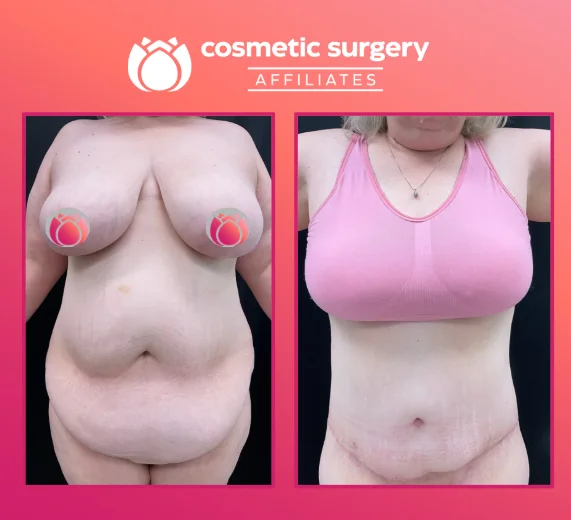
Let’s start with the question sitting heaviest on your mind: can you actually qualify? For many plus-size moms, the honest answer is yes, with the right preparation and surgeon. Candidacy is about health and safety, not fitting a narrow body mold.
BMI does come up, and being transparent about it helps. Many surgeons look for a body mass index under roughly 35 to 40 for a combined procedure, because a stable body heals more predictably. Even so, the number alone rarely makes or breaks the decision.
What a thorough surgeon looks at instead is your full health story:
- Whether your weight has held steady for roughly 6 to 12 months, which protects your result
- How well-controlled any conditions like diabetes or high blood pressure are
- Whether you’re nicotine-free, since that strongly improves circulation and recovery
- Whether you’re finished having children, so your results have the best chance to last
You don’t have to reach some ideal weight before you’re allowed to ask questions. If losing a bit more first would make the surgery safer, a good surgeon frames that as strengthening your outcome, not a reason for shame. There’s no judgment in where your body is today.
This is where a consultation earns its keep. Think of it as a two-way evaluation: your surgeon assesses your health, and you decide whether you trust them with your goals. The triple board-certified cosmetic surgeons at Cosmetic Surgery Affiliates deliver personalized cosmetic surgery in OKC, treating each plan as personal, never a template. Both in-person visits in Oklahoma City and virtual consultations are available.
What cosmetic procedures are customized for a curves-friendly mommy makeover?
A plus-size mommy makeover from an OKC plastic surgeon for post-baby transformations isn’t a different operation so much as a smarter combination of familiar ones. The procedures are tailored to bodies carrying more skin, more volume, and the aftermath of weight changes.
Liposuction was the second most common cosmetic surgical procedure worldwide in 2024, according to the ISAPS global survey. Here’s how the core pieces typically fit together for a fuller figure.
| Procedure | Best suited for | What it addresses |
|---|---|---|
| Extended tummy tuck | Loose skin reaching the love handles | Excess abdominal skin and muscle laxity |
| Lower body lift | Skin laxity all the way around | Tummy, hips, and outer thighs in one stage |
| Breast lift or reduction | Heavy, sagging, or uncomfortable breasts | Position, shape, and physical comfort |
| Liposuction with skin removal | Stubborn fat plus loose skin | Contour refinement alongside excision |
Tummy and waistline
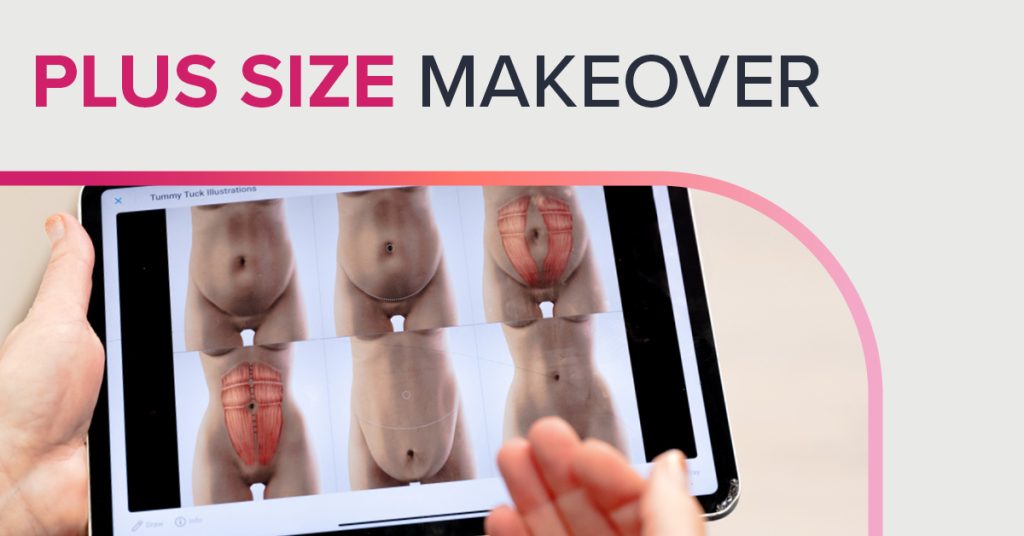
For many plus-size patients, a standard tummy tuck isn’t quite enough. When loose skin extends toward the sides, an extended waistline tightening surgery reaches around to remove it. When that laxity wraps all the way around, surgeons may recommend one of the circumferential body lift options, which combine a tummy tuck in front with lifts at the sides and back, all in one stage.
That can feel like a lot to picture. The upside is that addressing it together usually means one recovery, not several.
Breast options
Pregnancy and weight changes leave many women with breasts that sit lower or feel heavy. Rather than implants alone, plus-size patients often benefit more from breast lift options in OKC that restore position. When the weight of larger breasts causes back pain or chafing, breast reduction procedures in OKC can ease that discomfort while reshaping at the same time.
Fat and skin together
Stubborn fat and loose skin tend to travel together after significant weight changes. A trusted lipo surgeon near Oklahoma City removes the fat through a thin tube. Stretched skin often won’t snap back on its own, which is where surgical skin removal comes in, clearing what’s left behind. Arms, inner thighs, and bra-line rolls can often be folded into the same plan.
The art is in the sequencing, and that’s what Cosmetic Surgery Affiliates maps out for each patient. With a plan in hand, the next honest question is usually: Is all of this safe at a higher weight?
Is a plus-size mommy makeover safe, and what are the unique risks?

It’s completely understandable to feel uneasy reading about surgical risks, especially when you’ve heard that a higher weight raises the stakes. Knowing what those risks are, and how they’re managed, is genuinely empowering. So let’s look at them plainly.
A higher BMI does carry a somewhat greater chance of a few specific issues. Fatty tissue tends to heal a little more slowly, which can make fluid pockets, called seromas, more likely. The reassuring part is that experienced surgeons plan around these realities from the start.
| Consideration | How it’s managed |
|---|---|
| Fluid pockets (seromas) | Drains and compression help your body clear fluid naturally |
| Slower wound healing | Careful tension on incisions and close follow-up |
| Anesthesia and airway | A monitored, often hospital-based setting keeps you safe |
| Blood clots (DVT) | Early movement, compression, and clot-prevention steps |
Choosing an experienced surgeon who operates in a monitored, often hospital-based setting is a large part of what keeps a higher-BMI procedure safe. Staying mobile soon after surgery and wearing your compression garment as directed both protect your recovery. For some patients, staging the makeover into two sessions is the safest path, and a thoughtful surgeon will say so clearly.
Francesca, a patient who combined a breast lift and tummy tuck, shared her experience:
“I had a breast lift and tummy tuck with Cosmetic Surgery Affiliates in OKC, and I couldn’t be happier with my experience. Dr. Meyer was absolutely amazing, she made me feel comfortable and confident from day one. She’s warm, fun, and incredibly honest, always putting your best interests first.”
You’re not doing this alone, and a good team carries a lot of that weight with you. If safety questions are on your mind, start a conversation with a board-certified cosmetic surgeon before you decide. Once safety feels settled, most people want to know what recovery actually looks like.
What should I expect during recovery from a higher-BMI mommy makeover?
The first stretch of recovery asks a lot of you, and it’s completely normal to feel anxious about handing over your routine. Knowing the rhythm ahead of time makes it far less daunting. Healing happens in stages, and each one gets a little easier.
The first week
Right after surgery, your team monitors you and sends you home in a compression garment that supports your tissues. Standing fully upright will feel tight for the first couple of weeks, so rest is the main assignment. Most patients find that walking gets easier within a few days.
Drains and compression
If you have a tummy tuck, you may go home with small drains that gently clear fluid for cleaner healing. Wearing your compression garment consistently is one of the simplest things you can do to move swelling along and help your skin settle back into place.
Getting back to life
Desk work is usually realistic around two to three weeks out, depending on how your body responds. Light activity often returns around four to six weeks, with heavier lifting and chasing little ones coming a bit later. Lining up help at home for the first couple of weeks makes a real difference.
Full healing keeps progressing over several months, even after you feel mostly back to normal. Once the swelling fades, the question everyone is really waiting on is what the mirror will show.
What will my plus-size mommy makeover results look like?
Here’s an honest reframe worth holding onto: this surgery is about reshaping your silhouette, not shrinking you into someone else. The goal is a smoother, more comfortable version of you, with curves that feel balanced and proportionate.
Swelling takes time to settle, so what you see at two weeks is not the body you’ll see at three months. A tummy tuck removes loose skin and stubborn surface fat, but it won’t address the deeper fat around your organs, which responds to overall weight management. What it can do is restore a flatter, firmer foundation.
Alta, a patient who had an extensive body-contouring combination, described her results:
“I cannot say enough wonderful things about Dr. Tessa Meyer and the entire team at Cosmetic Surgery Affiliates. Dr. Meyer is a true artist, she understands the form, lines, and natural balance of the human body, and that expertise is evident in her results. I had a full lower body lift, breast lift, and more.”
Protecting what you gain comes down to steady habits. Keeping your weight stable and staying active supports the contour over time. Beyond the physical changes, many patients describe feeling more at ease getting dressed and more present in their day-to-day lives. That clearer picture makes the cost conversation easier to approach.
How much does a plus-size mommy makeover cost, and how can I pay for it?
Money is often the most stressful part, and real numbers help. At Cosmetic Surgery Affiliates, every surgical price is a single, all-inclusive fee covering anesthesia, the facility, supplies, and professional fees. It’s a straightforward approach the practice has kept for more than two decades, with no surprise line items added later.
A mommy makeover starts in the range of $9,000 to $12,000, and the total shifts based on how much you combine. Plus-size plans often involve more extensive work. A full tummy tuck with liposuction runs about $17,000 to $20,000, and a tummy tuck paired with a full breast lift falls around $20,000 to $23,000. A consultation gives you a number tailored specifically to your goals.
Combined procedures cost more because each one adds surgical time, anesthesia, and operating room resources. It’s also worth weighing the appeal of cheaper surgery far from home against the real value of having your team nearby for follow-up.
Cost should never be the wall that stops you from exploring your options. To keep things manageable, the practice offers flexible financing through PatientFi and Alphaeon, so you can spread the investment across monthly payments. As for insurance, a cosmetic mommy makeover typically isn’t covered, though a functional piece like a breast reduction for chronic pain is sometimes evaluated differently. It’s a good question to bring up at your consultation.
Conclusion
A plus-size mommy makeover isn’t reserved for a narrow set of bodies. With honest candidacy guidance, tailored procedures, a safety-first setting, and a recovery you can plan around, it’s a real option for a lot of women who were told to wait. What it offers is comfort, balance, and the chance to feel like yourself again.
You deserve to make this choice feeling heard and respected, not judged for where your body is today. The team at Cosmetic Surgery Affiliates in Oklahoma City believes every patient should feel confident and supported every step of the way. There’s no pressure and no rush. Whenever you’re ready, schedule a consultation and start the conversation on your own terms.
Frequently asked questions
Is there a maximum BMI for a plus-size mommy makeover?
Many surgeons prefer a BMI under roughly 35 to 40 for a combined procedure, because a stable body heals more predictably. The number is a guideline, not a hard gate. Your overall health, weight stability, and medical history all factor into the decision your surgeon makes with you.
Can I get a mommy makeover if I have diabetes or high blood pressure?
Often, yes, as long as the condition is well managed. Stable blood sugar and controlled blood pressure support smoother healing, so your surgeon will review your health closely during the consultation. The goal is to confirm that surgery is safe and to set you up for the best possible recovery.
What is the difference between a plus-size mommy makeover and a standard mommy makeover?
The procedures are the same family, but the approach is tailored to bodies carrying more skin and volume. That often means an extended tummy tuck or lower body lift instead of a standard one, plus liposuction paired with skin removal. The combination is customized rather than templated.
Does a plus-size mommy makeover include a breast lift or a breast reduction?
It can include either, depending on your needs. A lift restores position for breasts that sit low after pregnancy or weight changes. A reduction reshapes and eases the discomfort that comes with heavier breasts. Your surgeon helps you decide which fits your goals.
Will a tummy tuck remove visceral fat?
No, a tummy tuck removes loose skin and some surface fat, but not the deeper visceral fat around your organs. That deeper fat responds to overall weight management rather than surgery. What a tummy tuck delivers is a flatter, firmer abdominal contour.
How long after breastfeeding should I wait to get a mommy makeover?
Most surgeons suggest waiting around three to six months after you finish breastfeeding so your breast tissue can settle. This gives a clearer picture of shape and volume to work with. Your surgeon can confirm the right timing for you at the consultation.
Can I get pregnant after a plus-size mommy makeover?
Yes, pregnancy afterward is possible and safe. The catch is that a later pregnancy can stretch the abdomen and breasts again and change your results. For that reason, many patients choose to wait until they’re done growing their family.
Is it safer to stage mommy makeover procedures rather than doing them all at once?
For some higher-BMI patients, splitting the makeover into two sessions is safer, since it shortens each surgery. For others, combining everything in one trip works well. A board-certified cosmetic surgeon will recommend the approach that fits your individual health.
*Disclaimer: This content is for educational purposes only and does not constitute medical advice. A consultation with a qualified board-certified surgeon is required to determine the best treatment plan for your individual needs and any questions you may have about a medical condition or procedure.