Give it several months. Swelling masks the shape early on and the tissue keeps settling, so the contour you see at three weeks is not the one you keep.
FTM TOP SURGERY
A Chest That Matches Who You Are
FTM top surgery removes breast tissue and reshapes the chest for a flatter, masculine contour. Which technique fits depends on your chest, and that choice does more to determine your result than anything else.
Treatment Highlights
Treatment Time
About 2 hours
Anesthesia
General
Initial Recovery
About 1 to 2 weeks
CHEST MASCULINIZATION
For many transmasculine and nonbinary people, top surgery is the most affirming step of all, and the one that changes daily life the most.
Your result comes down to the technique, and the technique comes down to your chest size, your skin elasticity, and how much tissue needs to be removed. Nipple sensation and scarring both follow from that same decision, which is why it is worth understanding the trade-offs before your consultation rather than during it.
What Is FTM Top Surgery?
Top surgery, also called chest masculinization or chest reconstruction, removes breast tissue and excess skin and reshapes the chest, repositioning or resizing the nipples for a natural, masculine result. It relieves chest dysphoria more directly than any other procedure, which is why it is often the first surgery patients pursue and the one they research hardest.
Top surgery addresses:
- Chest dysphoria and the need to bind
- Breast tissue and excess chest skin
- Nipple size and position
- A chest contour that does not match your identity

Top Surgery Techniques
There is no one-size-fits-all approach, and the honest answer is that your chest largely decides this rather than your preference.
Double Incision
The most common approach. Removes the most tissue, with the nipples resized and replaced as free grafts.
Best For
Medium to large chests, or looser skin.
Periareolar
Incisions around the areola, keeping the nipple attached to its original blood supply.
Best For
Smaller chests with good skin elasticity.
Thighs
A thigh lift, inner or outer depending on where the skin sits.
Best For
Loose inner or outer thigh skin and chafing.
Keyhole
A small incision under the areola with no skin removed and the nipple left in place.
Best For
Very small chests with firm skin.
Choosing a technique your chest is not suited to is the most common cause of a result patients want revised, so this is worth getting right the first time.
NIPPLES AND SENSATION
What Happens to Nipple Sensation?
-
Free Grafts
Sensation Is Usually Reduced
In a double incision procedure the nipples are removed, resized, and replaced as grafts. That allows precise placement and sizing for a masculine chest, but erotic sensation is typically reduced or lost. Some superficial feeling returns over the following year.
-
Nipple Preserved
More Sensation Retained
Keyhole and periareolar techniques keep the nipple attached to its original blood supply and nerves, so more sensation is preserved. The trade-off is that both require a smaller chest with good elasticity, and they remove less tissue.
How to Get Started
The pathway is more straightforward than most patients expect, and we handle the administrative side with you rather than handing you a list of requirements.
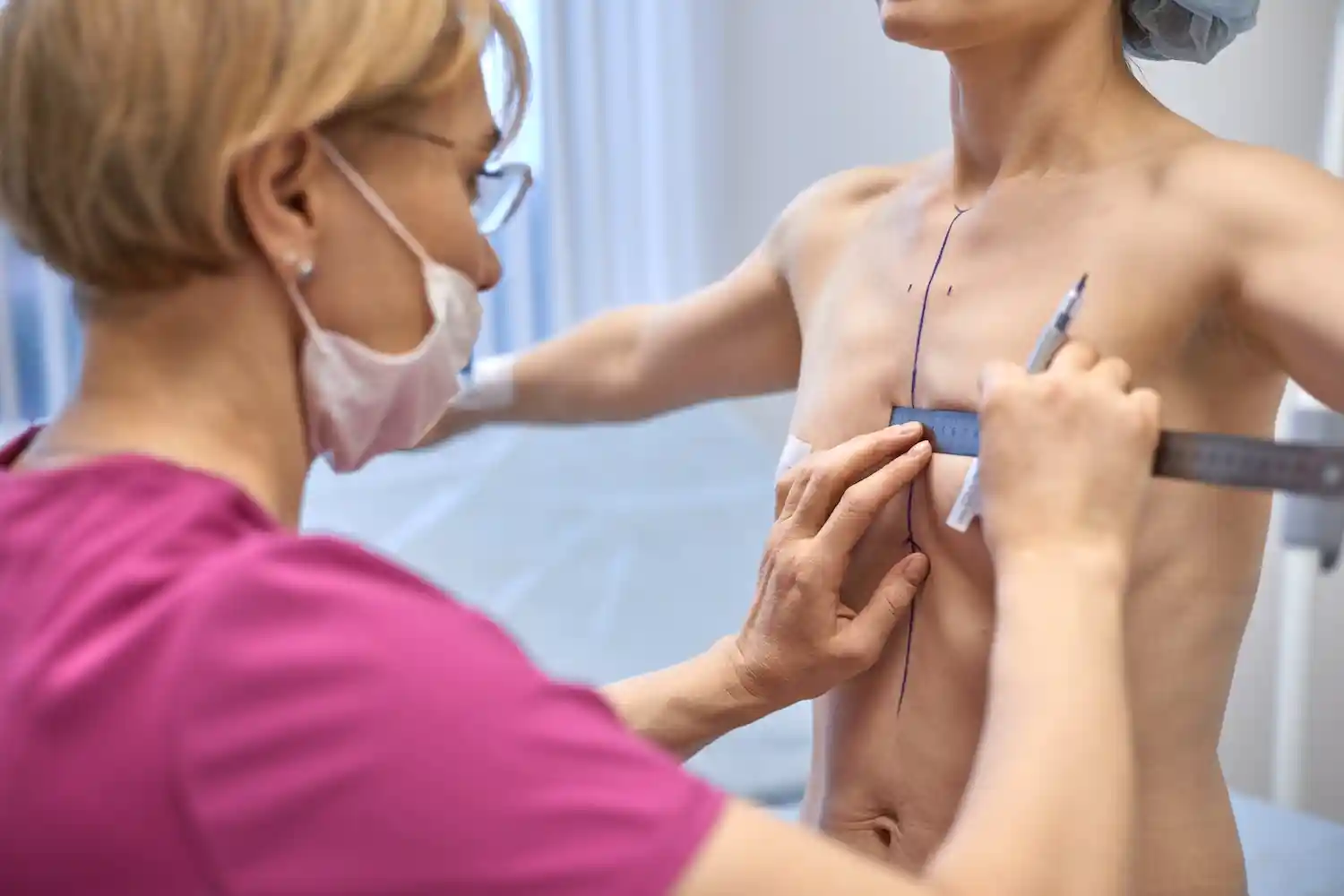
It begins with a consultation to discuss your goals, examine your chest, and identify the right technique. Depending on your insurance, a letter of support from a healthcare provider may be needed, and we will tell you exactly what your plan asks for and help you gather it. Hormone therapy is not a prerequisite. If you have been putting off making the call because the process sounds complicated, this part is genuinely manageable.

WHAT TO EXPECT
01
CONSULTATION
We discuss your goals, examine your chest, recommend a technique, and outline recovery, requirements, and cost.
02
PLANNING
We help with any letters, documentation, and insurance pre-authorization your plan requires.

03
SURGERY
Your procedure takes about two hours under general anesthesia, and most patients go home the same day.

04
RECOVERY
You go home with drains and a compression vest, plus a clear step-by-step recovery plan and scheduled follow-ups.

IS IT RIGHT FOR YOU
Am I a Good Candidate?
Top surgery is for adults, and beyond that the requirements depend on the procedure and your insurance rather than on a fixed rule. Hormone therapy is not required for top surgery, though some patients are on testosterone for other reasons. Being at a reasonably stable weight helps the contour, and smoking affects healing in the chest specifically, so we ask patients to stop beforehand. Knowing what you want from the surgery matters more than any checklist, and that is what the consultation is for.


HEALING
YOUR RECOVERY TIMELINE
This is a real recovery rather than a long weekend, and knowing that upfront makes it far easier to plan around.
01
FIRST WEEK
Rest with help. Surgical drains are typically in place and come out at about a week.
02
1 TO 2 WEEKS
Most patients return to work or school, still avoiding lifting and overhead reaching.
03
SEVERAL WEEKS
Wear your compression vest as directed while swelling settles and the contour tightens.
04
4 TO 6 WEEKS
Strenuous exercise resumes once your surgeon clears you. Scars keep maturing for a year or more.
PLANNING AHEAD
Planning Your Procedure and Time Off
Top surgery is an outpatient procedure, so you go home the same day. Arrange a ride and someone to help for the first several days, since you will not be reaching overhead or lifting anything meaningful. Plan on one to two weeks away from work or school rather than a few days.
Set up what you need at waist height before surgery, including clothes you can get into without raising your arms, since button-front shirts are far easier than anything pulled over your head. Wear your compression vest for the full period you are given, start scar care as soon as your surgeon clears it, and keep the scars out of direct sun during their first year while they are still maturing.

Things to Consider
Top surgery is safe and very commonly performed, and like any surgery, there are a few things to keep in mind. Your surgeon will go over each one with you before you decide.
-
- Visible chest scarring, which fades but does not disappear
-
- Reduced or lost nipple sensation, depending on technique
-
- Partial loss of a nipple graft, which is uncommon but possible
-
- Fluid collecting under the skin, or asymmetry that may warrant a small revision
Does Top Surgery Affect Breast Cancer Risk?
Top surgery removes most but not all chest tissue, so a small residual risk remains and monitoring should continue. It is not a preventive mastectomy and should not be treated as one. Testosterone’s effect on breast cancer risk is still being studied and is not settled. Follow your primary care provider’s screening advice, and tell any new provider what surgery you have had so your care is planned accordingly.
Can I Combine It With Other Procedures?
Often yes, and many patients do, particularly body contouring in the same session. Your surgeon will tell you what is safe to combine, since total operating time affects risk more than the individual procedures do. Facial work is usually planned separately, both for recovery reasons and because the two heal on different timelines.
Cost & Financing
Many insurance plans now cover top surgery as medically necessary care, though coverage and requirements vary considerably by plan. Our team can help with documentation and pre-authorization, and we will tell you honestly what your plan is likely to support. For any costs not covered, we provide clear pricing after your consultation and financing options are available.

THE CSA DIFFERENCE
Why Choose Cosmetic Surgery Affiliates for Your Top Surgery?
Offices in Oklahoma City and Jacksonville
This procedure is available at both Cosmetic Surgery Affiliates locations, in Oklahoma City and Jacksonville, Florida. Book your consultation at whichever office is closer to you, and our team will take it from there.
Technique Matched to Your Chest
We recommend an approach based on your tissue and skin rather than on the one technique a surgeon prefers to perform.
Straight Answers on Trade-Offs
Sensation, scarring, and how flat a result is achievable are all discussed plainly before surgery, not after.
Affirming, Judgment-Free Care
Our team uses your name and pronouns and treats this as the ordinary medical care it is.
Every top surgery is performed by a board-certified surgeon in an accredited surgical facility, with your technique and nipple placement confirmed with you before the day of surgery.
FTM Top Surgery FAQs
Usually, for about a week. They reduce fluid buildup under the chest skin, and we show you how to care for them before you go home.
Revisions for contour, dog ears at the ends of the incisions, or nipple adjustment are a normal part of this surgery. We would rather refine a result than leave you unhappy with it.
Chest skin numbness is common early on and improves over months as nerves recover. Some patients keep small areas of reduced feeling permanently.
Look for board certification, an accredited surgical facility, and high volume in chest masculinization specifically. Ask to see healed results from patients whose chest resembled yours, at a year out rather than a month.
Flat is the goal, and double incision achieves it most reliably. With a nipple-preserving technique on a larger chest, some contour usually remains, which is part of why technique choice matters.
Yes. Minor revisions to nipple size, shape, or placement are common and are usually done as a small procedure once everything has healed.
You will be in a surgical compression vest from the start, which replaces binding entirely. You should not need to bind again, and returning to a binder is not part of recovery.
Often yes, though a higher BMI raises the wound-healing risk and can affect the contour. Your surgeon will tell you honestly whether losing some weight first would give you a better result.
READY WHEN YOU ARE
Ready to See What Is Possible?
Ready to look how you feel? Schedule a consultation to find out whether FTM top surgery is right for you, and whether your insurance may help with coverage.