Most patients describe a quick snap with each pulse, similar to a rubber band. The handpiece is cooled, and areas over bone feel more than others.
IPL PHOTOFACIAL
Clear Away Brown Spots and Redness
IPL uses broad-spectrum light to target the pigment and blood vessels that show up as brown spots and flushing. It treats color rather than texture, and it works across the whole face at once.
Treatment Highlights
Treatment Time:
20 to 45 minutes
Sessions Needed:
3 to 5
Downtime:
1 to 3 days
INTENSE PULSED LIGHT
Sun damage and redness are color problems rather than texture problems, and they respond to light in a way that creams and exfoliation cannot match.
The first question is whether IPL is appropriate for your skin tone, because this treatment targets pigment and that carries real limits. After that it is a question of how many sessions your concern needs and when to start, since recent sun exposure rules out treatment.
What Is an IPL Photofacial?
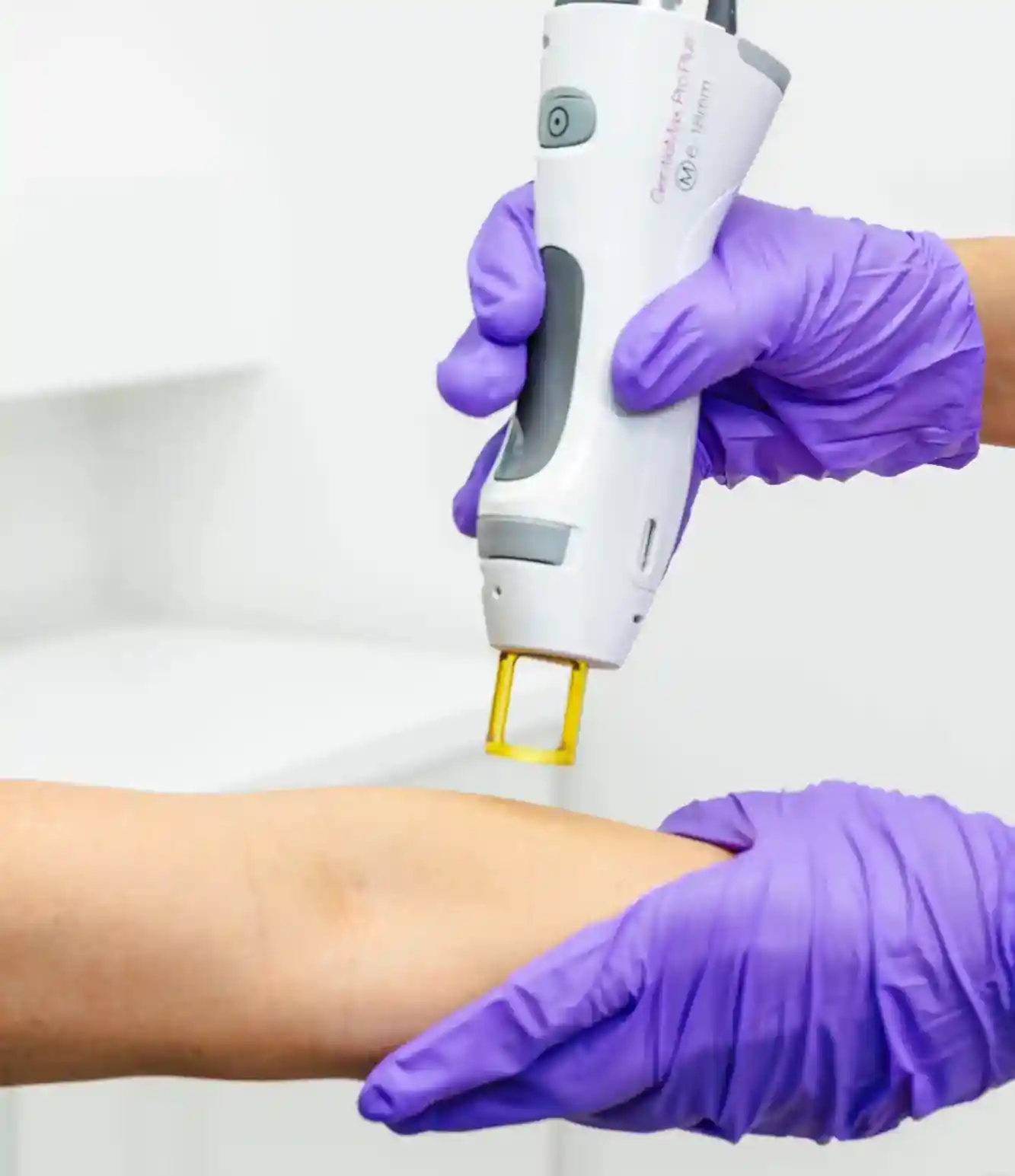
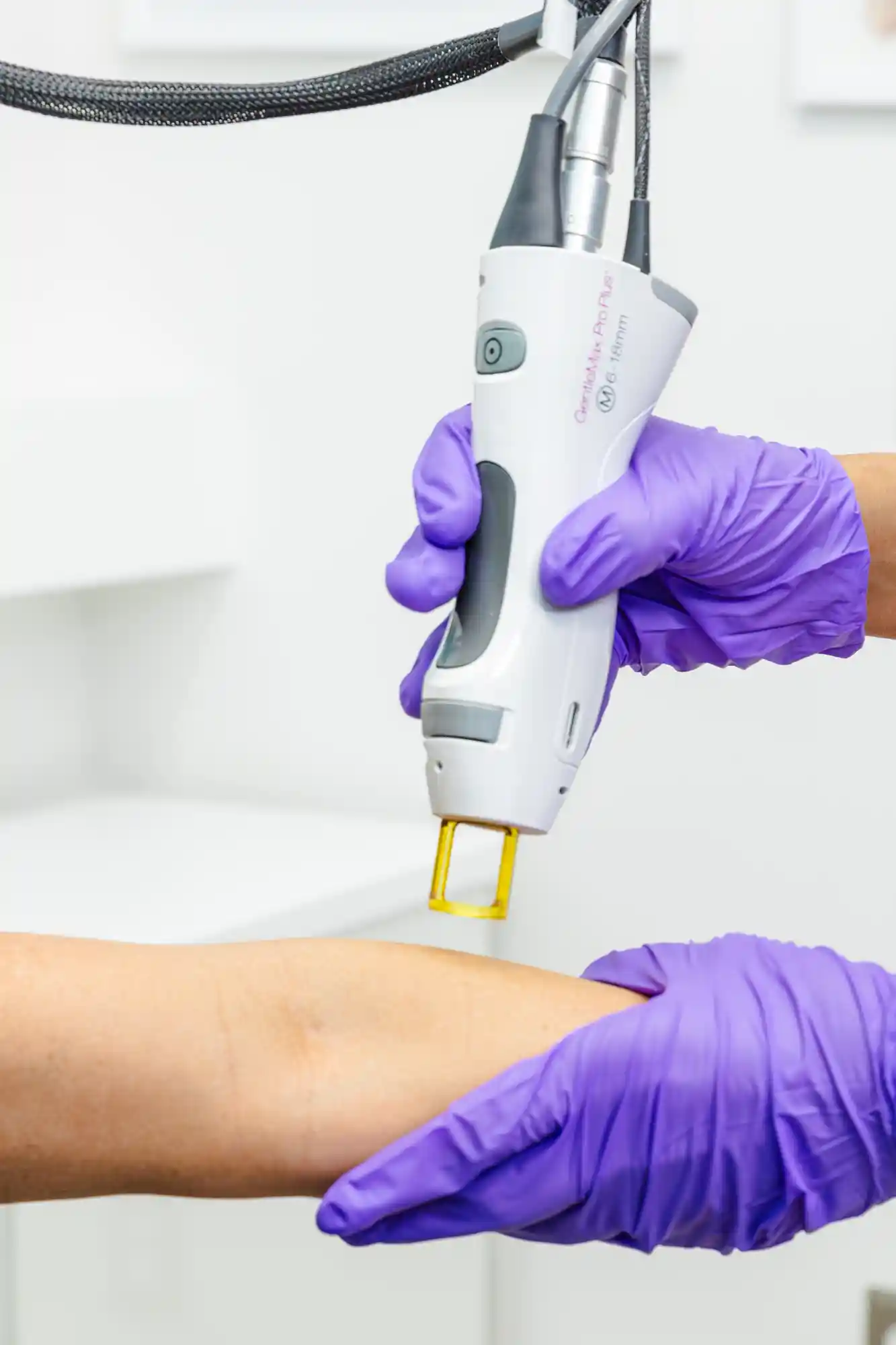
IPL delivers pulses of broad-spectrum light that pass through the skin and are absorbed by the darker targets inside it, meaning clusters of melanin and the hemoglobin in small blood vessels.
That absorbed light converts to heat, which breaks up the pigment and collapses the vessel. Your body clears the debris over the following weeks. It is not technically a laser, since a laser uses one wavelength and IPL uses many at once, which is what lets it treat brown and red in the same pass.
IPL can treat:
- Sun spots, age spots, and freckling
- Facial redness and flushing
- Broken capillaries and visible vessels
- Rosacea-related redness
- Uneven tone on the face, neck, chest, and hands

What IPL Treats Best
This treatment is about color, and it is far stronger on some concerns than others.
Brown Spots
Sun spots, age spots, and freckling lifted by breaking up clustered pigment.
Sessions
Often visible after one, with 3 to 5 for full clearing.
Redness and Flushing
Diffuse facial redness reduced by collapsing the small vessels causing it.
Sessions
3 to 5, then periodic maintenance.
Broken Capillaries
Individual visible vessels around the nose and cheeks closed off.
Sessions
1 to 3 for most patients.
Body Areas
The neck, chest, and backs of the hands, where sun damage shows early.
Sessions
Similar to the face, by area size.
IPL does nothing for wrinkles, scars, or texture. Those need resurfacing or microneedling instead.
COLOR OR TEXTURE
IPL or a Resurfacing Treatment?
-
IPL
For Color
IPL removes discoloration without disrupting the surface of the skin, which is why the downtime is a couple of days rather than a couple of weeks. If your complaint is that your skin looks blotchy, spotted, or red, this is the treatment aimed at that.
-
Resurfacing
For Texture
Peels, microneedling, and laser resurfacing work on the surface and the structure underneath, so they handle lines, scars, and roughness. They also improve tone as a side effect, but they are slower and more disruptive than IPL for pigment alone. Many patients use IPL for color and something else for texture.
The Spots Get Darker First
Almost every patient is surprised by this, so it is worth knowing before your first session rather than during it. Treated brown spots typically darken over the first day or two before they clear.
The pigment rises toward the surface, looking like coffee grounds or a sprinkling of pepper, then flakes away over roughly one to two weeks. It is the treatment working rather than a reaction, and picking at it is the one thing that can leave a mark. Redness behaves differently and simply fades. Plan for that darkening phase, because it is visible up close even though most patients can cover it and go about their week.
WHAT TO EXPECT
01
CONSULTATION
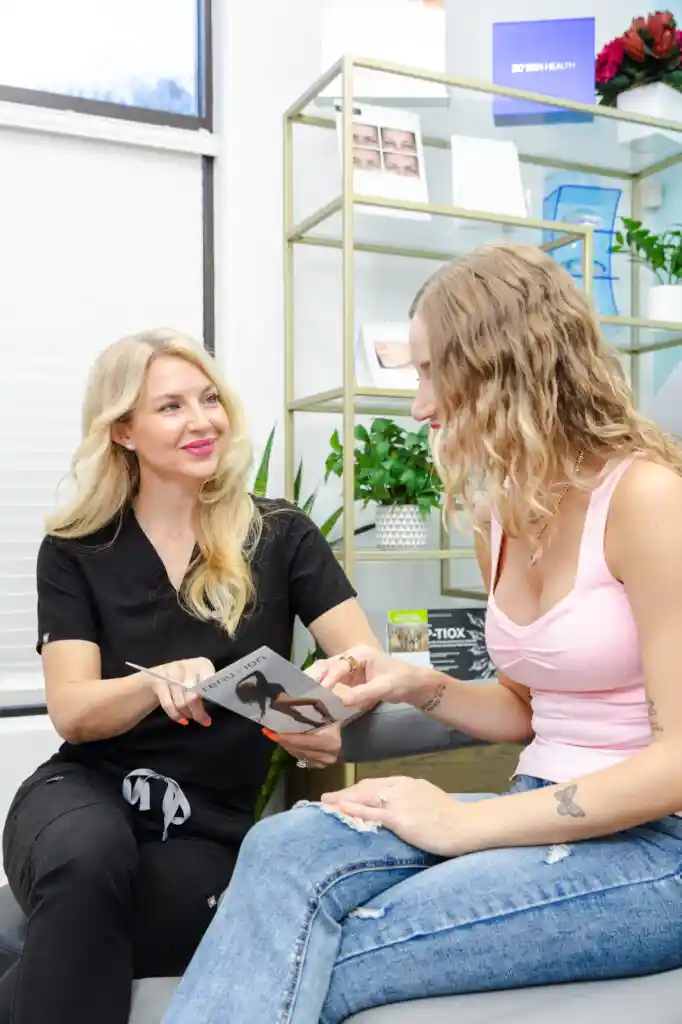
We assess your skin tone and your concerns, confirm IPL is appropriate, and plan your sessions.
02
PREPARATION
Arrive with clean skin and no makeup. Avoid sun exposure and self-tanner for several weeks beforehand.

03
TREATMENT
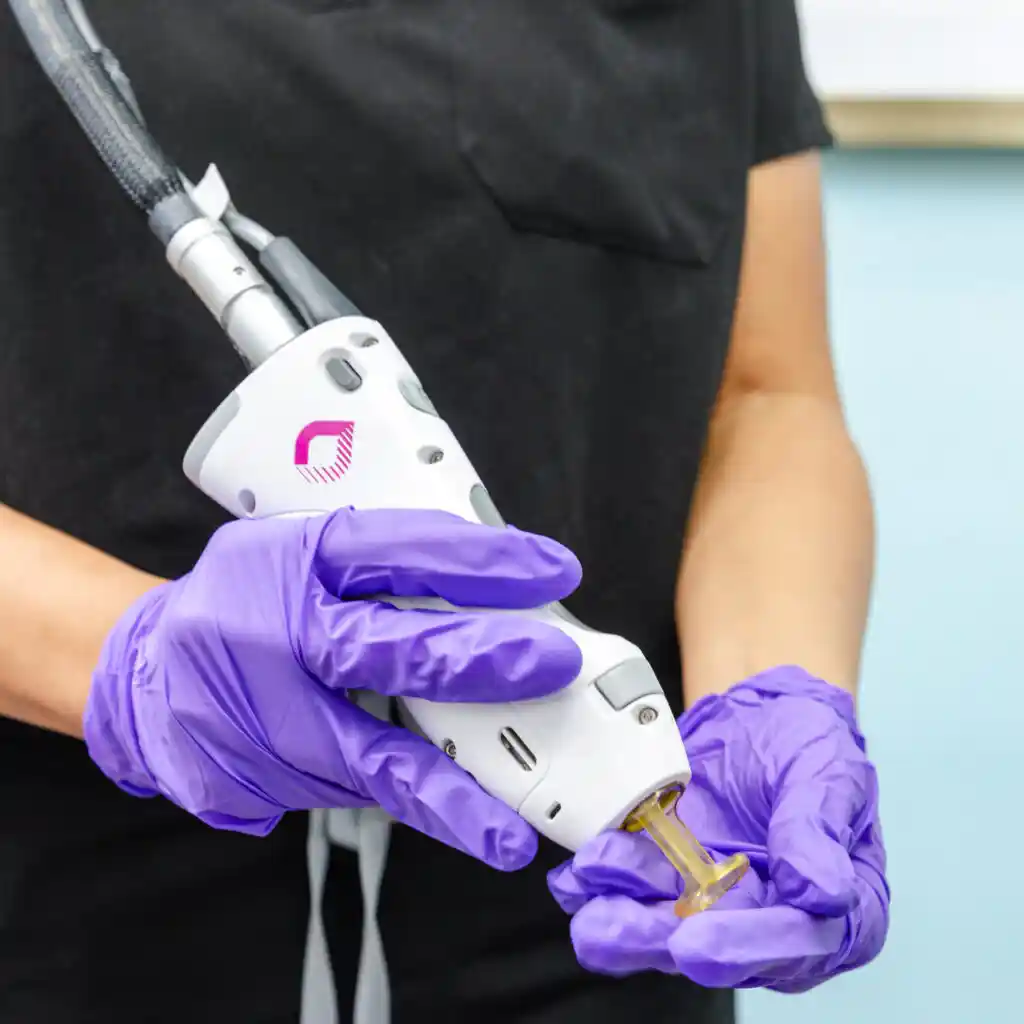
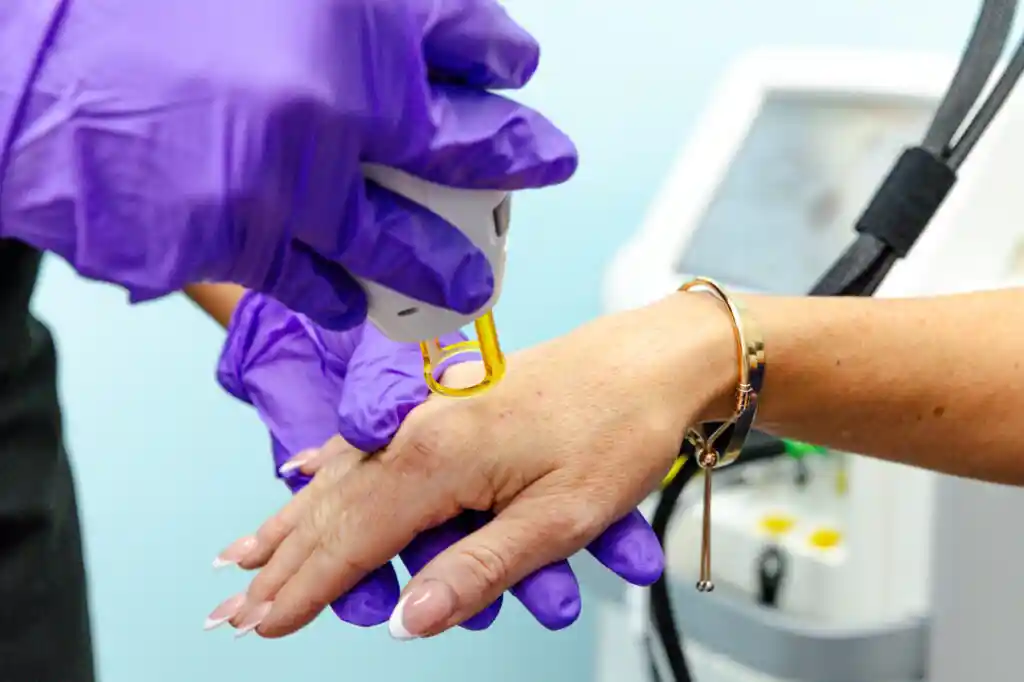
With eye protection on and gel applied, the handpiece delivers pulses across the area. Most patients need 20 to 45 minutes.
04
AFTERCARE
Redness settles within a day or two. Spots darken, then flake away over the following one to two weeks.
IS IT RIGHT FOR YOU
Am I a Good Candidate?
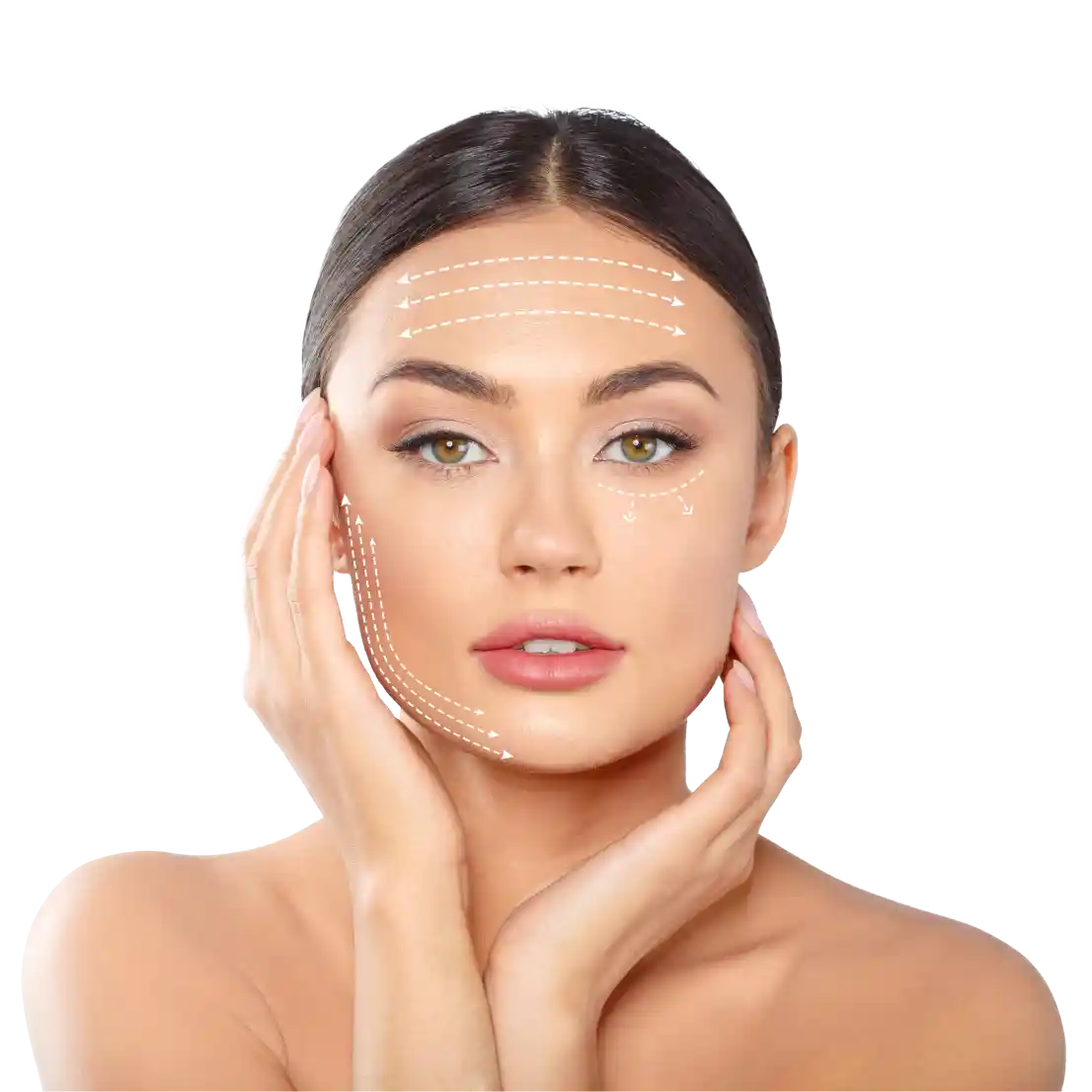
The best candidates have fair to medium skin with clearly defined brown spots or redness against a lighter background, because contrast is what lets the light find its target. IPL is not appropriate for deeper skin tones, since the light cannot distinguish a sun spot from the surrounding skin and the risk of burns and pigment loss becomes real. We will tell you honestly if your skin is not suited to it, and we have other treatments that are. Recent sun exposure, self-tanner, isotretinoin, and pregnancy all affect timing.

YOUR PROGRESS
YOUR RECOVERY TIMELINE
Each session runs on the same pattern, and the darkening phase is the part to plan around.
01
FIRST 24 HOURS
Redness and mild warmth, similar to a light sunburn. Some swelling around treated vessels is normal.
02
DAYS 1 TO 3
Brown spots darken noticeably, though mineral makeup covers it, and the redness fades.
03
1 TO 2 WEEKS
Darkened pigment flakes away and the skin looks clearer and more even.
04
ACROSS THE SERIES
Sessions spaced three to four weeks apart build toward your full result.
PLANNING AHEAD
Planning Your Treatment
Downtime is short, but the timing matters more with IPL than with most treatments. Sun exposure before a session makes treatment unsafe, and sun exposure afterward undoes the result.
Most patients run their series in the cooler months for that reason, and if you have been in the sun or used a self-tanner we will reschedule rather than treat you. For an event, allow at least three weeks after a session so the flaking has finished. Wear sunscreen daily throughout the series, skip retinoids for several days on either side, and use a gentle cleanser while the pigment is lifting.
Things to Consider
IPL is safe when the settings match your skin, and most side effects are brief. The main concerns come from treating the wrong skin type or treating tanned skin.
-
- Redness, warmth, and temporary swelling for a day or two
-
- Blistering or burns if the energy is too high for your skin, or if skin is tanned
-
- Loss of pigment, leaving lighter patches, which can be lasting
-
- Little to no response on pigment that is too light or too deep in the skin
Will It Help My Melasma?
Sometimes, and it can also make it worse, which is why melasma needs a different conversation than sun spots do. Melasma is hormonally driven and sits deeper in the skin, and heat is one of its triggers, so IPL can clear it temporarily and then provoke a rebound that is darker than where you started. Some patients do well with carefully chosen settings alongside prescription topicals. Others are better served by treatments that do not rely on heat at all, and we will tell you which group you are likely in.
How Long Do the Results Last?
The spots and vessels treated are gone for good, since they are broken up and cleared rather than faded. What IPL cannot do is stop new sun damage or new vessels from forming, and both continue with ordinary living. Most patients hold their result with daily sunscreen and come back for a maintenance session once or twice a year, and patients with rosacea often keep a more regular schedule.
Cost & Financing
IPL is priced by session and by the size of the area treated, so the face costs less than the face, neck, and chest together. Because a full result takes a series, packages and memberships are usually the more economical route than booking one at a time. We provide clear pricing at your consultation.

THE CSA DIFFERENCE
Why Choose Cosmetic Surgery Affiliates for Your IPL?
Offices in Oklahoma City and Jacksonville
This procedure is available at both Cosmetic Surgery Affiliates locations, in Oklahoma City and Jacksonville, Florida. Book your consultation at whichever office is closer to you, and our team will take it from there.
Honest About Candidacy
If your skin tone is not suited to IPL, we will say so at the consultation rather than treating you at a setting that carries real risk.
Settings Matched to You
Energy is chosen for your skin and your concern at each visit rather than run from a default program.
Alternatives in House
When IPL is not the right tool, RF microneedling, peels, and resurfacing are all available here.
Every treatment is performed by a trained medical provider, with your settings and treatment areas confirmed with you at each visit.
IPL Photofacial FAQs
A tan adds pigment the light has to pass through, which raises the risk of burns and pigment loss. We reschedule rather than treat tanned skin.
It can reduce the redness left behind by breakouts and some inflammation, though it is not an acne treatment. Blue light therapy or a peel is a better fit for active acne.
Often after one session for defined brown spots, once the darkening has flaked away. Redness usually takes two or three sessions to shift noticeably.
Ask whether they treat your skin tone with IPL and why, confirm settings are adjusted per patient, and ask what they would recommend instead if IPL is not appropriate. A provider who treats everyone with IPL is a warning sign.
Mineral makeup the next day is usually fine. Skip it on the day of treatment while the skin is still warm and flushed.
No, though the two get grouped together. The practical difference is that IPL covers a wide area quickly, while lasers are more precise on a single target.
Yes, and both are common. Those areas show sun damage early and are often more spotted than the face.
IPL is one of the more effective options for rosacea-related redness. Most patients need a series and then ongoing maintenance, since rosacea is managed rather than cured.
READY WHEN YOU ARE
Ready to See What Is Possible?
Ready for clearer, more even skin? Schedule a consultation to find out whether IPL is right for your skin, and how many sessions you are likely to need.