Sometimes, depending on how much liposuction is involved. When used they are small and typically come out within the first several days.
MTF BODY CONTOURING
Softer Curves and a Defined Waist
Body contouring slims the waist and adds volume to the hips and buttocks. The contrast between those two changes is what creates a feminine waist-to-hip ratio, and both halves matter.
Treatment Highlights
Treatment Time
About 2 hours
Anesthesia
IV sedation or general
No Sitting
About 2 weeks
BODY FEMINIZATION
Estrogen softens the body and shifts some fat toward the hips and thighs, but it often does not go far enough to create the curves you are picturing.
Your plan comes down to two questions worked out with your surgeon: where volume should be added, and whether your own fat or an implant will get you there. Slimming the waist is part of nearly every plan, because a narrower midsection does as much for the shape as anything added to the hips.
What Is MTF Body Contouring?
A masculine frame tends toward a straight waist, narrow hips, and less lower-body fat. Body feminization changes that in two directions at once. Liposuction narrows the waist, abdomen, flanks, and back, while fat transfer or implants build fuller hips and buttocks. Neither half creates the shape on its own, which is why they are planned together.
Body contouring can address:
- A straight waistline with little definition
- Narrow hips and a flat seat
- Fat that estrogen has not redistributed
- A silhouette that reads as masculine in clothes
How the Shape Is Built
Three things go into a feminine silhouette, and most plans use the first alongside one of the other two.
Waist Liposuction
Fat removed from the waist, abdomen, flanks, and back to narrow the midsection.
Best For
Definition through the middle. Part of nearly every plan.
Fat Transfer
Fat harvested during the liposuction, purified, and placed in the hips and buttocks.
Best For
A natural feel, and slimming the donor area at once.
Implants
Silicone hip or buttock implants that add reliable, lasting volume.
Best For
Slimmer patients without enough donor fat.
Slimming the waist is what makes added volume read as a curve rather than as bulk, so it is rarely skipped.
FAT OR IMPLANTS
Which Way to Add Volume?
-
Your Own Fat
Natural, and It Slims Twice
A fat transfer uses tissue taken from your waist and abdomen, so one procedure narrows the middle and fills the hips. It feels natural because it is your own tissue. The limits are that you need enough donor fat and that some of what is placed reabsorbs over the first few months.
-
Implants
Reliable Volume, Any Frame
Hip and buttock implants do not depend on having fat to spare, which makes them the practical answer for slimmer patients. Volume is predictable and does not reabsorb, and your surgeon helps you choose shape and size. The trade-off is a device, a longer recovery, and a higher chance of needing revision later.
An Honest Word About Your Frame
How narrow your waist can look depends partly on your skeleton, and no amount of soft-tissue work changes bone. A wider ribcage sets a limit on the waistline, and we would rather explain that at your consultation than have you disappointed afterward.
We work with fat, skin, and soft tissue, and we do not perform rib repositioning. If that is something you want to explore, we will gladly point you toward surgeons who specialize in it. Within your frame there is usually more room than patients expect, particularly once the waist and back are treated together, and we will show you honestly what that looks like.

WHAT TO EXPECT
01
CONSULTATION
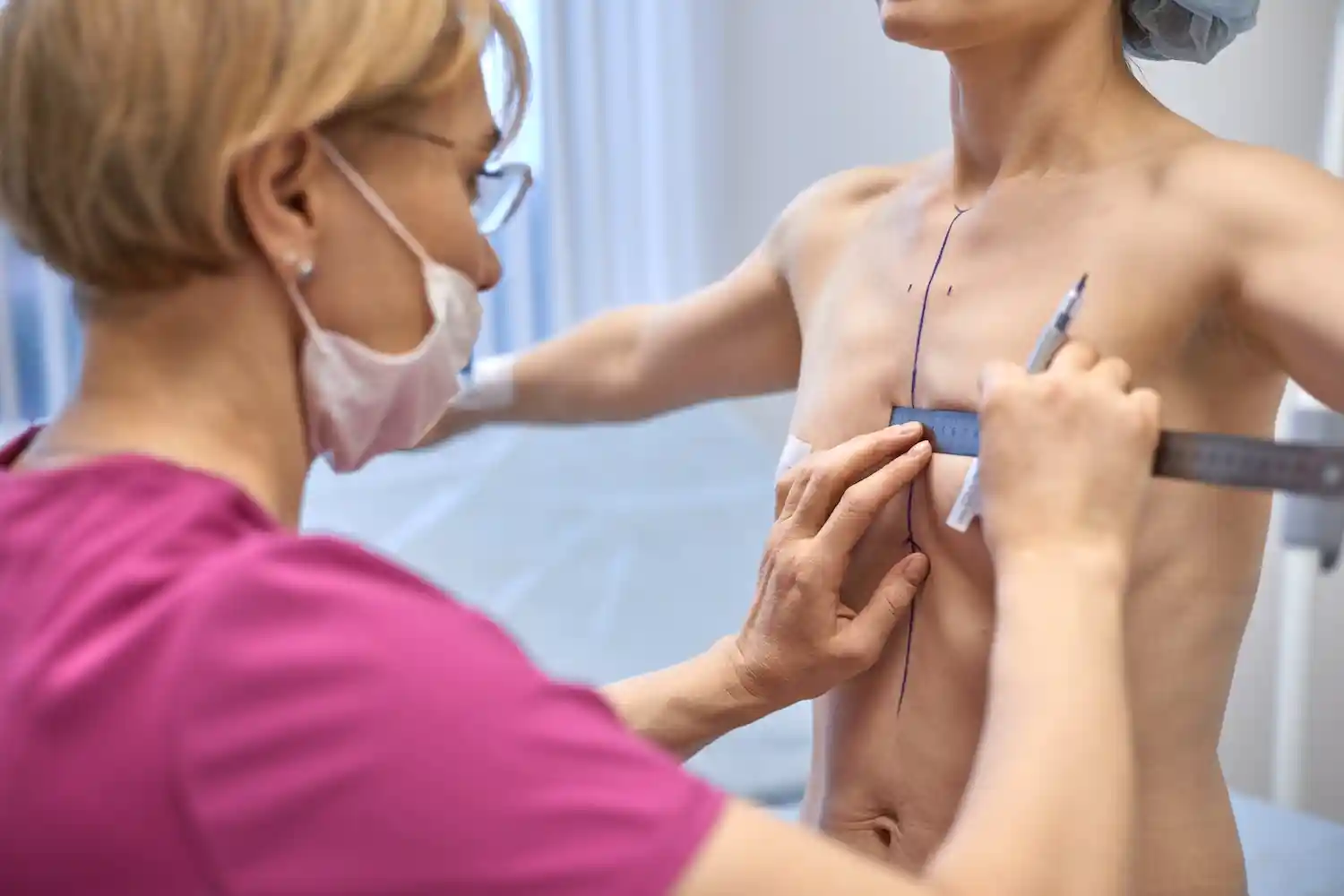
We discuss your goals, assess your frame and donor fat, recommend fat or implants, and outline recovery and cost.

02
PREPARATION
We review your pre-care instructions, including which medications to stop, and explain your anesthesia.

03
SURGERY
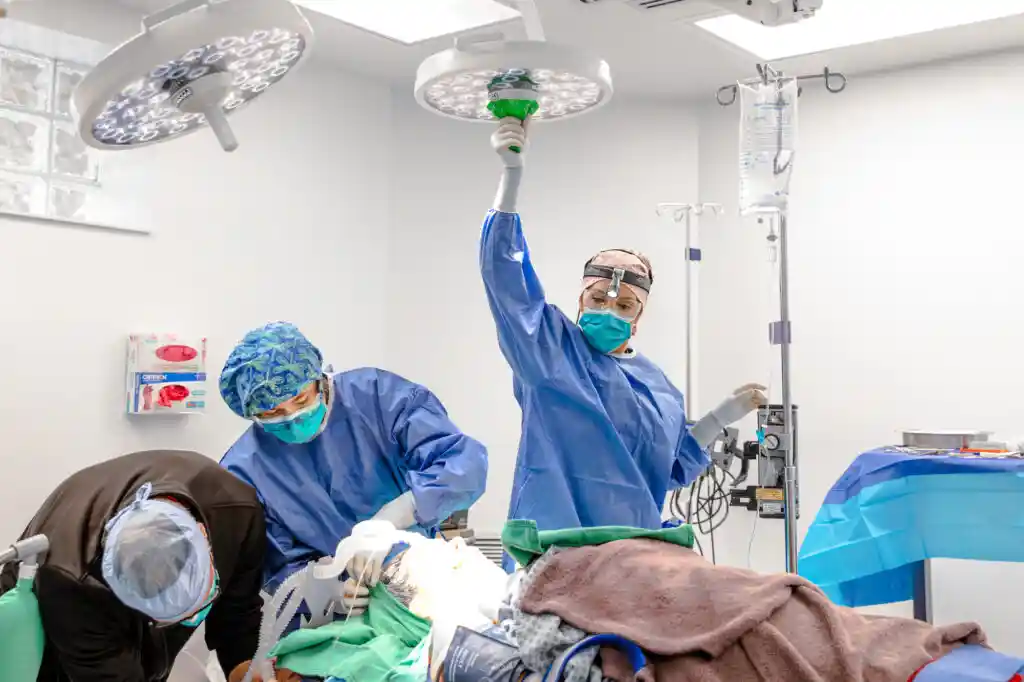
Your surgeon removes fat from the waist and midsection, then places fat or implants in the hips and buttocks.
04
RECOVERY
You go home the same day in compression garments with clear instructions on protecting the treated areas.

IS IT RIGHT FOR YOU
Am I a Good Candidate?
You may be a good candidate if you are at or near a stable weight, you are in good general health, and your skin still has reasonable elasticity. Many patients are already a year or more into hormone therapy, which gives a clearer picture of what has redistributed on its own. For a fat transfer you need enough donor fat to work with, and if you do not have it, implants are the better route. Smoking affects fat survival as well as healing, so we ask patients to stop beforehand.


HEALING
YOUR RECOVERY TIMELINE
Recovery is manageable, but the garments and the swelling schedule both run longer than the downtime itself.
01
FIRST FEW DAYS
Soreness at the liposuction sites is usually more noticeable than the areas that received volume.
02
ABOUT 1 WEEK
Most patients return to desk work, using a cushion that keeps pressure off the buttocks.
03
FIRST 2 WEEKS
Avoid sitting directly on your buttocks. A donut or nursing pillow shifts the pressure to your thighs.
04
6 WEEKS
Strenuous exercise resumes once cleared. Your final shape settles over a few months.
PLANNING AHEAD
Planning Your Procedure and Time Off
This is an outpatient procedure, so you go home the same day. Arrange a ride and help for the first few days. The no-sitting period is the part to plan around, since it affects driving, desk work, and travel for a full two weeks.
Buy a donut or nursing pillow before surgery rather than after, and think through how you will manage your commute without sitting normally. Wear your compression garments for the full period you are given, sleep on your stomach or side, and expect the volume to look generous at first and settle over the following months as some fat reabsorbs.
Things to Consider
These procedures are safe in experienced hands and in the right setting, and each comes with a few things to keep in mind. Fat placement in particular depends on technique, and your surgeon will explain exactly how yours is performed.
-
- Contour irregularities, lumpiness, or asymmetry between sides
-
- With implants, a risk of shifting, firmness from scar tissue, or revision
-
- Some transferred fat reabsorbing, which is expected and planned for
-
- Temporary numbness or changes in sensation
Is Buttock Fat Transfer Safe?
It is, when performed by an experienced surgeon in an accredited facility. The critical point is where the fat is placed. It goes into the layer beneath the skin and never deep into the gluteal muscle, which is where the serious risk in this procedure comes from. This is one area where the surgeon and the setting matter more than any other factor, and we will walk you through exactly how your procedure is done.
Will Insurance Cover It?
Usually not, and we would rather say so plainly. Insurers commonly classify body feminization as cosmetic even when they cover chest surgery, because their criteria for contouring are narrower. It is still worth submitting for a determination since plans differ, and our team can help you do that. Plan on this being out of pocket, and know that financing is available.
Cost & Financing
The cost depends on how many areas are treated with liposuction, whether you choose fat or implants, and the anesthesia and facility fees involved. Because every plan is different, we provide personalized pricing after your consultation. Financing options are available, and we will be straightforward about what your plan is unlikely to cover.

THE CSA DIFFERENCE
Why Choose Cosmetic Surgery Affiliates for Your Body Contouring?
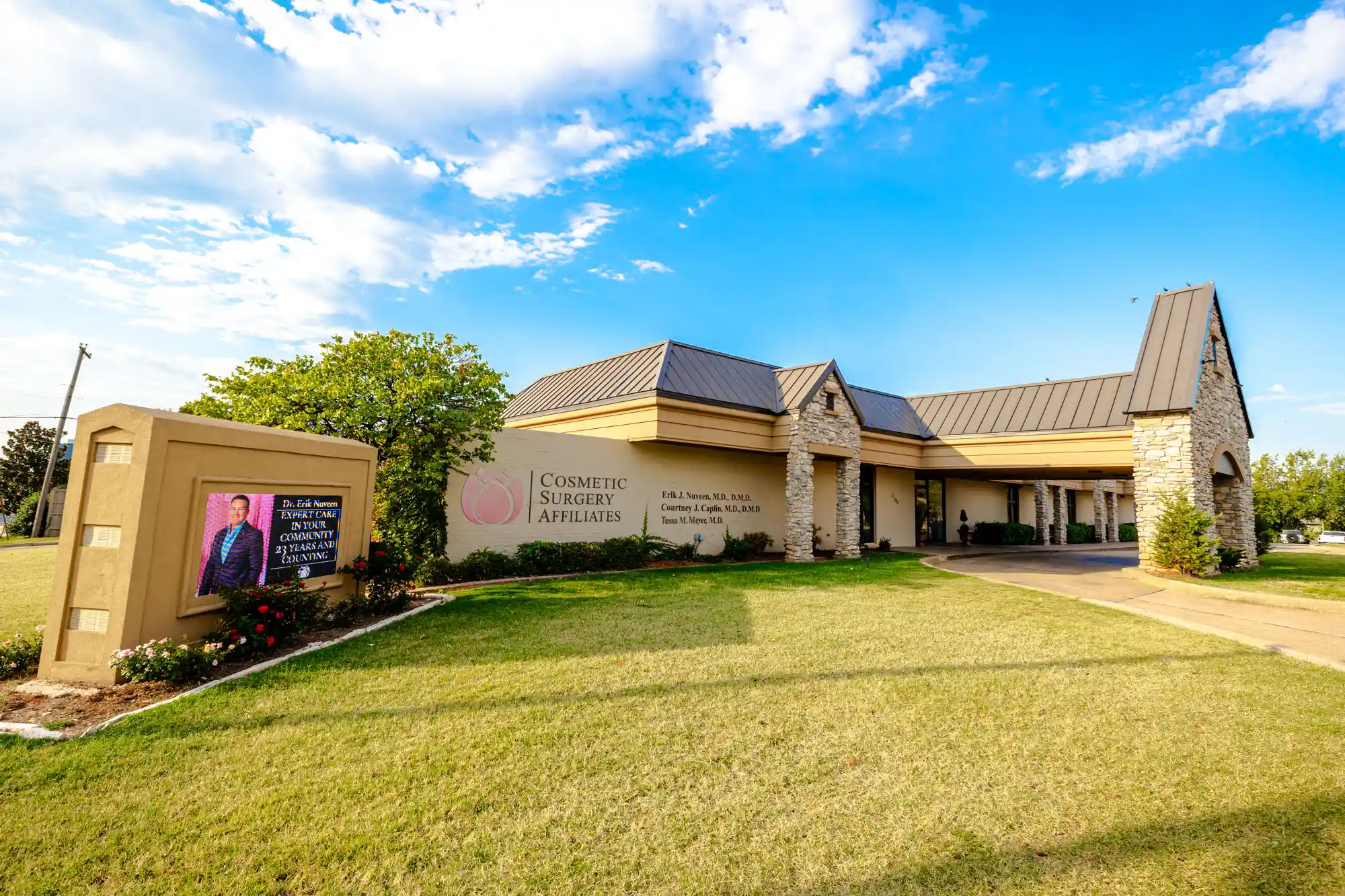
Offices in Oklahoma City and Jacksonville
This procedure is available at both Cosmetic Surgery Affiliates locations, in Oklahoma City and Jacksonville, Florida. Book your consultation at whichever office is closer to you, and our team will take it from there.
Both Halves Planned Together
We treat the waist and the hips as one design problem, because volume added without narrowing the middle rarely gives the shape patients want.
Fat or Implants, Your Frame Decides
We offer both, so slimmer patients are not told to gain weight and patients with donor fat are not sold a device.
Straight About Limits
We explain what your frame allows before surgery, including the things we do not perform, rather than overselling the result.
Every contouring procedure is performed by a board-certified surgeon in an accredited surgical facility, with your treatment areas and volume plan confirmed with you before the day of surgery.
MTF Body Contouring FAQs
Sometimes, and it can be a good combination. An implant provides the base volume while fat smooths the transitions around it. Your surgeon will tell you whether your tissue supports both.
Body and chest work can often be combined, depending on total operating time. Facial surgery is usually scheduled separately because it heals on a different timeline.
It can. Transferred fat responds to weight loss the way the rest of your fat does, so a stable weight protects your shape. Implants hold their volume regardless.
Look for board certification, an accredited surgical facility, and a surgeon who will tell you plainly that fat is placed subcutaneously rather than in the muscle. Ask to see results at three months or later, from patients whose frame resembles yours.
It depends on your donor supply and what your tissue will support. Overfilling reduces how much fat survives, so there is a practical ceiling per session and a second transfer is always possible later.
That is the goal, and it comes from proportion rather than maximum volume. We size the hips and buttocks to your frame, since curves that outpace your build are what make work look obvious.
Give it a couple of weeks and check with your surgeon. Sitting for a long flight puts pressure exactly where it should not go, and immobility raises clot risk after any procedure.
There is no fixed replacement schedule, and many last for years. Some patients revise later if an implant shifts or their goals change.
READY WHEN YOU ARE
Ready to See What Is Possible?
Ready for softer, more balanced curves? Schedule a consultation to map out your plan.