
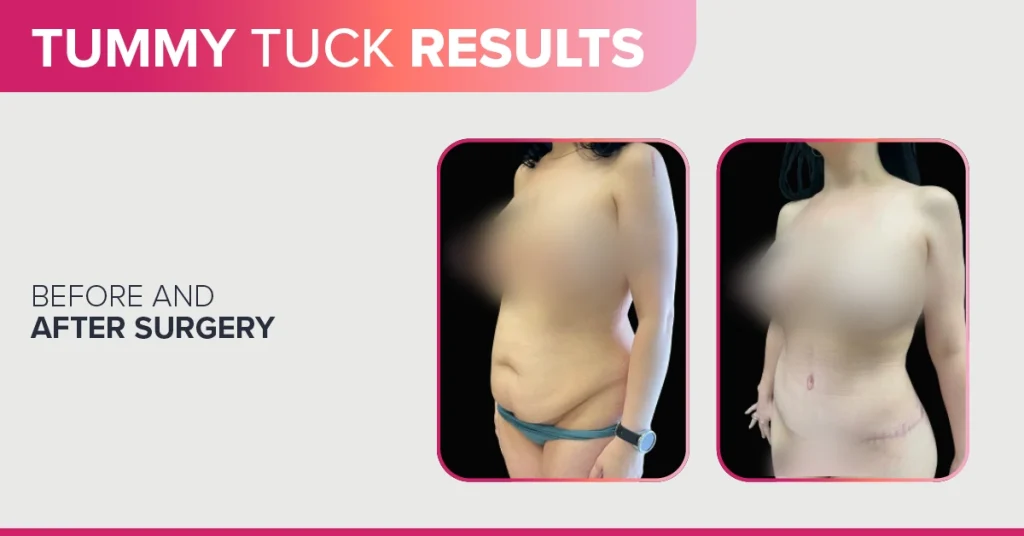
Before-and-after photos and surgery videos are how most people first picture a tummy tuck on their own body. They can be genuinely helpful, but only if you know how to read them. A polished gallery shot taken in flattering light tells a very different story than what you’ll see in your own mirror at week three.
More than 1 million abdominoplasty procedures were performed worldwide in 2024, according to ISAPS. That’s a lot of people looking at the same galleries you are, trying to figure out what’s realistic and what’s marketing. Photos and videos can answer that question, or quietly mislead you, depending on how you approach them.
The board-certified cosmetic surgeons at Cosmetic Surgery Affiliates in Oklahoma City have performed more than 3,000 body-contouring procedures. They’ve watched plenty of patients move from curious about photos to confident in a real plan.
This article shows you how to read before-and-after results and what a tummy tuck looks like in a surgery video. It also covers what healing feels like stage by stage, and how to set expectations you’ll be happy with.
Key takeaways
- A trustworthy before-and-after set uses consistent lighting, angle, and posture in both photos, and names how far out from surgery the “after” was taken, since swelling can hide the real contour for months.
- Surgery videos are educational, not predictive. They show muscle repair, skin removal, liposuction, and belly-button reshaping, but your own result depends on your anatomy and goals, not the patient on screen.
- Healing happens in stages: a hunched, swollen first week, a gradual return to desk work around two weeks, and a contour that keeps refining over six to twelve months as swelling resolves and the scar matures.
- A tummy tuck is a contouring procedure, not a weight-loss tool. It removes loose skin and repairs separated muscles, but it works best when you’re already at or near a stable goal weight.
- Compare results from patients with a similar starting point to yours. Then bring your questions to a consultation, where a surgeon can assess your actual anatomy.
How can you tell if a tummy tuck before and after a photo shows real results?
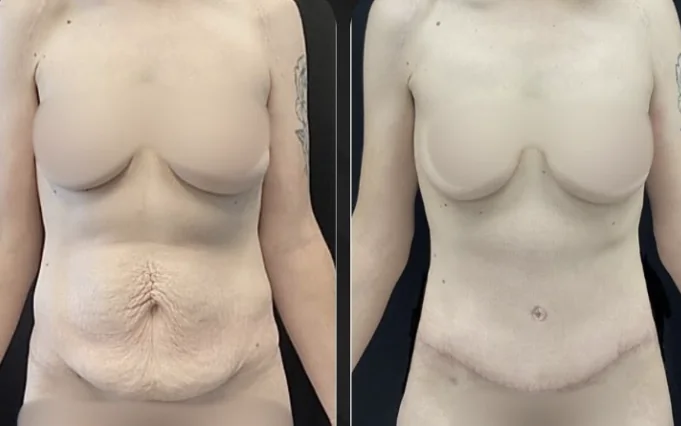
A genuinely useful before-and-after photo is boring in all the right ways. Same lighting, same camera angle, same posture, same distance. When those things match, you’re seeing a real change in the body. When they don’t, you might be seeing a change in the photography.
Lighting and angle do a surprising amount of heavy lifting. Harsh overhead light in the “before” and soft, flattering light in the “after” can exaggerate a result that’s actually modest. The American Society of Plastic Surgeons points out that a change in pose, lighting, makeup, or clothing can fake improvement that surgery didn’t create.
Two details reward a closer look: the belly button and the scar. A natural-looking navel sits in a soft, slightly hooded shape rather than a tight, obviously cut circle. A well-placed scar rides low, along the bikini line, where underwear or a swimsuit can hide it.
Then there’s timing, which is the detail most galleries leave out. An “after” shot taken at two or three months still carries swelling that softens the true contour. Here’s what that means for you. An honest gallery tells you when each photo was taken, so you’re comparing your future self to a healed result, not a mid-recovery one.
When you’re scanning a gallery, look for a few specific things:
- Matching lighting, angle, posture, and distance between the two photos
- A belly button that looks natural, not tightly stamped on
- A low scar positioned along the bikini line
- A stated timeframe for the “after” photo, ideally six months or later
- A “before” patient whose body type and concerns resemble your own
That last point matters most. Cosmetic Surgery Affiliates keeps a real gallery of tummy tuck results so you can find a starting point that looks like yours.
Seeing patients who began where you are turns a pretty picture into useful information. You can browse the practice’s abdominoplasty before-and-after photos to compare. One patient in her 40s paired liposuction with a tummy tuck to smooth her abdomen and flanks.
Another patient addressed a lingering C-section scar, and a postpartum patient had her separated muscles reinforced with a mesh support during her tummy tuck. If you spot a result that looks like the outcome you’re picturing, schedule a consultation to ask what made it possible. Once you trust the photos, the next question is usually about the surgery itself.
What does a tummy tuck actually look like in a surgery video?

If you’ve watched an abdominoplasty video or a tummy tuck surgery video online, you’ve probably noticed it looks more methodical than dramatic. A tummy tuck is a sequence of deliberate steps, and understanding them makes the before-and-after make sense. What a video can’t show you is your result, since every abdomen starts in a different place.
Most surgery videos move through the same core stages, so it helps to know what each one is doing.
| Type of tummy tuck | Best suited for | Incision | Typical recovery |
|---|---|---|---|
| Mini | A small pooch of skin and fat below the belly button | Short incision along the bikini line | Return to work around two weeks, exercise around six weeks |
| Full | Loose skin and fat across the whole abdomen, with separated muscles | Incision between the belly button and pubic region | Desk work around two weeks, rigorous activity around twelve weeks |
| Extended | Significant loose skin after major weight loss, including love handles and waist | Incision from hip bone to hip bone | Work around four to six weeks, strenuous exercise around twelve weeks |
Muscle repair
The step that changes the most on video is muscle repair. Pregnancy and weight changes can separate the vertical abdominal muscles, a condition called diastasis recti. That separation leaves a stubborn bulge no amount of crunches will flatten. During surgery, those muscles are stitched back toward the midline, rebuilding a firmer core wall.
For patients whose muscles have weakened significantly, a mesh reinforcement can add extra support to that repair. It’s one of the reasons a flat result holds its shape rather than bulging again under pressure.
Skin, fat, and liposuction
Next comes the part most people picture: removing the excess. The surgeon trims loose skin between the navel and the pubic line, and often uses liposuction to sculpt the flanks and waist at the same time. Combining the two, sometimes called lipoabdominoplasty, is how a video goes from “flatter” to “contoured.”
How much is removed depends entirely on how much you have. A mini tummy tuck addresses only the area below the belly button, while a full or an extended version reaches the upper abdomen too.
Reshaping the belly button
The belly button step is the one that surprises people. In a full tummy tuck, the navel stays attached to its own stalk while the skin around it is redraped. Then the belly button is brought out through a new opening and reshaped. Done well, it’s the difference between a natural result and an obvious one.
That attention to small details is exactly what separates a skilled result from a rushed one. Which brings up the question everyone actually wants answered: what does healing really feel like?
What can you realistically expect at each stage of healing?
Recovery isn’t a single moment, it’s a series of them, and knowing the sequence keeps the slow early days from feeling discouraging. The first week looks nothing like the final result, and that’s completely normal. Your body needs time to settle before the “after” you’re picturing shows up.
Here’s a realistic map of how the stages tend to unfold.
| Stage | What you’ll typically notice |
|---|---|
| First week | Swelling, a hunched posture, and a compression garment. Rest is the job, and walking feels stiff at first. |
| Weeks two to six | Many people return to desk work in around two weeks. Swelling starts easing and standing upright gets easier. |
| Months two to six | Swelling keeps resolving, the contour becomes clearer, and the scar begins to soften and flatten. |
| Six to twelve months | The scar continues to fade and the final shape settles into place. |
The surgeons at Cosmetic Surgery Affiliates schedule routine follow-ups through these months, so your healing gets tracked the whole way. That steady check-in is part of why the slow stretches feel less uncertain.
Swelling is the main reason patience pays off. It tends to peak in the first several days, then recedes slowly, which is why your midsection can look fuller than expected early on. Wearing your compression garment as directed helps the swelling settle and lets your skin re-drape smoothly over your new contour.
The emotional arc matters too. It’s genuinely common to feel a little deflated in week one, when you’re swollen and moving carefully, before the payoff arrives. That dip is part of the process, not a sign something went wrong.
Keith, who had excess skin removed from his stomach, described the whole arc from first visit to healing:
“I had a procedure to remove excess skin from my stomach, and from the very first consultation through recovery, the entire team made the process smooth, comfortable, and reassuring.”
Because the timeline stretches over months, the smartest move is to think in stages rather than days. To keep the financial side from adding stress to that timeline, you can view financing options through PatientFi and Alphaeon. Understanding the healing curve also makes the next topic easier: keeping your expectations grounded.
How do you set realistic expectations and avoid disappointment?
The happiest patients tend to be the ones who understood what a tummy tuck could and couldn’t do before they ever booked it. This is a contouring procedure, not a shortcut. It reshapes what’s there rather than shrinking the number on the scale.
A tummy tuck is not a weight-loss tool or a substitute for diet and exercise. The American Society of Plastic Surgeons is clear on that point: it removes loose skin and repairs separated muscles, which is different from losing fat throughout the body. That’s why surgeons recommend being at or near a stable goal weight first.
It also helps to picture a realistic result rather than a flawless one. A tummy tuck delivers a flatter, firmer, more proportional midsection, not a board-flat stomach with zero softness. Chasing that kind of flawless ideal is how a genuinely good outcome starts to feel like a letdown.
A few factors shape how well your result holds up over time:
- Keeping your weight stable, since significant gain can stretch the remaining skin
- Waiting until you’re done having children, because pregnancy re-stretches the abdomen
- Supporting your skin with hydration, good nutrition, and sun protection
- Following your recovery instructions closely in those first weeks
Waiting until your family is complete is worth underlining. Triple board-certified, fellowship-trained cosmetic surgeon Dr. Erik Nuveen has performed more than 27,000 major cosmetic surgeries since 2003. Much of his work is with patients finishing a major weight-loss chapter, where timing is a big part of protecting the result. Letting your weight settle first protects your contour for years to come.
As with any surgery, a tummy tuck carries potential concerns, and your surgeon reviews yours individually. The extent of the procedure influences your recovery and the small risks that come with it, which is why a candid conversation matters more than any gallery. If loose skin is your main worry, this honest guide to saggy skin after a tummy tuck is a helpful next read. And that honest conversation is exactly what a good consultation is built for.
What should you expect at your tummy tuck consultation?
A consultation is where photos and videos finally become personal. This isn’t only a chance for the surgeon to evaluate you. It’s equally your chance to evaluate them, their results, and whether the plan they describe fits what you actually want.
Expect a real, two-way conversation. Your surgeon assesses your skin, your muscle tone, and how much excess tissue you’d like to address, then explains which approach, mini, full, or extended, suits your anatomy. You share your goals, your medical history, and any past surgeries so the plan is built around you.
This is also the moment to review before-and-after photos together, especially of patients who started where you are. Bring your questions about scar placement, recovery time, and what a realistic result looks like for your body. Nothing is off limits, and an experienced surgeon would rather you ask now than wonder later. Wherever you have surgery, choose an accredited surgical facility and a board-certified surgeon, since those two credentials are the baseline for a safe result.
Francesca, who chose a tummy tuck after weighing her options carefully, valued the honesty most:
“Dr. Meyer was absolutely amazing. She made me feel comfortable and confident from day one. She is warm, fun, and incredibly honest, always putting your best interests first.”
Both in-person visits at the Oklahoma City office and virtual consultations are available, so you can start the conversation from home if you’re traveling in or simply more comfortable that way. The Oklahoma City office is also an easy drive for patients from Edmond, Norman, and the surrounding metro. To make the cost side less stressful, flexible financing through PatientFi and Alphaeon lets you spread payments into a plan that fits your budget. When you’re ready to talk specifics, you can request an appointment and bring every question on your list.
Conclusion
Before-and-after photos and surgery videos are powerful tools when you read them with a critical eye. That means matching lighting and timing, comparing similar body types, and treating videos as education rather than a preview of your result. A tummy tuck can deliver a flatter, firmer midsection, but the outcome you’ll love is the one planned around your real anatomy and goals.
That’s the whole point of doing your homework before you sit in a consultation room. At Cosmetic Surgery Affiliates, every patient deserves to feel heard, respected, and confident in the choice they make, whether that’s moving forward or simply learning more.
Frequently asked questions
How much weight can you lose from a tummy tuck?
A tummy tuck isn’t designed for weight loss, so the scale usually moves only a little from the skin and fat that’s removed. Its real value is contour, a flatter and firmer midsection, rather than a lower number. The best results come when you’re already at or near a stable goal weight.
Does a tummy tuck get rid of stretch marks?
Stretch marks located on the skin that’s removed, usually below the belly button, come off with that skin. Marks above the navel or outside the removal area typically remain, though they may sit on a flatter surface afterward. Your surgeon can tell you which of yours are likely to go during a consultation.
Is it safe to get pregnant after a tummy tuck?
Pregnancy after a tummy tuck is possible, but it can stretch the skin and separate the repaired muscles again, which may soften your result. For that reason, surgeons generally encourage finishing your family before scheduling. If pregnancy is still a possibility, it’s worth discussing your timeline openly.
What is the difference between a mini and full tummy tuck?
A mini tummy tuck focuses only on the area below the belly button, using a shorter incision and little to no muscle repair. A full tummy tuck addresses the entire abdomen, tightens separated muscles, and repositions the belly button. The right choice depends on how much loose skin you have and where it sits.
Will a tummy tuck repair separated abdominal muscles from pregnancy?
Yes. Repairing separated muscles, known as diastasis recti, is a core part of a full tummy tuck, done by stitching the muscles back toward the midline. For muscles that have weakened significantly, some board-certified cosmetic surgeons also offer a mesh reinforcement to add durable support to that repair.
How long do tummy tuck drains need to stay in place?
When drains are used, they usually stay in for about one to two weeks, until the daily fluid output drops to a low, steady level. Your surgeon removes them at a follow-up visit once you’re ready, and the process is quick. Not every patient needs them for the same length of time.
When can you return to a desk job after a tummy tuck?
Many people return to a non-strenuous desk job around two weeks after surgery, depending on the type of tummy tuck and how they’re healing. A more extended procedure may call for a bit more time. Your surgeon gives you a personalized clearance based on your progress.
Does insurance cover any part of an abdominoplasty?
A cosmetic tummy tuck is generally considered elective, so insurance usually doesn’t cover it. Occasionally, a functional component, like a hernia repair, is evaluated separately by your provider. A consultation is the best place to sort out what applies to your specific situation, and flexible financing through PatientFi and Alphaeon can help with the rest.
When can you start exercising and lifting weights again?
Light walking is encouraged early to support circulation, but strenuous exercise and heavy lifting usually wait. After a mini tummy, it’s often around six weeks, while a full or extended procedure may take closer to twelve. Your cosmetic surgeon clears you for each stage based on how your recovery is going.
*Disclaimer: This content is for educational purposes only and does not constitute medical advice. A consultation with a qualified board-certified surgeon is required to determine the best treatment plan for your individual needs and any questions you may have about a medical condition or procedure.