

Before anyone books a tummy tuck, most people start with a more basic question first: would I even qualify for one? It is a fair thing to ask. Being a good candidate for tummy tuck is about more than wanting a flatter stomach, and knowing where you stand can save you a lot of second-guessing.
Plenty of people are asking the same question. According to ISAPS, surgeons performed 945,636 abdominoplasty procedures on women worldwide in 2024, making it one of the most requested surgical procedures for women. Most patients are not seeking weight loss. They are addressing loose skin or separated abdominal muscle after pregnancy or significant weight loss.
At Cosmetic Surgery Affiliates in Oklahoma City, this is a conversation our board-certified cosmetic surgeons have every week with patients from across the metro, including Edmond and Norman. We would rather tell you honestly whether the timing is right than rush you into surgery. In this article, you will learn what the real requirements are, whether a tummy tuck matches your concerns, and the honest pros and cons. You will also learn what recovery requires of you and how to know when you are ready.
Key takeaways
- Good candidates for a tummy tuck are at a stable weight, in generally good health, and finished having children. The procedure refines your contour, so it works best once your body has settled.
- A tummy tuck removes loose skin and tightens separated abdominal muscles, while liposuction only removes fat. Knowing which concern is yours points you to the right procedure.
- The main trade-offs are a permanent low scar and several weeks of limited activity, weighed against a flatter, firmer midsection and relief from issues like back strain tied to weakened core muscles.
- Being ready is as much practical as physical. Realistic goals, help at home for the first week or two, and a plan to keep your weight steady all protect your result.
What are the basic requirements to qualify for a tummy tuck?
A good tummy tuck candidate is not defined by one number on a scale. It comes down to a combination of health and timing factors that support a safe surgery and a lasting result. Here is what your surgeon looks for.
| Requirement | Why it supports a safe, lasting result |
|---|---|
| Stable weight | A steady weight for several months means your contour won’t shift after surgery |
| Healthy weight range | Being near a healthy weight keeps anesthesia and healing as low-risk as possible |
| Nicotine-free | Staying off cigarettes and vapes supports strong wound healing |
| Done having children | Finishing your family first protects the muscle repair from being stretched again |
| Well-managed health | Conditions like diabetes kept under control help your body heal predictably |
| Realistic, specific goals | Understanding what surgery can and can’t do sets you up to be happy with the result |
The weight piece matters most. As ASPS notes, a tummy tuck isn’t a substitute for weight loss, so anyone planning to lose a significant amount more is usually advised to wait until their weight is stable. Being in a healthy weight range also keeps the surgery itself as safe as possible, which is why your surgeon reviews it early.
Timing around pregnancy is just as important. Because a future pregnancy can stretch the repaired muscles again, finishing your family first protects your result for the long run. Staying nicotine-free for a few weeks on either side of surgery supports healthy healing too.
Your overall health rounds out the picture. Well-controlled conditions and a clear surgical history help your surgeon plan safely. Triple board-certified cosmetic surgeon Dr. Erik Nuveen and the team review any past abdominal surgeries and your health history during your visit to confirm the approach that fits you.
How do I know if a tummy tuck is the right solution for my concerns?
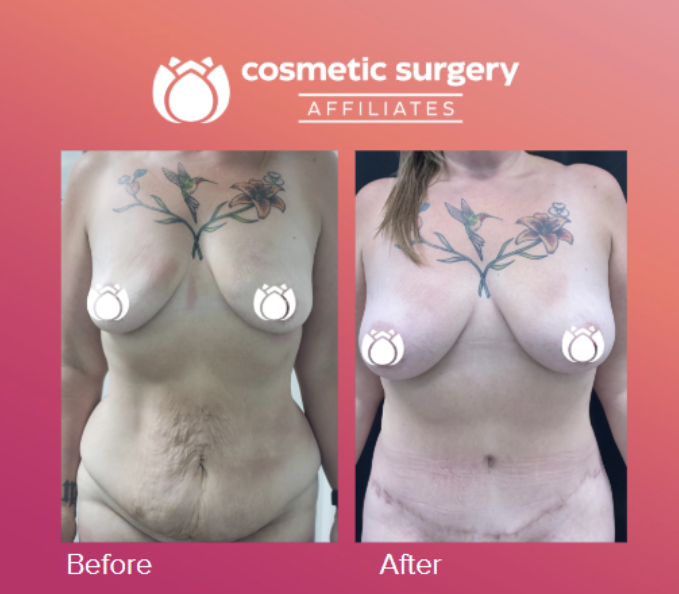
Meeting the health requirements matters, but a tummy tuck only makes sense if it fixes what’s actually bothering you. That comes down to what’s happening under your skin.
A tummy tuck does two things at once. It removes loose, hanging skin, and it stitches separated abdominal muscles back together, closing the gap many people develop after pregnancy. If your main issue is stubborn fat rather than loose skin, liposuction on its own may be the better fit.
Here’s a simple way to think about it. Firm, pinchable fat usually responds to liposuction, while skin that hangs or folds needs to be surgically removed. Many people have some of both, and combining the two in one procedure is common.
You may also hear about a panniculectomy, which removes an overhanging apron of skin for comfort and hygiene but doesn’t tighten muscle. For loose skin after major weight loss, dedicated excess skin removal can address that specifically. A tummy tuck is also not a weight loss procedure. If dropping significant weight is your goal, that comes first, and a tummy tuck handles the leftover skin afterward.
It’s completely normal to feel unsure which camp you fall into. That’s exactly what a consultation sorts out. Once you know a tummy tuck fits your concern, the honest question is whether the trade-offs are worth it.
What are the pros and cons of getting a tummy tuck?
Every surgery is a trade, and a tummy tuck is no exception. Weighing the upside against the realities is how you decide if it’s worth it for you.
| Pros | Cons |
|---|---|
| A flatter, firmer midsection | A permanent low scar across the lower belly |
| A tighter core and better posture | Several weeks of limited activity |
| Relief from back strain or leaking linked to weak muscles | Temporary numbness and swelling while you heal |
| Clothes fit more comfortably | A meaningful financial investment |
The benefits go beyond looks. A 2025 study of 78 women found real gains in body image and urinary symptoms after abdominoplasty, along with relief for the lower back. For patients whose core muscles are separated during pregnancy, tightening them restores support that diet and exercise simply can’t rebuild.
Joann, who paired her tummy tuck with liposuction, shared her experience:
“I’m very pleased with my tummy tuck and liposuction procedure! Dr. Nuveen and his team (Meg, Ashley, Amber) were so kind and helpful in answering questions. As soon as I saw the results during the follow up appointment I was delighted to see the smooth stomach!”
On the other side, a tummy tuck is real surgery, so the risks deserve a clear look. The reassuring part is that serious problems are uncommon.
A 2024 analysis of more than 55,000 procedures found an overall complication rate of 2.1%. Most issues that come up are minor and temporary, like swelling or a small pocket of fluid your body reabsorbs on its own.
The scar is the honest trade-off most people weigh. It runs low across the abdomen, usually hip to hip, and your surgeon places it so underwear or a swimsuit hides it. It fades over time, though it doesn’t disappear.
You may also notice some numbness across the lower abdomen at first. That’s a normal part of healing as the nerves settle, and sensation gradually returns for most people over the following months.
Then there’s cost, which can feel heavy alongside everything else. At Cosmetic Surgery Affiliates, a full tummy tuck ranges from $12,000 to $16,500. Because our surgeons often include liposuction in the treatment area, a combined tummy tuck with liposuction runs about $17,000 to $20,000.
Every price is a single, all-inclusive fee covering anesthesia, the facility, and your surgeon, with no surprise line items. To keep it manageable, you can view financing options through PatientFi and Alphaeon.
If the trade-offs feel worth it, the next thing to plan for is recovery.
What does tummy tuck recovery require of you?

Recovery is where a little patience pays off, and knowing the timeline ahead of time makes it far less daunting. Most of it is predictable, and your body does the real work.
| When | What to expect |
|---|---|
| First 1 to 2 weeks | Rest, short gentle walks, and standing slightly bent forward to ease tension on the incision |
| Weeks 2 to 4 | Many people return to a desk job, though strenuous activity is still off the table |
| Weeks 4 to 6 | Lighter activity gradually returns, but heavy lifting and strenuous exercise stay off the table until about 12 weeks |
| Weeks 6 to 8 | The compression garment comes off for most patients as swelling settles |
Your surgeon will likely have you wear a compression garment or abdominal binder for six to eight weeks. It supports your abdomen and helps prevent fluid buildup, so wearing it as directed helps your skin re-drape smoothly.
Time off work depends on your job. Desk roles often mean two to four weeks away, and physical jobs need longer. Planning that time in advance takes the stress out of it.
That hunched-over posture in the first couple of weeks is normal and temporary. It protects the muscle repair, and standing fully upright comes back as you heal. The early days can feel frustrating if you’re used to being independent, and that’s completely understandable. Once you know what recovery asks of you, the last question is a personal one.
Are you mentally and practically ready for a tummy tuck?
Being a candidate on paper is different from being ready in real life. Readiness is part mindset and part logistics, and both are worth an honest look.
Start with clear, specific goals. A tummy tuck gives you a flatter, firmer midsection and removes loose skin, though stretch marks above the belly button may remain. Knowing exactly what it can and can’t do is what leaves patients genuinely happy with the result.
The practical side matters just as much. It helps to have someone with you during the first several days, especially if you have young children or pets, since lifting is restricted early in recovery. Maintaining a stable weight and keeping up healthy habits afterward is what protects your result for years.
This is exactly what a consultation is for, and it works both ways. It’s your surgeon’s chance to assess your candidacy, and just as much your chance to decide whether the practice feels right.
At Cosmetic Surgery Affiliates, you can start with a virtual consultation from home or visit the Oklahoma City office in person. You will share your goals openly and leave with a personalized plan, no pressure to decide on the spot.
Katie, who researched surgeons across Oklahoma and out of state before deciding, shared her experience:
“Dr. Courtney Caplin is truly amazing and has so much talent! CSA was the third cosmetic surgery facility I received a consult from as I had done extensive research on procedures and doctors in the OKC area and out of state. The entire process was so simple, I shared my insecurities with my consulting team.”
Conclusion
Choosing a tummy tuck ultimately comes down to a few honest questions. Are you at a stable weight and in good overall health? Is loose skin or separated abdominal muscles what’s bothering you most? And do the improvements you’re hoping for feel worth the scar and recovery that come with surgery? If your answers point in the same direction, you may be a strong candidate.
Just as importantly, you deserve a surgeon who will be as honest with you as you are with yourself. At Cosmetic Surgery Affiliates, every patient is treated with respect, listened to carefully, and given the information they need to make a confident decision. Whether you’re ready to move forward or simply want straightforward answers to your questions, it all begins with a consultation.
Frequently asked questions
How long do I need to be at a stable weight?
Most surgeons look for a stable weight held for about three to six months. That tells them your contour won’t shift much after surgery, which protects your result. Small fluctuations are fine. Big swings are what you want to avoid.
Can I have a tummy tuck if I plan to get pregnant later?
You can, but it’s usually better to wait until you’re finished having children. A future pregnancy can stretch the repaired muscles and skin again, softening your result. If more kids are in your near future, your surgeon may suggest timing surgery for afterward.
Do I have to quit smoking before a tummy tuck?
Yes, staying nicotine-free before and after surgery matters because it supports strong, healthy wound healing. Surgeons typically ask you to stop all nicotine, including vapes, for several weeks on each side of the procedure. It’s one of the most impactful things you can do for a smooth recovery.
What’s the difference between a tummy tuck and liposuction?
Liposuction removes stubborn fat but doesn’t tighten skin or muscle. A tummy tuck removes loose skin and repairs separated abdominal muscles, and it often includes liposuction for extra contouring. Which one you need depends on whether your main concern is fat, skin, or both.
Will a tummy tuck get rid of my stretch marks?
It can remove stretch marks on the lower skin that gets taken away, but marks above the belly button usually stay. The main goal is removing loose skin and tightening the core, with some stretch mark improvement as a bonus. Your surgeon can tell you what to expect based on your skin.
How long is recovery after a tummy tuck?
Most people take two to four weeks off work, and longer for physically demanding jobs. You’ll wear a compression garment for six to eight weeks and avoid heavy lifting and hard exercise for about 12 weeks. Walking early and following your aftercare plan keeps recovery on track.
Does a tummy tuck leave a permanent scar?
Yes, there’s a permanent scar low across the abdomen, but it’s placed so underwear or a swimsuit covers it. It fades noticeably over time with good scar care. Your surgeon uses techniques to keep it as thin and low as possible.
Is a tummy tuck covered by insurance?
A standard cosmetic tummy tuck generally isn’t covered by insurance. A panniculectomy, which removes hanging skin for medical reasons, is sometimes covered when it’s considered medically necessary. Our team can help you understand which category your situation falls into.
Can I get a tummy tuck if I have diabetes or high blood pressure?
Often yes, as long as the condition is well controlled. Well-managed health helps your body heal predictably, so your surgeon will review your history and may coordinate with your regular doctor. The goal is making sure surgery is safe for you specifically.
How do I know if I’m a good candidate?
The clearest way is a consultation, where a board-certified cosmetic surgeon reviews your health, goals, and anatomy. Our team offers virtual and in-person visits, plus flexible financing through PatientFi and Alphaeon if cost is on your mind.
*Disclaimer: This content is for educational purposes only and does not constitute medical advice. A consultation with a qualified board-certified surgeon is required to determine the best treatment plan for your individual needs and any questions you may have about a medical condition or procedure.