
Most people researching a flatter stomach assume one procedure will do everything. It rarely works that way. A tummy tuck, liposuction, a combined approach, and non-surgical treatments each solve a different problem, and picking the wrong one is exactly why some patients end up disappointed.
Interest in these procedures is not slowing down. Surgeons performed nearly 1 million tummy tucks worldwide in 2024, according to ISAPS. The real question is not whether a tummy tuck works, but whether you need one at all. That comes down to two things your mirror can hint at but not confirm. How much of your concern is fat, and how much is loose skin or separated muscle?
At Cosmetic Surgery Affiliates in Oklahoma City, serving patients from Edmond, Norman, and across the metro, our board-certified cosmetic surgeons offer both surgical and non-surgical body contouring. The goal is always to match you to the least-invasive option that fits your anatomy. This article walks through when a tummy tuck is truly necessary, how combining it with liposuction works, where it fits after weight loss, and which non-surgical alternatives are worth a look.
Key takeaways
- A tummy tuck removes loose skin and repairs separated abdominal muscles, while liposuction only removes fat. Which of those is your main concern decides the procedure.
- Combining liposuction with a tummy tuck in one operation is called a lipoabdominoplasty. It sculpts the waist and flanks a standalone tummy tuck cannot reach, without raising your overall risk.
- Timing matters most after major weight loss. Letting your weight settle first protects your final contour.
- Non-surgical treatments like EmSculpt NEO, Renuvion, and Morpheus8 refine small fat pockets or mild skin laxity. None of them remove an apron of loose skin the way surgery can.
- A mini tummy tuck sits in the middle, addressing a lower-belly pouch with smaller incisions than a full procedure.
When do you actually need a tummy tuck instead of just liposuction?
To find out the answer, let’s start with what each procedure can and cannot do. A tummy tuck removes excess, hanging skin and tightens the abdominal wall, including separated muscles. Liposuction does one thing well: it removes stubborn fat that resists diet and exercise. It cannot tighten loose skin or repair muscle.
That distinction is everything. If your concern is a soft layer of fat you can pinch, liposuction alone may be enough. If you have an apron of skin left after weight change or pregnancy, removing fat underneath it can actually leave the skin looser than before.
| Concern | Liposuction alone | Tummy tuck |
| Stubborn fat pockets | Yes | Yes (included in the treatment area) |
| Loose, hanging skin | No | Yes |
| Separated abdominal muscles | No | Yes |
| Best skin elasticity needed | High | Not required |
Skin elasticity is the deciding factor. There is a simple check you can do at home: gently pinch a fold of lower-belly skin, pull it away, and let go. Skin that snaps back quickly has the elasticity to shrink after liposuction. Skin that settles back slowly or leaves a fold usually needs to be removed surgically.
Then there is the muscle question. Diastasis recti is the separation of the two vertical abdominal muscles down the middle. It affects up to 36 percent of women three years after giving birth, according to a 2024 study. Those muscles do not rejoin on their own, and no amount of core work fully closes a true separation. Liposuction cannot touch it, because the bulge comes from below the fat layer, not the fat itself.
So if your stomach still rounds outward even when you are near your goal weight, the cause may be muscle, not fat. If you are weighing the two procedures and want a straight answer about which one your body actually calls for, reach out to discuss your options with a board-certified cosmetic surgeon.
What are the benefits and risks of combining a tummy tuck with liposuction?
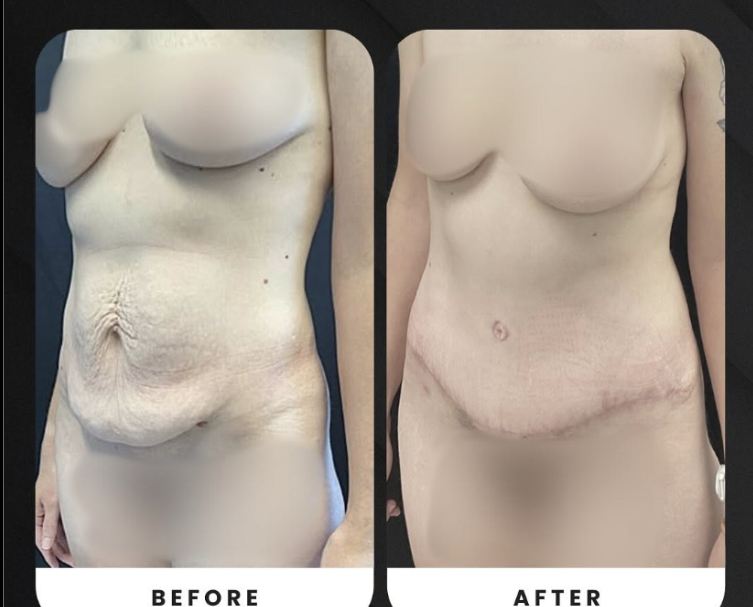
For many patients, the best result comes from doing both at once. Combining liposuction with a tummy tuck in a single operation is often called a lipoabdominoplasty. In plain terms, the surgeon uses liposuction to sculpt the waist, flanks, and upper abdomen, then removes loose skin and tightens the muscle in the same session.
The reason surgeons combine them is simple: a tummy tuck alone handles skin and muscle beautifully, but it does not slim the sides or contour the whole midsection. Liposuction fills that gap, giving a smoother, more three-dimensional shape.
A common worry is whether stacking two procedures doubles the danger. The reassuring news is that when an experienced body-contouring surgeon does both together, the combination does not raise your overall risk. Careful surgical planning keeps the blood supply to your skin protected. Your surgeon evaluates your health and goals first to confirm a combined approach is the safe choice for you.
There is also a practical payoff. Every tummy tuck we perform already includes liposuction of the treatment area, and our surgical fees are single, all-inclusive prices covering anesthesia, facility, and professional fees.
A full tummy tuck with liposuction of one area runs $17,000 to $20,000 as one bundled fee, compared with $12,000 to $16,500 for a full tummy tuck on its own. Doing both in one operation means you pay once for anesthesia and the facility, which is generally more economical than staging them as separate surgeries months apart.
Recovery is one timeline, not two. A tummy tuck at our Oklahoma City office takes around 90 minutes under general anesthesia, and adding liposuction extends the operative time modestly without doubling your downtime. Most patients plan for a few days of rest before easing back into light activity, then a gradual return over several weeks. One surgery, one recovery, and a more complete result is why so many patients choose the combined path.
How does a tummy tuck fit into major weight loss or bariatric surgery?
Reaching a major weight-loss goal is a real achievement, and it often leaves behind loose skin that no workout can tighten. Many patients come to us after bariatric surgery or after using GLP-1 weight loss injections like semaglutide or tirzepatide, ready to address the skin that remains.
Timing is the single most important decision here. Letting your weight stabilize first protects your final contour, so surgeons generally recommend reaching a stable weight and holding it before body contouring. After bariatric surgery, that usually means waiting until your weight has plateaued, and after childbirth, waiting at least six months and until you have finished breastfeeding. A settled weight gives your surgeon a reliable canvas to work with.
When skin laxity wraps around the whole midsection, a standard front-only tummy tuck may not be enough. That is where a 360-degree body lift comes in, removing a continuous belt of loose skin around the waistline. For patients whose main concern is the skin itself after significant weight loss, excess skin removal surgery targets exactly that.
Triple board-certified, fellowship-trained cosmetic surgeon Dr. Erik Nuveen has performed more than 27,000 major cosmetic surgeries since 2003, with massive weight-loss management as one of his two areas of focus. That kind of experience matters when the goal is contouring a body that has been through a big change.
Pregnancy adds its own layer. A mommy makeover combines several customized procedures in one plan, commonly a tummy tuck with breast surgery and targeted liposuction. It restores the areas most affected by pregnancy and weight change. Our mommy makeover runs $19,000 to $30,000, while a circumferential body lift for full-torso skin laxity runs $20,300 to $25,000.
Francesca, who had a breast lift and tummy tuck combined, shared her experience:
“I had a breast lift and tummy tuck with Cosmetic Surgery Affiliates in OKC, and I couldn’t be happier with my experience. Dr. Meyer was absolutely amazing—she made me feel comfortable and confident from day one.”
Cost should never be the reason you delay a plan that is right for you. To keep your options open, you can explore flexible financing through PatientFi and Alphaeon and choose a payment plan that fits your budget.
What are the best non-surgical and minimally invasive alternatives to a tummy tuck?
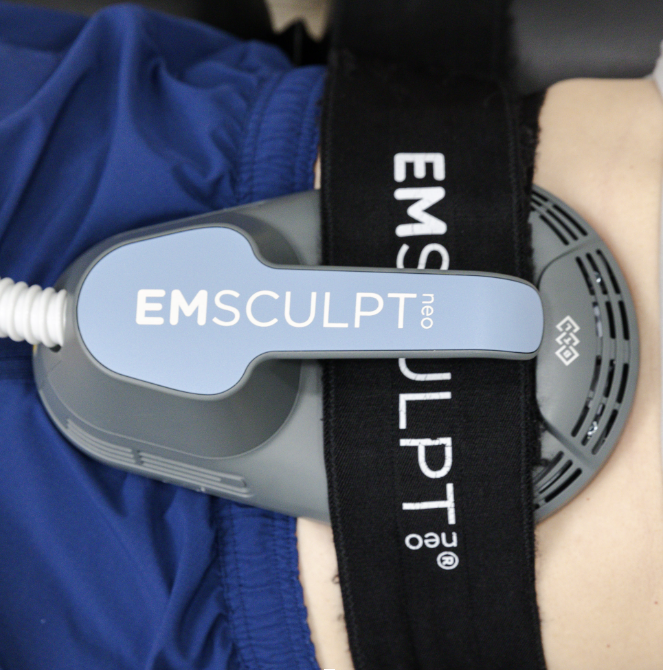
Non-surgical body contouring has grown fast, with more than 700,000 non-surgical fat reduction treatments performed worldwide in 2024, according to ISAPS. These treatments have a real place, but it helps to be clear-eyed about what they can and cannot do.
Devices like CoolSculpting, SculpSure, and Kybella reduce small, pinchable pockets of fat, typically trimming a modest amount from a treated area. They work best for someone already near their goal weight with good skin quality. What none of them can do is remove loose, hanging skin or repair separated muscle, which is the line between a non-surgical touch-up and a tummy tuck.
Muscle-toning devices are one more category to know about, and they target muscle and fat rather than skin.
EmSculpt NEO, for example, builds muscle and reduces fat in about 30-minute sessions. A 2023 review of similar HIFEM devices found measurable muscle gain and fat loss, though this kind of toning will not remove loose skin.
At Cosmetic Surgery Affiliates in Oklahoma City, the in-house alternatives focus on skin tightening rather than skin removal. For mild skin laxity, Renuvion uses helium plasma energy to tighten skin with less downtime than surgery. It can even be paired with liposuction in the same visit.
Morpheus8 takes a different route, combining microneedling with radiofrequency to firm and refine the skin’s surface. It works on texture and firmness, not deeper fat or muscle.
| Option | What it does best | Downtime |
|---|---|---|
| EmSculpt NEO | Tones muscle, reduces modest fat | Minimal |
| Renuvion | Tightens mild to moderate loose skin | Short |
| Morpheus8 | Refines skin texture and firmness | Short |
| Mini tummy tuck | Lower-belly pouch and small skin excess | Moderate |
| Full tummy tuck | Loose skin plus separated muscle | 2 to 4 days before light activity |
Pricing for these treatments reflects how targeted they are. Renuvion runs $3,500 to $6,500 for the first area and $1,500 to $4,500 for each additional area, and Morpheus8 runs $3,600 to $6,600 for a package of three sessions.
There is also a genuine middle ground between non-surgical treatment and a full procedure, though that middle ground is in scope and recovery rather than price. A mini tummy tuck addresses a lower-belly pouch with smaller incisions and less healing time, and runs $11,000 to $14,000. The ideal candidate is someone at a stable weight with good skin elasticity above the navel and excess limited to below it. If your laxity extends above the navel or you have significant muscle separation, a full tummy tuck remains the more reliable choice.
Here is the honest bottom line. Non-surgical options are body contouring, not weight loss, and they shine on small refinements near your goal weight. When the concern is real loose skin or a separated core, surgery is still the gold standard for a lasting change in shape.
What should you expect at your consultation?
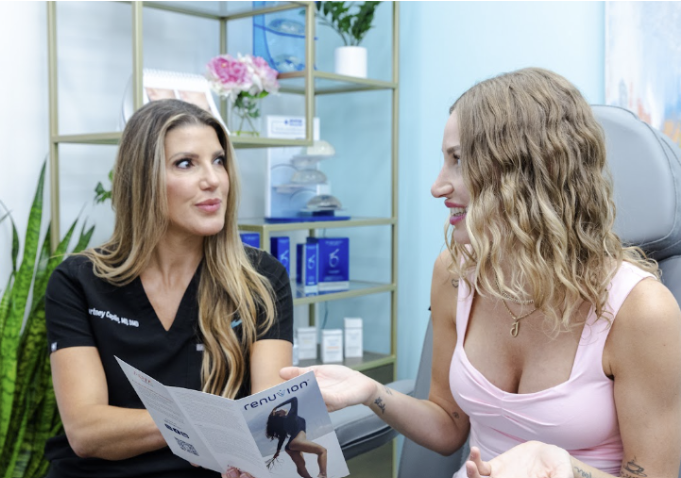
A consultation is not just the surgeon sizing you up. It is equally your chance to evaluate them, ask hard questions, and decide whether the fit feels right. There is no pressure to commit, and nothing is off limits.
During the visit, you sit and talk directly with a doctor about your concerns and goals. They assess your skin quality, muscle tone, and how much fat and loose skin are involved, then walk you through both surgical and non-surgical options tailored to your anatomy. Reviewing before-and-after result galleries together is one of the most useful parts, since it grounds the conversation in real outcomes rather than promises.
At Cosmetic Surgery Affiliates, both in-person and virtual consultations are available. That means you can start the conversation from home, whether you are in Edmond, Norman, or Moore, or traveling in from outside the Oklahoma City metro. Cost comes up here too, and it should. Flexible financing through PatientFi and Alphaeon can make a plan more accessible, with pre-qualification that does not affect your credit score.
Katie, who compared practices across Oklahoma and beyond before deciding, shared her experience:
“CSA was the third cosmetic surgery facility I received a consult from as I had done extensive research on procedures and doctors in the OKC area and out of state. The entire process was so simple.”
Conclusion
Choosing between a tummy tuck, liposuction, a combination of the two, or a non-surgical option comes down to two questions. How much loose skin and muscle separation do you have, and how close are you to a stable weight? Fat responds to liposuction, loose skin and separated muscle call for surgery, and non-surgical treatments handle the smaller refinements in between. Knowing which camp your concern falls into turns a confusing set of choices into a clear, personalized plan.
At Cosmetic Surgery Affiliates, our board-certified cosmetic surgeons believe every patient should feel heard, respected, and genuinely confident in their choice. That belief shapes every conversation we have. Whenever you are ready to map out the right path for your body, you can book your consultation and talk it through with someone who has seen it all.
Frequently asked questions
What is the difference between a tummy tuck and a panniculectomy?
A panniculectomy removes a hanging apron of excess skin and fat, usually for medical reasons, without tightening the abdominal muscles. A tummy tuck removes loose skin and also repairs separated muscles for a firmer, more contoured result. They are sometimes combined depending on your goals.
Can exercise alone fix separated abdominal muscles?
Core exercises can strengthen the surrounding muscles and help support your posture, but they cannot close a true muscle separation. Once the connective tissue down the middle has stretched apart, it does not fully rejoin on its own. Surgical repair during a tummy tuck is what physically brings the muscles back together.
How much weight can I expect to lose from a tummy tuck?
A tummy tuck is a contouring procedure, not a weight-loss method. Most patients see only a small change on the scale, since the goal is removing loose skin and tightening muscle rather than reducing overall weight. The visible change in your shape is usually far more dramatic than the number.
Is it safe to get pregnant after having a tummy tuck?
Yes, pregnancy after a tummy tuck is generally safe, though it can stretch the repaired muscles and skin again. Many patients choose to wait until they are done having children so their result stays stable. If you are planning a future pregnancy, share that at your consultation so your surgeon can advise on timing.
Will a tummy tuck get rid of my stretch marks?
A tummy tuck removes the stretch marks that sit on the section of loose skin taken away, usually below the navel. Stretch marks above that area may remain, though they can appear tighter as the skin is smoothed. Your surgeon can show you during the consultation which marks are likely to be removed.
Can I use insurance to cover any part of these procedures?
Cosmetic tummy tucks and liposuction are elective and generally not covered by insurance. In some cases, a panniculectomy for a documented medical issue may be partially covered. It is worth checking with your insurer, and our team can help you understand your financing options either way.
How long do I have to wait after bariatric surgery to get a tummy tuck?
Most surgeons recommend waiting until your weight has stabilized, which often takes 12 to 18 months after bariatric surgery. A stable weight protects your contour so your result holds. Your surgeon confirms the right timing based on your progress and overall health.
Does CoolSculpting tighten loose abdominal skin?
No, CoolSculpting only reduces small pockets of fat and does not tighten loose skin. If skin laxity is your main concern, a skin-tightening treatment or a tummy tuck is a better match. A consultation helps clarify whether your issue is fat, skin, or both.
Can Morpheus8 or other radiofrequency treatments replace a mini tummy tuck?
Radiofrequency treatments like Morpheus8 firm and refine the skin’s surface, but they cannot remove excess skin or repair muscle the way a mini tummy tuck can. For a lower-belly pouch with real skin excess, a consultation can help you compare a mini tummy tuck against non-surgical options.
*Disclaimer: This content is for educational purposes only and does not constitute medical advice. A consultation with a qualified board-certified surgeon is required to determine the best treatment plan for your individual needs and any questions you may have about a medical condition or procedure.