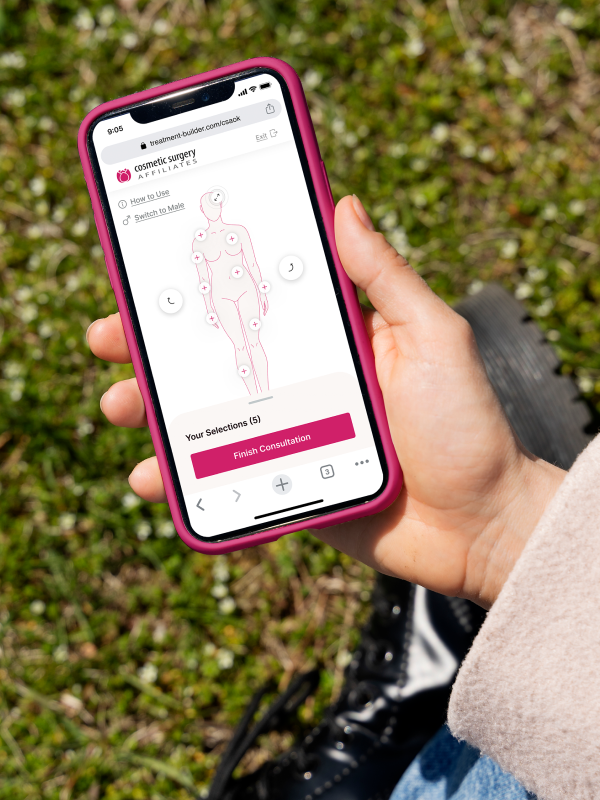


You’ve done the research. You know a tummy tuck can flatten your stomach and tighten the muscles underneath. But there’s one question that keeps circling: what actually happens once you’re on that operating table?
The gap between deciding you want this and understanding what “this” involves can feel huge. You’re not alone in wanting a clear picture.
Abdominoplasty ranks as the 4th most common cosmetic surgical procedure worldwide according to ISAPS. That demand means surgical techniques have been refined over decades.
At Cosmetic Surgery Affiliates in Oklahoma City, our board-certified cosmetic surgeons have performed over 26,000 major cosmetic surgeries. This article walks through every step of a tummy tuck, from anesthesia to final closure. You’ll know exactly what happens in the operating room.
Key takeaways
- Your surgeon marks your body while you’re standing, maps out the incision plan, and administers general anesthesia before the first incision is made.
- The main incision runs hip to hip along the pubic crease, and a full tummy tuck includes a second incision around the belly button to allow repositioning.
- Muscle repair, called plication, stitches separated abdominal muscles back together along the midline, which is what creates the firm, flat wall underneath.
- Excess skin is pulled downward and trimmed, and liposuction is included in roughly 87 percent of cases to refine the surrounding contours.
- Closure uses multiple suture layers, and temporary drains reduce fluid buildup while a compression garment supports healing for the first month.
What preparation and setup happen right before a tummy tuck starts?
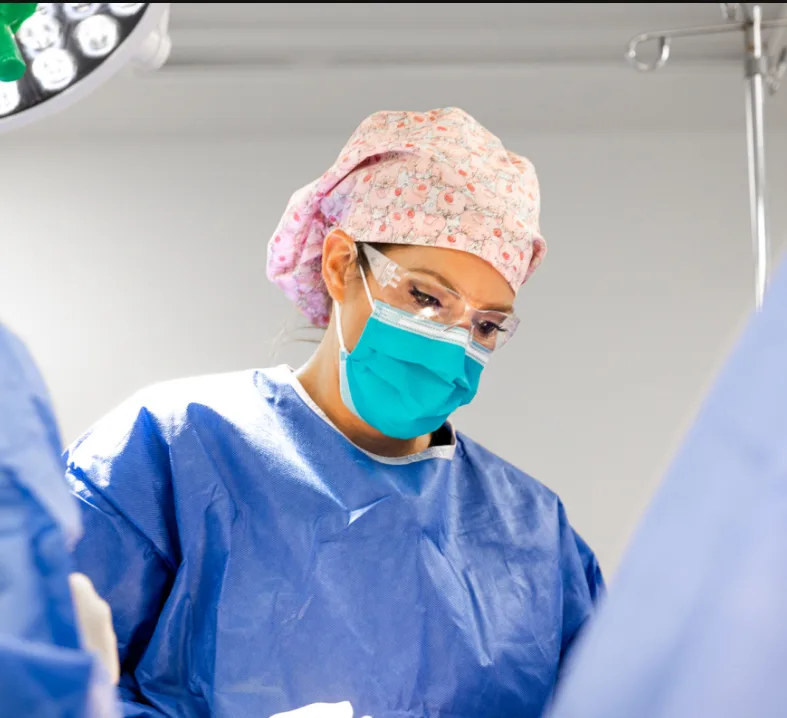
Before a single incision is made, your surgical team has already completed a carefully structured preparation process. These steps are not formalities, but a foundational part of ensuring that the procedure unfolds safely, efficiently, and exactly as planned. Skilled plastic surgeons in oklahoma city ok area treat this prep stage as seriously as the surgery itself, since the precision starts here.
Your surgeon marks your body while you’re still standing, because skin shifts when you lie down. Using a sterile marker, they outline the planned incision lines, the areas of excess skin, and key landmarks. These markings are your surgeon’s roadmap for the entire procedure.
Once you’re in the operating room, you’ll lie on your back with your arms resting on arm boards. General anesthesia is the standard for tummy tucks, meaning you’ll be completely asleep and won’t feel anything during surgery. For some patients, IV sedation may be an option depending on the scope of the procedure and their surgeon’s recommendation.
If liposuction is part of your treatment plan, your surgeon may perform it first. Liposuction is commonly combined with abdominoplasty to contour the flanks and refine areas where fat persists even after skin removal.
With your body marked, anesthesia administered, and the surgical plan confirmed, your surgeon is ready to begin. If you’re curious about what your own preparation would look like, schedule a consultation to discuss a personalized surgical plan.
How are incisions made during a tummy tuck?
The incision is where the procedure really begins, and its placement is one of the most important decisions your surgeon makes.
For a full tummy tuck, your surgeon makes a horizontal incision from hip bone to hip bone, following the natural crease above your pubic area. This positioning keeps the scar low enough that underwear or a swimsuit covers it completely. A study of nearly 9,000 cases found that 92% involved a full-length incision, reflecting how common this approach is.
A second, smaller incision is made around your belly button. This frees the navel from the surrounding skin so it can be repositioned later once the excess tissue is removed.
The length of the main incision depends on how much excess skin needs to be addressed. Patients with significant loose skin may need incisions that extend further toward the lower back.
| Feature | Full tummy tuck | Mini tummy tuck |
|---|---|---|
| Incision length | Hip to hip, along the pubic crease | Shorter, focused on the lower abdomen |
| Belly button | Repositioned through a new opening | Usually stays in place |
| Skin addressed | Upper and lower abdomen | Below the belly button only |
| Muscle repair | Full, from breastbone to pubis | Limited to below the navel |
A mini tummy tuck uses a shorter incision and typically doesn’t require repositioning the belly button. It works best for patients who only have a small amount of excess skin below the navel. If you’ve had a C-section, the mini tummy tuck incision is often made just below that existing scar, and the two heal into a single line. Reviewing OKC mini tummy tuck procedures can help you decide if the mini is the right fit for your anatomy.
After the incision, your surgeon lifts the skin and fat away from the abdominal wall, creating a flap that can be pulled downward. This gives direct access to the muscles underneath, and it’s where the real reshaping starts.
How do surgeons repair and tighten the abdominal muscles?
The muscle repair component of abdominoplasty produces the most dramatic and lasting change. Unlike liposuction, which addresses fat alone, this step works at a deeper structural level, restoring the abdominal wall to a tighter, more functional state.
Underneath the skin and fat, your abdominal muscles may have separated along the midline, a condition called diastasis recti. This is especially common after pregnancy, affecting roughly 60% of women after childbirth. The separation weakens your core, can contribute to back pain, and creates a rounded belly that diet and exercise alone often can’t address — which is exactly what surgical muscle repair is designed to correct
Your surgeon repairs this by stitching the muscles back together along the center line, a technique called plication. Think of it like tightening a corset from the inside. Permanent sutures hold the repair in place from the breastbone down to the pubic area, creating a firm, flat internal wall.
The result is a noticeably narrower waistline. Research shows that plication also tightens the thoracolumbar fascia, which can reduce excessive lower back curvature and improve posture over time.
Katie H., who came in for a tummy tuck and liposuction, shared their experience:
“I was scheduled within 8 weeks from my consult. CSA has many financing options and they were all very easy. Day of surgery I was very nervous, but the moment I went back everyone on my surgical team made me feel at ease. Recovery was so much easier than I expected, I had a full tummy tuck with a muscle repair and liposuction. The worst part was my back pain from being hunched over. During my recovery, my body rejected some of my sutures and naturally, I was freaking out, but CSA was incredible giving me proper wound care instructions and seeing my every week until I was over the hump of healing.”
Even in mini tummy tucks, some muscle repair may be included, though it’s typically limited to the area below the belly button. The muscle work is what gives the abdomen its structural firmness, so it matters whether you’re having a full or mini procedure. Understanding the abdominal plastic surgery process section by section helps you weigh which approach lines up with your anatomy and goals.
How is excess skin and fat removed and the abdomen reshaped?
With the muscles repaired, your surgeon turns attention to the tissue above them. This is the step that creates the visible change you’ve been picturing.
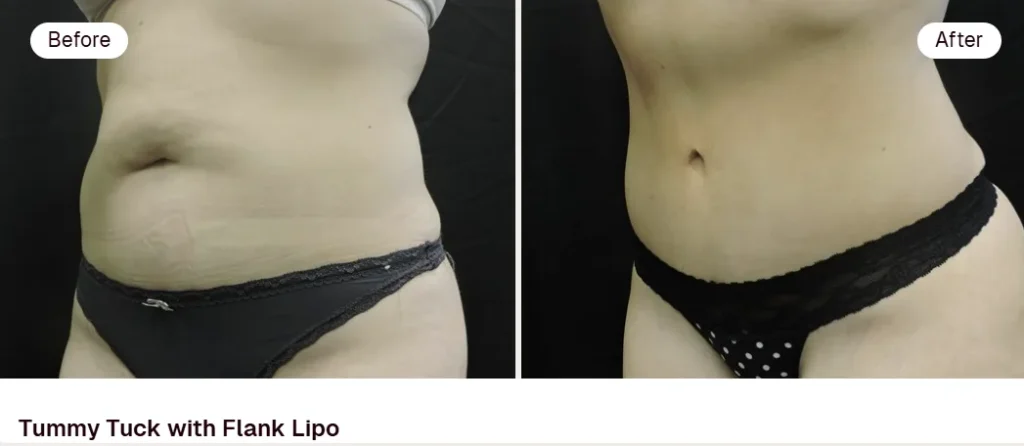
Your surgeon pulls the upper abdominal skin downward, almost like pulling down a window shade. The skin is stretched tight over the newly repaired muscle wall, and any excess tissue is carefully trimmed at the lower incision line. In a clinical evaluation of 310 abdominoplasties, 87% also included liposuction to refine contours around the flanks, thighs, or upper abdomen.
Liposuction during a tummy tuck addresses pockets of fat that skin removal alone can’t fix. A thin cannula is used to suction out fat cells from targeted areas, smoothing the transition between the treated abdomen and surrounding tissue. Our walkthrough of how liposuction surgeons perform the procedure covers the technique and what to expect from each phase.
With over 27,000 satisfied patients, Cosmetic Surgery Affiliates builds every surgical plan around you. How much tissue is removed and whether liposuction is included depends on your anatomy and goals. The attention to detail in this step is what sets the foundation for a natural-looking result.
Keith M., who had excess stomach skin removed, shared their experience:
“I had an absolutely amazing experience with Cosmetic Surgery Affiliates in Oklahoma City. I had a procedure to remove excess skin from my stomach, and from the very first consultation through recovery, the entire team made the process smooth, comfortable, and reassuring.”
Patients focused specifically on excess skin can start with understanding the excess skin removal process to see what the standalone procedure involves.
For patients with skin laxity that extends to the sides or love handles, an extended tummy tuck may be recommended. This involves longer incisions that wrap further around the body, addressing areas a standard tummy tuck doesn’t reach.
Flexible financing options through Cherry, PatientFi, and Alphaeon can help make your procedure more accessible, so cost doesn’t have to be the deciding factor.
How is the belly button repositioned during a tummy tuck?
Belly button repositioning is one of the most frequently misunderstood aspects of abdominoplasty, and it is a question that arises consistently during pre-operative consultations. To address the most common concern directly: the belly button is never removed. It remains attached to its underlying stalk throughout the entire procedure. What changes is its position on the skin.
During a full tummy tuck, the navel is separated from the surrounding skin early in the surgery, but it remains connected to the abdominal wall by a stalk of tissue. Once the excess skin is removed and the remaining skin is pulled tight, a new opening is created at the appropriate level, usually right at the hip crests.
Your surgeon then brings the belly button through this opening and sutures it into place. Defatting the area and precise suture placement help the navel sit naturally, with a slight inward curve. Patient satisfaction studies report that 85% are satisfied with their belly button appearance after surgery.
In a mini tummy tuck, the belly button usually isn’t touched at all. Because only the skin below the navel is addressed, there’s no need to reposition it. That’s one of the key differences between the two procedures.
The belly button step may sound like a small detail, but it’s a big part of what makes the final result look natural rather than surgical. With the navel repositioned and the skin pulled smooth, the closure phase comes next.
How are the incisions closed, and what happens right after surgery?

The final surgical steps focus on closure and setting you up for a smooth recovery. What happens here directly affects your scarring, comfort, and early results.
Closure methods
Your surgeon closes the incision in multiple layers. Deep sutures secure the internal tissues first, including the fascia. Then absorbable sutures close the deeper skin layers, and fine intradermal sutures or adhesive strips bring the surface together. This layered approach minimizes tension on the skin and helps the scar heal as a thin, flat line.
Drains and compression
Many surgeons place temporary drains near the incision site. These thin tubes collect excess fluid that naturally accumulates after surgery, reducing the chance of swelling or fluid pockets. Drains are typically removed within 7 to 10 days once fluid output drops.
A compression garment is applied before you leave the facility. You’ll wear it around the clock for the first two weeks, then 12 hours a day for weeks 3 and 4. After the first month, wearing it becomes optional.
Early results and mobility
You’ll notice a flatter profile right away, but swelling is expected in the first few days. Most of the swelling resolves within the first month, and final results typically emerge between 3 and 6 months. Some initial pleating or puckering of the skin is normal and smooths out as healing progresses.
| Timeline | What to expect |
|---|---|
| Day of surgery | Walking encouraged, bent posture |
| Week 1 | Off prescription pain meds for most patients |
| Weeks 2-4 | Gradually increasing activity, upright posture returns |
| Month 1 | Most swelling gone, compression garment optional |
| Months 3-6 | Final contour visible, scars continue fading |
Walking on the same day of surgery is part of every standard recovery plan — it boosts circulation and is one of the routine measures your surgical team uses to keep recovery safe and on track
You’ll walk with a slight forward lean at first because the tightened skin limits full extension. By the second week, standing upright becomes much more comfortable.
At Cosmetic Surgery Affiliates, the team provides detailed post-operative instructions and schedules follow-up appointments to monitor your healing along the way. For patients pairing their tummy tuck with breast work as part of a mommy makeover, your mommy makeover recovery week by week walks through the broader timeline.
Francesca M., who had a breast lift and tummy tuck in Oklahoma City, shared her experience:
“I had a breast lift and tummy tuck with Cosmetic Surgery Affiliates in OKC, and I couldn’t be happier with my experience. Dr. Meyer was absolutely amazing — she made me feel comfortable and confident from day one.”
Combined procedures like Francesca’s are detailed in our overview of combined cosmetic procedures after childbirth, which covers what to expect from the layered recovery.
As you can see, every step depends on surgical judgment, precision, and experience. That is why finding body plastic surgery specialists nearby makes such a difference. A local consultation lets you walk into the office, meet your surgeon face to face, review past patient results in person, and build a plan that takes your anatomy, lifestyle, and recovery support system into account from day one.
What should you expect at your tummy tuck consultation?

A consultation is your chance to get answers, but it’s also your chance to evaluate the surgeon. It goes both ways. Your surgeon assesses your anatomy and goals, and you decide whether you trust the person who’ll be operating on you.
During the visit, your surgeon examines your abdominal area, evaluates skin elasticity and muscle separation, and discusses which type of tummy tuck fits your situation. You’ll talk through your goals, medical history, and any previous surgeries. Nothing is off limits, and questions about recovery, scarring, r what your specific results will look like, are encouraged
Both virtual and in-person consultations are available. A virtual consultation lets you start the conversation from home, which is especially convenient if you’re traveling from outside the Oklahoma City area. In-person visits give your surgeon the opportunity for a hands-on assessment.
There’s no pressure to commit during the appointment. The goal is to leave feeling informed and confident in whatever you decide. To help make your goals more accessible, flexible financing through Cherry, PatientFi, and Alphaeon is available so you can choose a payment plan that fits your budget.
When you’re ready to take the next step, request an appointment to sit down with our team and build a plan around your goals.
Conclusion
A tummy tuck is a multi-step surgical procedure that addresses loose skin, stubborn fat, and weakened abdominal muscles in a single operation. From precise incision placement to muscle repair to careful closure, each step builds on the last to create a result that looks natural and lasts.
At Cosmetic Surgery Affiliates in Oklahoma City, our board-certified surgeons have performed more than 26,000 major cosmetic surgeries. Every patient who walks through our doors deserves to feel genuinely heard, thoroughly informed, and completely confident in the decisions they make about their body.
When you are ready to move from research to conversation, we invite you to book a consultation, a no-pressure setting where your questions are welcomed and your goals take center stage.
Frequently asked questions
How long does a tummy tuck take from start to finish?
A tummy tuck typically takes 2 to 4 hours, depending on whether it’s a mini, full, or extended procedure. Adding liposuction or muscle repair extends the time slightly, but most patients are in and out of the operating room within that window.
Do surgeons actually remove the belly button during a tummy tuck?
No. Your belly button stays attached to your body through a tissue stalk the entire time. During a full tummy tuck, it’s repositioned through a new opening in the skin, but it’s never detached or removed.
Is liposuction included in most tummy tuck procedures?
Liposuction is frequently combined with a tummy tuck to refine contours, especially around the flanks and upper abdomen.
What is the difference between a full and a mini tummy tuck?
A full tummy tuck addresses the entire abdomen with a hip-to-hip incision, muscle repair from breastbone to pubis, and belly button repositioning. A mini focuses on the lower abdomen below the navel, uses a shorter incision, and typically involves less downtime. Your surgeon recommends the right option based on how much excess skin and muscle separation you have.
Will you have visible scars after a tummy tuck?
Yes, but they’re designed to be easy to hide. The main scar runs horizontally along the pubic crease and sits low enough that underwear or a swimsuit covers it. Scars fade significantly over 12 to 18 months, and your surgical team provides scar management guidance to help them continue improving.
How painful is tummy tuck recovery?
The first week involves the most discomfort, managed with prescribed pain medication. Most patients are off prescription painkillers within 7 days. The sensation is more like deep soreness than sharp pain, and it improves steadily each week.
When can you return to work after a tummy tuck?
Most patients return to desk work within 2 to 4 weeks. If your job involves physical labor or heavy lifting, plan for 6 weeks before resuming full duties. Light walking starts on the day of surgery itself.
Does insurance cover tummy tuck surgery?
In most cases, no. Tummy tucks are classified as cosmetic procedures, and insurance typically doesn’t cover them. Exceptions may apply if the surgery is medically necessary, such as removing tissue that causes skin breakdown or mobility issues. A consultation can help clarify your specific situation.
Can you get pregnant after a tummy tuck?
Yes, pregnancy is still possible after a tummy tuck. However, a future pregnancy will likely stretch the repaired muscles and skin, which can undo some of the results. Most surgeons recommend completing your family before scheduling the procedure.
Will a tummy tuck remove stretch marks?
Only stretch marks located on the excess skin that’s removed, which is typically the skin below the belly button. Stretch marks above the navel usually remain, though they may shift lower as the skin is pulled tight.
*Disclaimer: This content is for educational purposes only and does not constitute medical advice. A consultation with a qualified board-certified surgeon is required to determine the best treatment plan for your individual needs and any questions you may have about a medical condition or procedure.