
Recovery time is one of the first things patients look up after liposuction, usually within the first day or two. The immediate aftermath tends to raise questions quickly: swelling appears more pronounced than expected, the compression garment feels restrictive, and the treated area is sore in a way that’s hard to gauge against what’s normal.
Most of that is expected at this stage, though the timeline for it resolving varies by the extent of treatment and the areas involved. What follows is a breakdown of what happens week by week, what’s typical at each point, and which symptoms are worth flagging to your surgeon.
According to the International Society of Aesthetic Plastic Surgery (ISAPS), liposuction was the most requested surgical cosmetic procedure among women worldwide in 2024. With millions of patients navigating recovery each year, the healing process is well understood.
At Cosmetic Surgery Affiliates (CSA) in Oklahoma City, we hear this concern from patients every week. Recovery is often the part people feel least prepared for, which is why post-op education is built into our cosmetic surgery care in Oklahoma City. This guide walks you through the full stomach liposuction recovery timeline, day by day and week by week, so you know exactly what’s normal, when swelling subsides, and when compression garments finally come off.
Key Takeaways
- Peak swelling and bruising hit around days two and three, then steadily improve. Compression garments and light walking are your two best recovery tools.
- Most patients return to desk work within seven to 14 days. Physical labor typically requires four to six weeks before your surgeon gives clearance.
- Compression garments are worn around the clock for the first 1 to 3 weeks, then reduced to daytime wear and eventually nighttime only.
- The fat cells removed during liposuction are permanently gone. Maintaining a stable weight within 5 to 10 pounds of your post-surgery weight preserves your contour long term.
- Final results take 3 to 6 months to fully appear as swelling resolves and skin tightens, with complete refinement visible by 12 months.
What Should You Expect During the First Week of Liposuction Recovery?
The first week is the most intense part of the healing process, but it’s also the week where you’ll see the fastest improvement day to day. Most of what you experience (the swelling, the soreness, the drainage) is your body’s completely normal response to the procedure. Here’s what to expect:
Days One Through Three
Swelling peaks around 48 hours after surgery. The treated area will feel tight and puffy, similar to intense workout soreness rather than sharp surgical pain. Your surgeon will prescribe medication to keep you comfortable during this phase.
You may notice fluid draining from the incision sites. This is completely normal. The fluid is a mix of the tumescent solution (a numbing and swelling control fluid injected before fat removal) and a small amount of blood. Absorbent pads placed under your compression garment will manage the drainage.
Compression and Movement
Your compression garment should be worn 23 to 24 hours a day during the first week. Remove it only to shower. The garment helps control swelling, supports your healing tissue, and begins shaping your new contours from day one.
Light walking is encouraged starting the evening of your surgery. Short five to ten minute walks several times a day promote healthy circulation and reduce the risk of blood clots. You don’t need to push yourself, just getting up and moving gently around the house is enough.
Your First Follow-Up
Most patients have their first post-op appointment within 5 to 7 days. Your surgeon checks the incisions, removes any sutures if needed, and assesses how your healing is progressing.
Watch for warning signs such as fever above 100.4°F worsening pain that does not respond to medication, or excessive redness around the incision sites. Serious complications are genuinely uncommon. One study of over 246,000 outpatient cases found an overall complication rate of just 0.40%, making liposuction one of the most studied and safest elective surgeries available.
By day seven, most patients feel noticeably better and are ready to ease into some of their normal routine.
How Does Recovery Progress in Weeks Two Through Four?
This is when the healing really picks up speed. The soreness fades, bruising starts to clear, and you’ll begin to see early hints of your results underneath the remaining swelling.
Returning to Daily Life
Most patients return to desk work within 7 to 14 days. If your job involves sitting at a computer, you’ll likely feel ready by the end of week two. Continue wearing your compression garment under your clothes during this time.
Bruising typically fades by weeks 2 and 3. Major swelling continues to decrease steadily, with some cosmetic surgery practices reporting that up to 90% of visible swelling may resolve by week three (see recovery timeline here).
Ongoing Compression and Incision Care
You’ll likely transition from full-time compression wear to daytime wear around weeks three and four. The garment continues to help reduce residual swelling and shapes your skin to fit your new contours.
Incision sites should be fully closed by this point. Gentle cleaning, silicone-based scar products, and sun protection help the tiny marks fade over time. Some patients notice numbness or firmness around the treated area, which is normal and typically resolves within 3 to 6 months.
Nutrition for Healing
Stay hydrated and focus on protein-rich foods, which support tissue repair. Anti-inflammatory foods such as pineapple, leafy greens, and vitamin C-rich produce help reduce lingering swelling.
A low-sodium diet makes a real difference during these weeks. Salt encourages your body to hold onto water, which shows up as extra puffiness. Cutting back on processed foods gives your recovery a noticeable boost.
Have questions about what your recovery would look like? You can schedule a consultation to get a personalized timeline from a board-certified cosmetic surgeon at CSA.
When Can You Resume Exercise and Normal Activities After Stomach Liposuction?
This is one of the most common questions patients ask, and the answer depends on what kind of activity you’re talking about and where the fat was removed.
Light Activity vs. Strenuous Exercise
Light activity such as short walks and gentle stretching can resume during weeks two and three. Think of activities that keep you moving without raising your heart rate significantly or putting intense strain on your core muscles.
Strenuous exercise, including running, weight lifting, high-intensity interval training (HIIT), and sports, typically requires a four to six week waiting period. Pushing too hard too soon can increase swelling, delay healing, or cause fluid buildup in the treated area. Your surgeon will give you individual clearance based on how your recovery is progressing.
Stomach-Specific Considerations
Recovery after liposuction on the stomach may take slightly longer than with smaller treatment areas like the chin or arms. The abdomen involves larger volumes of fat removal, and your core muscles play a role in nearly every movement you make. Lifting heavy objects is usually restricted for four to six weeks. Our broader lipo surgery recovery tips cover what to expect from each treatment area, since timelines and restrictions vary by location.
If your job involves physical labor, plan for the full six-week window. A gradual return starting with lighter duties helps your body adjust without setbacks.
Building Back Your Fitness
A safe progression starts with low-impact movement like a stationary bike for 20 to 30 minutes during weeks two and three. By weeks four through six, you can add moderate cardio and light resistance training. After your surgeon clears you, full-intensity workouts are back on the table.
If you’re still deciding whether liposuction is right for your goals, you can schedule a consultation to get a personalized recovery timeline based on your treatment plan.
How Long Do You Need to Wear Compression Garments After Liposuction?
Compression garments are one of the most important tools in your recovery. They might feel like a nuisance at times, but they’re doing serious work beneath the surface to help shape your final results.
| Phase | Timeframe | Wear Schedule |
|---|---|---|
| Stage 1 (firm) | Weeks 1 to 2 | 23 to 24 hours daily |
| Stage 1 to 2 transition | Weeks 3 to 4 | Daytime, 12 to 16 hours |
| Stage 2 (lighter) | Weeks 5 to 8 | Nighttime or as needed |
| Tapering off | Weeks 8 to 12 | Occasional, surgeon guided |
Full-Time Wear
For the first one to three weeks, your garment stays on around the clock. You remove it only for showering and washing the garment itself. The consistent pressure helps minimize swelling, supports your skin as it conforms to its new contours, and reduces the risk of fluid buildup.
The garment should feel snug and supportive (roughly 15 to 30 mmHg of pressure, which is similar to a firm hug) without causing pain, numbness, or difficulty breathing. If it feels too tight or starts leaving deep marks in your skin, let your surgeon know.
Transitioning and Tapering
As swelling decreases, your original garment may start feeling loose. This is a completely normal sign of progress. Some surgeons recommend a second-stage garment around weeks two to four that’s lighter and more comfortable for daily wear.
By weeks five through eight, most patients shift to nighttime-only wear. Full removal typically happens between weeks 8 and 12, once your contours have stabilized.
Joann C., a Cosmetic Surgery Affiliates patient who had liposuction and a tummy tuck, shared their experience:
“I’m very pleased with my tummy tuck and liposuction procedure! Dr. Nuveen and his team (Meg, Ashley, Amber) were so kind and helpful in answering questions. As soon as I saw the results during the follow up appointment I was delighted to see the smooth stomach!”
Patients pursuing cosmetic abdominal reshaping alongside liposuction, like Joann, often find the same compression garment supports recovery for both procedures.
If your garment causes persistent irritation, don’t just stop wearing it. Talk to your surgeon about sizing adjustments or switching to a different material. Stopping compression too early can affect your final contour results.
How Do You Manage Swelling, Pain, and Other Symptoms During Recovery?
Even though the timeline gives you a general roadmap, symptoms don’t follow a perfectly neat schedule. Here’s how to handle the most common ones.
Managing Swelling
Swelling peaks at 48 to 72 hours, then begins a slow and steady decline. By weeks two and three, the firmness you feel is your body building new collagen beneath the skin. About 90% of visible swelling resolves within three weeks, but subtle puffiness can linger for three to six months as your body continues to heal.
- Elevate the treated area above your heart to help fluid drain naturally
- Apply cold compresses for 20 minutes at a time during the first 72 hours
- Walk gently, even just around the house, to keep your lymphatic system (your body’s natural drainage network) moving
Managing Pain
Pain typically peaks around days two through four, then tapers quickly. Your surgeon will prescribe medication for the first few days, and most patients comfortably switch to acetaminophen (such as Tylenol) after that. Avoid ibuprofen and other NSAIDs (non-steroidal anti-inflammatory drugs like Advil or Aleve) for about two weeks, since they can increase bruising.
Most patients find that discomfort decreases significantly after the first few days and becomes manageable with over-the-counter pain relief by the end of the first week, according to the American Society of Plastic Surgeons.
Staying hydrated matters more than you might think. Eight or more glasses of water daily helps flush excess fluid from your body. Pair that with a high-protein diet and you’re giving your body the building blocks it needs for tissue repair.
When Will You See Your Final Liposuction Results, and How Do You Maintain Them?
This is the part that requires the most patience. Your body needs time to settle, and the final picture emerges gradually over several months.
| Milestone | What You’ll See |
|---|---|
| 1 month | 50 to 70% of swelling gone, early contours visible |
| 3 months | 85 to 90% of results visible, skin tightening progressively |
| 6 months | 95% of final contours visible, residual puffiness fading |
| 12 months | Complete refinement and full skin retraction |
At one month, the major swelling is gone and you can see the direction your results are heading. By three months, most patients see 85% to 90% of their final contours as skin tightens progressively.
Your lymphatic system (your body’s natural fluid management network) needs time to fully repair, and skin gradually contracts as specialized cells called fibroblasts produce fresh collagen beneath the surface. Evidence from a systematic review suggests that skin retraction after liposuction may range from roughly 12% to 31%, although results vary widely based on the technique and study conditions.
Protecting Your Results Long Term
The fat cells your surgeon removed are permanently gone. They do not grow back. But the remaining fat cells in your body can still expand if you gain weight. Staying within five to 10 pounds of your post-surgery weight is the most reliable way to preserve your new contour.
A routine of 150 minutes of cardio per week plus two to three strength training sessions keeps your results looking their best and supports your overall health.
Scars and Follow-Up Visits
Liposuction incisions are tiny, typically just a few millimeters. The scars fade to flat, barely visible lines over six to 12 months with the use of silicone scar products and sunscreen.
Your surgeon schedules follow-up visits at one to two weeks, one month, three months, six months, and one year to track your progress and answer any questions along the way.
Katie H., who consulted at multiple practices before choosing CSA, said it best:
“Dr. Courtney Caplin is truly amazing and has so much talent! CSA was the third cosmetic surgery facility I received a consult from as I had done extensive research on procedures and doctors in the OKC area and out of state. The entire process was so simple.”
A study of 360 patients found an 88.8% overall satisfaction rate following liposuction and abdominoplasty procedures. When you combine skilled surgical results with realistic expectations and a little patience, the outcome tends to speak for itself.
Liposuction is one piece of a broader set of options, and it often works best when you see how it fits alongside related procedures like a tummy tuck, OKC cosmetic gluteal enhancement procedure, or full body reshaping surgery. If you want to explore the wider picture before deciding, you can learn about body surgery in Oklahoma City and compare which procedures might suit your goals on their own or in combination with liposuction.
What Should You Expect During a Liposuction Consultation?

A consultation is not just a chance for the surgeon to evaluate you. It’s equally your chance to evaluate them. The right surgeon will make you feel heard from the very first minute.
During the visit, your surgeon reviews your anatomy (the structure of your body, including fat distribution, muscle placement, and skin behavior in the areas you want treated), skin quality, and overall health as they relate to liposuction. You’ll discuss your goals, the areas you want to address, and what results are realistic for your body. Nothing is off limits during this conversation.
At Cosmetic Surgery Affiliates, both virtual and in-person consultations are available. If you’re local to Oklahoma City, an in-person visit lets you see the facility and meet the team. A virtual consultation provides the same personalized attention without the travel.
The practice also offers flexible financing through Cherry, PatientFi, and Alphaeon. You can explore financing options to find a payment plan that fits your budget.
Keith M., a patient who had a stomach procedure at the practice, talked about his experience:
“I had an absolutely amazing experience with Cosmetic Surgery Affiliates in Oklahoma City. I had a procedure to remove excess skin from my stomach, and from the very first consultation through recovery, the entire team made the process smooth, comfortable, and reassuring. Every nurse and staff member was incredibly kind and attentive.”
Patients exploring loose skin removal procedures nearby, like Keith, find that the consultation often clarifies what’s possible for their specific anatomy.
The best consultations leave you feeling more informed, not more pressured. Whether you’re ready to move forward or just gathering information, the conversation is worth having.
What Are Your Next Steps?
If you’re thinking about liposuction or already have a procedure scheduled, here’s how to move forward with confidence.
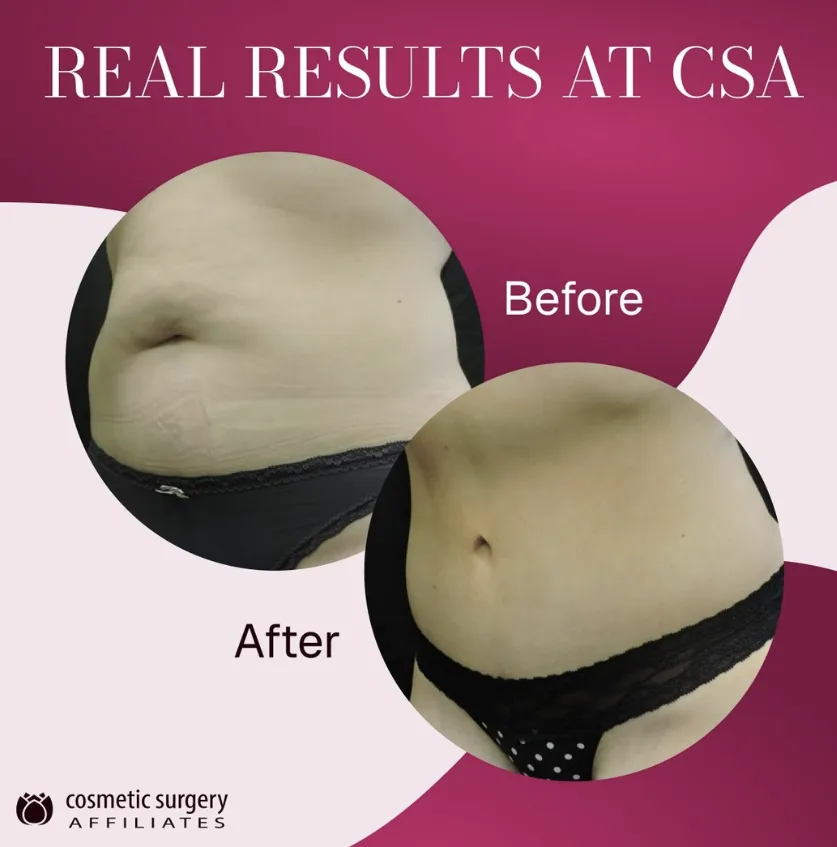
- View before-and-after results to see what’s realistically achievable for your treatment area
- Read patient reviews to hear firsthand about the consultation and recovery experience
- Schedule consultations with two to three surgeons and compare how comfortable you feel with each team
- Prepare a list of questions about recovery, compression, and activity restrictions
- Take time to reflect on your goals and make sure you feel fully confident before moving forward
- When you’re ready, schedule your procedure and begin pre-op preparation
Our overview of everything you need to know before getting liposuction walks through what to consider before that first consultation.
Both in-person and virtual consultations are available. You can reach out to our team whenever you’re ready to start the conversation.
Conclusion
Recovery after liposuction isn’t instant, but it is a journey you can trust. The first days may bring swelling and adjustment, but with each passing week, you’ll begin to see the transformation you’ve been waiting for. By the three- to six-month mark, those final contours start to tell the full story, one shaped by consistency, care, and patience.
Wearing your compression garments, staying gently active, nourishing your body, and giving yourself grace along the way all play a role in achieving smooth, lasting results. Small, steady steps truly make a visible difference.
At Cosmetic Surgery Affiliates in Oklahoma City, your experience matters just as much as your outcome. You’re not just another procedure, you’re a person with goals, questions, and a vision for yourself. Our board-certified cosmetic surgeons are here to support you, guide you, and help you feel confident every step of the way.
When you’re ready to see what’s possible, your next chapter starts with a conversation. Book your consultation today.
Frequently Asked Questions
How long is full liposuction recovery?
Most patients feel comfortable returning to daily activities within one to two weeks. Full recovery, including complete resolution of swelling and final contour refinement, takes three to six months. Some subtle changes continue up to 12 months as skin fully tightens.
How much pain is normal after liposuction?
Discomfort is usually moderate, similar to the soreness you’d feel after an intense workout. Pain peaks around days two and four, then improves quickly. Most patients report being comfortable with over-the-counter pain relief by the end of the first week.
When can I return to work after liposuction?
Desk jobs are typically manageable within seven to 14 days. Jobs involving physical activity or heavy lifting usually require four to six weeks. Your surgeon provides individual clearance based on your healing progress.
Do I really need to wear compression garments?
Yes. Compression garments reduce swelling, support your skin as it contracts, and help your contours form properly. Stopping them too early can lead to increased swelling and less defined results.
How long until swelling goes down?
The most dramatic swelling subsides within two to three weeks. Residual puffiness fades gradually over the next three to six months. Compression, hydration, and a low-sodium diet all help speed the process along.
When can I exercise after liposuction?
Light walking starts the day of surgery. Low-impact activities like a stationary bike can begin around weeks two and three. Full workouts, including weights and high-intensity cardio, require your surgeon’s clearance, usually at the four to six week mark.
Will I have scars from liposuction?
Incisions are very small, typically just a few millimeters. Scars start as tiny pink marks and fade to nearly invisible lines over six to 12 months with proper care.
Is liposuction recovery worse on the stomach?
Stomach liposuction often involves larger treatment areas and more volume removal than other body parts. That means slightly more swelling and a slightly longer timeline before final results appear. The overall recovery process follows the same general pattern, though.
What helps swelling and bruising fade faster?
Consistent compression garment wear, regular light walking, cold compresses in the first 72 hours, staying hydrated, and eating anti-inflammatory foods all make a measurable difference. Avoiding salt and alcohol during the first few weeks helps as well.
Can I drive after liposuction?
Most patients can drive again within three to five days, once they’ve stopped taking prescription pain medication and feel comfortable turning and braking. If you had abdominal liposuction, make sure you can move freely before getting behind the wheel.
How do I sleep comfortably with compression on?
Sleep on your back with pillows supporting your knees and upper body for the first week or two. This reduces pressure on the treated area and keeps swelling down. Many patients actually find that the compression garment helps them feel more supported while sleeping.
Are liposuction results permanent?
The fat cells removed during liposuction are gone permanently. However, remaining fat cells can still expand with weight gain, so staying within five to 10 pounds of your post-surgery weight preserves your results long term.
*Disclaimer: This content is for educational purposes only and does not constitute medical advice. A consultation with a qualified board-certified surgeon is required to determine the best treatment plan for your individual needs and any questions you may have about a medical condition or procedure.