
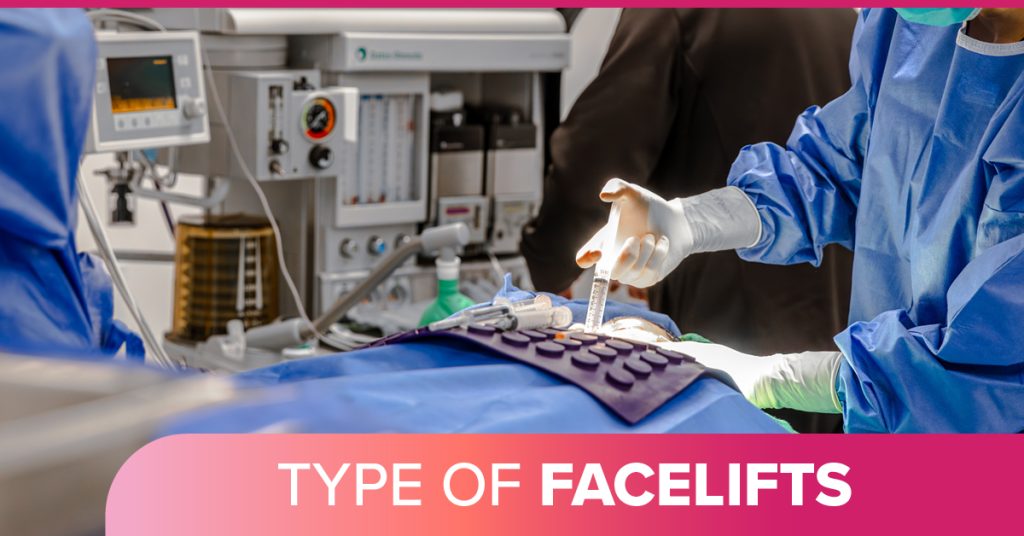
Start researching a facelift and you run straight into a wall of names. Mini, SMAS, deep plane, MACS, mid-face, lower face, full face, and a few more your surgeon might add. It can feel like reading a menu in a language you don’t speak, where every option sounds important and none explain themselves.
Here’s the reassuring part. Those names aren’t competing brands, they’re different surgical approaches that lift different layers of the face. Facelifts made up 4.2 percent of all cosmetic surgical procedures worldwide in 2024 according to ISAPS, so a lot of people are sorting through this exact vocabulary right now.
That’s where an experienced surgeon earns their keep. The team at Cosmetic Surgery Affiliates in Jacksonville matches the technique to the face, not the other way around. This article compares the main facelift types side by side, how they differ in results and recovery, what they tend to cost, and how to figure out which one actually fits your goals.
Key takeaways
- “Facelift” is a family of techniques, not one operation. Mini, SMAS, deep plane, and full face-and-neck lifts each work on a different layer and a different degree of sagging.
- A mini facelift suits early jowling and a softening jawline. Deep plane and extended SMAS techniques reposition deeper tissue and better address the midface and neck together.
- Recovery scales with how deep the lift goes. A lighter lift often means about a week of visible downtime, while a fuller face-and-neck lift can mean two to three weeks.
- The right facelift depends on your anatomy and goals. A consultation that maps your jawline, cheeks, and neck matters far more than picking a technique by name.
What are the main facelift techniques you should know about?
The honest answer to ‘which facelift procedure is best’ is that they solve different problems. Each technique is defined by how deep the surgeon works, from just under the skin to the deeper support layer that gives your face its shape. Triple board-certified, fellowship-trained cosmetic surgeon Dr. Courtney Caplin and the team tailor the approach to each patient. The plan fits your anatomy and goals instead of forcing one method on every face.
Here’s a quick side-by-side of the techniques you’re most likely to hear about.
| Technique | What it lifts | Best suited for |
|---|---|---|
| Mini facelift | Skin and limited deeper tissue, lower face | Early jowls, a softening jawline |
| SMAS facelift | The deeper muscle and connective tissue layer | Moderate jowls and lower-face sagging |
| Deep plane facelift | Tissue beneath the SMAS, repositioning the midface | Midface, jowls, and neck together |
| Full face and neck lift | Lower face plus the neck and jawline | More advanced, all-over sagging |
Mini facelift
A mini facelift is the lighter-touch option. It works mainly on the lower third of the face through shorter incisions, smoothing early jowls and a softening jawline. Because it lifts less tissue, it’s popular with people in their 40s and 50s who want a refresh rather than a dramatic change.
The tradeoff is reach. A mini lift does beautiful work on early sagging, but it isn’t built to correct heavier laxity in the neck or midface.
SMAS facelift
SMAS stands for the superficial musculoaponeurotic system, the layer of muscle and connective tissue under your skin that holds your facial contour. A SMAS facelift tightens that layer rather than just pulling the skin, which is why results look natural instead of stretched. It’s the workhorse of modern facelift surgery for moderate jowls and lower-face sagging.
When the surgeon extends the work along the jawline and neck, you’ll hear it called an extended SMAS lift, which reaches the jawline and neck more thoroughly.
Deep plane facelift
A deep plane facelift goes one layer deeper, releasing the ligaments that tether the face and repositioning the deeper tissue, including the cheek fat pad. Because the surgeon moves the tissue itself and closes the skin without tension, the result looks rested rather than tightened. It’s considered more advanced because it addresses the midface, jowls, and neck in one lift.
Full facelift, neck lift, and targeted lifts
A full facelift usually combines lower-face work with a neck lift to address jowls, the jawline, and a loose neck together. Our jowls jawline and neck lift guide covers when that combination makes the most sense. Many people pair their procedure with other facial surgeries in the same operation. Getting a brow lift raises a heavy forehead, cosmetic eye surgery options refresh tired eyes, and a mid-face lift restores volume to the cheeks.
If you’re not sure which of these names applies to your face, that’s exactly what an evaluation is for. A dedicated procedure for improving the jawline and neck can also pair with your facelift when the neck needs its own attention.
Putting a name to your own plan is easier with an expert in the room. When you’re ready, schedule a consultation to have a surgeon look at your anatomy and translate the jargon into something concrete.
Knowing what each technique does is one thing. Seeing how they differ in the mirror is another.
How do the different facelift techniques compare in results?
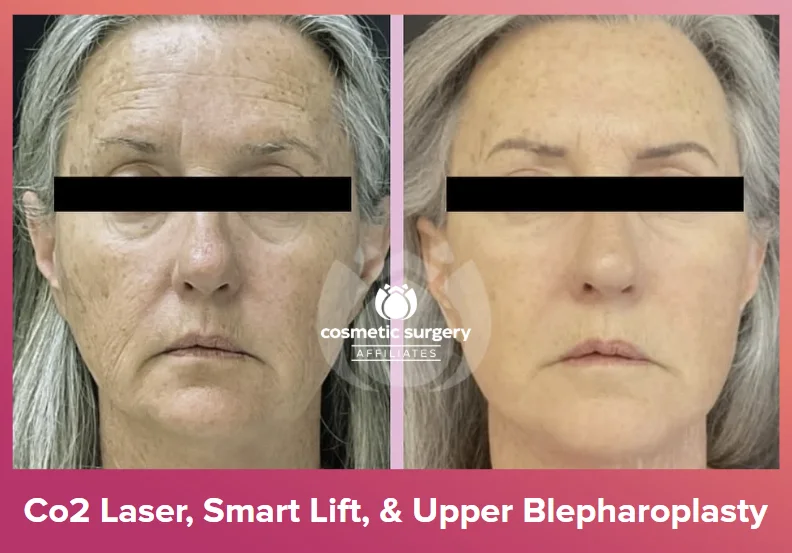
This is where the choice gets real, because the technique shapes the result you see in the after photo. The deeper a lift works, the more it repositions tissue instead of just tightening skin, and that shows up in how natural the result looks.
For the most natural look, deeper techniques tend to win. Because deep plane and high or extended SMAS lifts move the support layer and close the skin without tension, they’re less likely to look pulled or windblown. In one blinded-photo study of 68 patients, a high SMAS approach gave the greatest improvement in the jowls and neck compared with lighter methods.
There’s also the question of how much sagging a technique can correct. Lighter, short-scar approaches like the MACS lift are excellent for early laxity but more limited with significant looseness, as a systematic review of 739 patients concluded. A deeper lift simply has more reach.
Comparing photos for hours can leave you more confused than when you started, and that’s normal. The most useful thing is to study real results from one surgeon across techniques in a before-and-after gallery. Consistent, natural outcomes tell you more than any single label.
The other half of the decision is what life looks like right after surgery.
How much downtime and recovery should you expect after each facelift?
Recovery tracks closely with how deep the lift goes, so a mini lift and a full face-and-neck lift feel quite different early on. The good news is that the timeline is predictable, and your surgeon walks you through each stage.
A lighter lift usually means a shorter reset. A facelift focused on the lower face often involves about 7 to 10 days of visible downtime, while a standalone neck lift runs closer to 2 to 4 days. A fuller face-and-neck lift sits at the longer end, with many people planning two to three weeks.
Swelling, bruising, and a tight sensation are normal parts of healing, not signs that something is wrong. In one study of 88 short-scar facelifts, the average return to work was about two weeks, a realistic anchor for planning time off. Most of that visible swelling settles over the first couple of weeks.
Carolyn, a patient grateful for her care, shared her experience:
“I cannot say enough about Dr. Caplin and her entire team.”
Following your aftercare closely, like keeping your head elevated and using cold compresses, helps swelling fade faster. With recovery mapped out, the next practical question is usually cost.
How much do the different facelift options usually cost?
Cost is one of the first things people want to know. The honest answer is that it depends on which technique your face needs and how much area is treated. We know the financial side can feel stressful during a big personal decision. That’s why Cosmetic Surgery Affiliates keeps pricing transparent with a single, all-inclusive fee covering anesthesia, the facility, supplies, and the surgeon’s professional fee.
A facelift focused on the lower face and jawline generally ranges from $9,500 to $12,500. A full facelift combined with a neck lift runs from $14,500 to $17,500. Your final number depends on the technique, the extent of the lift, and whether you combine procedures.
| Facelift option | What it focuses on | Price range |
|---|---|---|
| Facelift (lower face and jawline) | Jowls, lower-face sagging | $9,500–$12,500 |
| Full facelift with a neck lift | Lower face plus the neck | $14,500–$17,500 |
| Extended neck lift (standalone) | Neck and under-chin laxity | $8,950–$11,950 |
| Brow lift | Heavy or sagging forehead | $6,000–$9,000 |
| Eyelid surgery (blepharoplasty) | Upper or lower eyelids | $4,500–$7,500 |
A facelift is a meaningful investment, and there are ways to make it more manageable. To spread the cost over time, you can explore financing options through PatientFi and Alphaeon. A consultation gives you an exact figure for your specific plan rather than a guess.
Once the numbers make sense, the real question is which technique is right for your face.
How do you know which facelift is right for your face and goals?
Choosing a facelift with a board certified cosmetic surgeon in Jacksonville isn’t about picking the trendiest name, it’s about matching the technique to your anatomy and goals. At Cosmetic Surgery Affiliates, the consultation is built around that match, and it works both ways. It’s your chance to evaluate the surgeon as much as theirs to evaluate you.
Start with the kind of change you want. A subtle refresh points toward a lighter lift, while more noticeable sagging points toward a deeper one. The location of your concern matters too, since jowls and a soft jawline are handled differently than flat cheeks or loose neck skin.
Surgery isn’t the only path, either. For mild laxity or early volume loss, non-surgical options like Renuvion skin tightening or dermal fillers can be a reasonable choice for a subtle, age-appropriate improvement.
Choosing a non-surgical route for early changes is a legitimate option, not a compromise. A 2023 review on patient choice supports that measured approach. A good surgeon will tell you honestly when a procedure is right and when it isn’t.
A few questions make any consultation more useful:
- Which technique do you recommend for my anatomy, and why that one over the alternatives?
- Will this address my neck and midface, or just my lower face?
- Can I see before-and-after photos of patients with a similar starting point?
- Would combining procedures give me a better, more balanced result?
Both in-person visits at the Jacksonville office and virtual consultations are available, so you can start the conversation from home if you’re traveling in from St. Augustine, Ponte Vedra, or beyond.
Stephanie, a patient reflecting on her recovery, shared her experience:
“Dr. Caplin and her team have been amazing from the beginning. This has been a life-changing experience for me. I left today after my first week post-op appointment in tears of happiness with my decision. Thank you for making me feel beautiful again.”
When the technique is matched to your face this carefully, the result reflects you, not a formula.
Conclusion
The word “facelift” covers a whole family of techniques, and the right one depends on your anatomy, your goals, and how much change you want. A mini lift refreshes early jowling, a deep plane or extended SMAS lift repositions deeper tissue for the midface and neck, and a full facelift with a neck lift handles more advanced sagging. The name matters far less than whether the approach fits your face.
That match is what the team at Cosmetic Surgery Affiliates in Jacksonville does best. Every patient deserves to feel heard, respected, and confident in their choices, whether you arrive set on a technique or still decoding the vocabulary. When you’re ready, book your consultation to get a plan built around your face.
Frequently asked questions
What is the difference between a mini facelift and a full facelift?
A mini facelift uses shorter incisions to lift the lower third of the face, addressing early jowls and a softening jawline. A full facelift treats more area, usually combining the lower face with a neck lift for more advanced sagging. The right choice depends on how much laxity you have.
Is a deep plane facelift better than a SMAS facelift?
Neither is universally better, they suit different faces. A deep plane lift releases deeper ligaments and repositions tissue for the midface and neck, while a SMAS lift tightens the deeper support layer for moderate lower-face sagging. A board-certified cosmetic surgeon recommends a technique based on your anatomy.
Which facelift looks the most natural?
Deeper techniques like deep plane and extended SMAS tend to look the most natural, because they reposition tissue and close the skin without tension. Skill matters as much as technique, so reviewing a surgeon’s before-and-after photos is the best way to judge naturalness.
Does a facelift always include the neck?
Not always. A lower-face lift can be done on its own, but because the jawline and neck age together, many people combine the two. Your surgeon will tell you whether your neck needs attention for a balanced result.
Can I combine a facelift with a neck lift?
Yes, and it’s one of the most common combinations because the lower face and neck age as a unit. Done together, they address jowls and a loose neck for a more harmonious result. Many patients also add a brow lift or eyelid surgery in the same operation.
How much downtime does a facelift usually require?
A lighter facelift typically involves about 7 to 10 days of visible downtime, while a fuller face-and-neck lift may take two to three weeks. Swelling and bruising ease over the first couple of weeks, and your surgeon gives you a personalized timeline.
What age is best for a facelift?
There’s no single right age, since it depends on how your face is aging rather than a number. Many people consider a mini lift in their 40s and 50s and a more comprehensive lift later, but the best gauge is the degree of sagging, not your birthday.
How do I know if I need surgery instead of fillers?
If your main concern is volume loss or mild laxity, non-surgical options like fillers or skin tightening may be enough. When there’s significant sagging in the jawline or neck, surgery does what injectables can’t. The clearest way to know is a consultation, where a board-certified cosmetic surgeon maps your anatomy and gives an honest recommendation, including virtual options if you’re starting from home.
*Disclaimer: This content is for educational purposes only and does not constitute medical advice. A consultation with a qualified board-certified surgeon is required to determine the best treatment plan for your individual needs and any questions you may have about a medical condition or procedure.