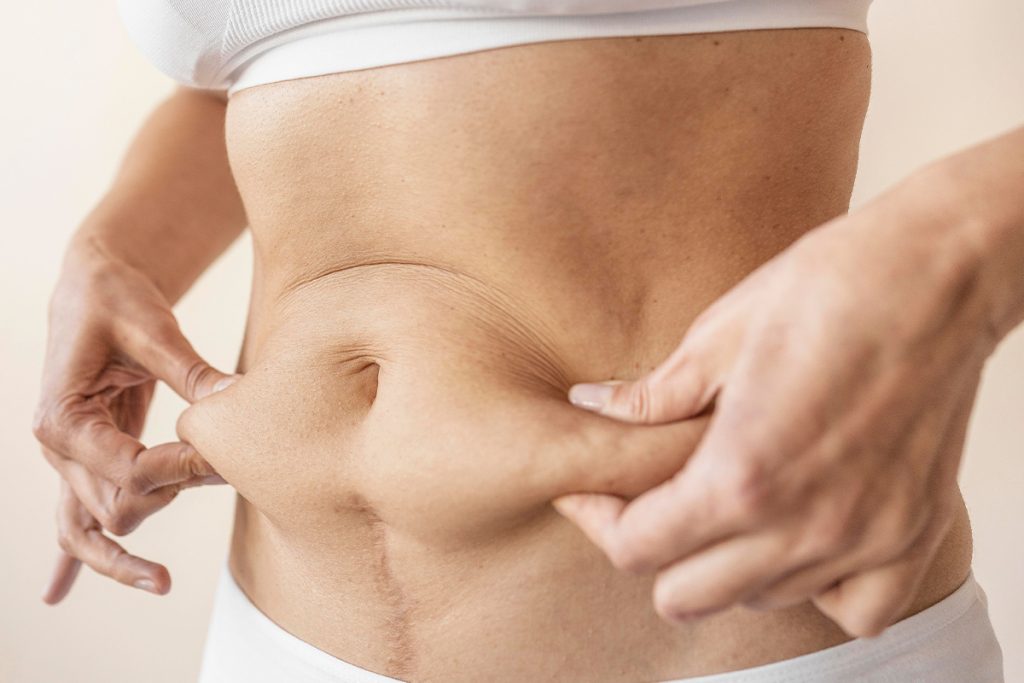


A softening jawline and loose skin along the neck are among the earliest and most noticeable signs of facial aging. A jaw that was once a clean line can begin to sag, while the skin along the neck starts to loosen as well. Even the best lighting and photo filters can only do so much to hide it. All of this is a normal part of getting older, but that does not mean that you have to resign yourself to living with it.
Concerns like these are extremely common. More than 477,000 neck lift procedures were performed worldwide in 2024, according to ISAPS, a sign of how many people are looking to address sagging in exactly these areas.
The skin along the jaw and neck is thinner and almost always in motion. Over the years, the deeper tissue loosens, fat shifts, and the once-crisp line between face and neck blurs.
At Cosmetic Surgery Affiliates in Oklahoma City, our board-certified cosmetic surgeons help patients answer one key question: is the issue the lower face, the neck, or both? This article covers how the two procedures differ, why they’re combined, what recovery involves, what it costs, and where non-surgical options fit.
Key takeaways
- A lower facelift targets jowls and the jawline, while a neck lift addresses loose skin, fat, and bands below the jaw. Many people need both for a balanced result.
- Surgeons combine the two because the jaw and neck age together, so doing them in one surgery means a single anesthesia, one recovery period, and one set of fees.
- Recovery is gradual. Most swelling and bruising fade within one to two weeks, and strenuous activity usually returns around six weeks.
- A lower facelift typically ranges from $9,500 to $12,500, and a combined lower face and neck lift from $14,500 to $17,500, with financing available to spread the cost.
What is the difference between a lower facelift and a neck lift?
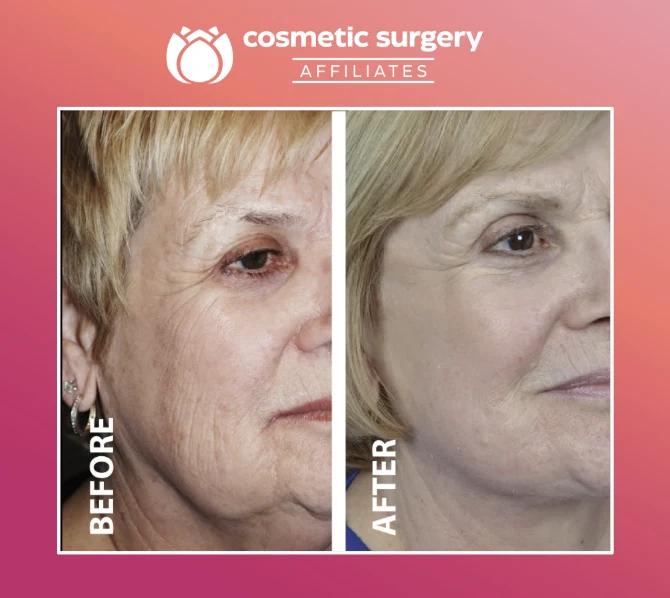
The simplest way to think about it is to draw a line at your jawbone. A lower facelift works on everything above that line, and a neck lift works on everything below it. Most people who feel like they’ve aged in this area have changes happening on both sides of that line.
A lower facelift focuses on the jowls, those soft pockets along the jaw, and the sagging near the corners of the mouth. A neck lift, focused on tightening loose skin along the jawline, handles the loose skin, stubborn fat, and vertical bands below the chin, the look many call a ‘turkey neck.’
| Lower facelift | Neck lift | |
|---|---|---|
| Main focus | Jowls and the lower cheeks along the jaw | Loose skin, fat, and bands below the jaw |
| What it improves | A softening jawline and sagging near the mouth | A double chin, “turkey neck,” and vertical neck bands |
| Typical incisions | Around the ears | In front of and behind the ears, often a small one under the chin |
It’s completely normal to feel unsure about which approach is right for you—this is something a lot of people wrestle with. A neck lift on its own won’t quite reach the jowls along the jawline, and a lower facelift on its own won’t smooth the skin that’s settled lower on the neck. That’s why the right combination can make such a difference, and why it helps to have an experienced surgeon guiding you.
Dr. Erik Nuveen, a triple board-certified, fellowship-trained cosmetic surgeon, takes the time to look at your jaw, cheeks, and neck together. From there, he’ll help you understand which procedure or pair of procedures will bring you closest to the result you have in mind. And once you have a clearer picture of what each surgery does, it’s natural to wonder why the two are so often recommended together.
Why do surgeons so often recommend combining a lower facelift and a neck lift?
The honest answer is reassuring once you understand it: the lower face and neck age together, as one connected area, so treating just half of it can leave things looking a little out of balance. Smoothing the jaw while a loose neck remains below it can actually draw more attention to the contrast rather than easing it, which is the opposite of what most people are hoping for.
You’re far from alone in thinking about this. Interest in neck work has grown remarkably, rising about 90 percent worldwide between 2020 and 2024, according to the ISAPS survey mentioned earlier. That reflects something surgeons notice every day: the jaw and neck flow gently into one another, and caring for them together tends to give the most natural result.
Doing both at once also makes practical sense. Combining the procedures means:
- A balanced result where the jaw and neck match, instead of a tightened face above a loose neck
- One round of anesthesia and one healing period rather than two
- A single set of facility and anesthesia fees instead of paying twice
- Less total time away from work and your social life
It’s normal to feel uneasy when you hear the word combined. In practice, treating both in one planned procedure is often gentler on your schedule and body than two operations months apart.
What surgical techniques are used to reshape the jawline and neck?
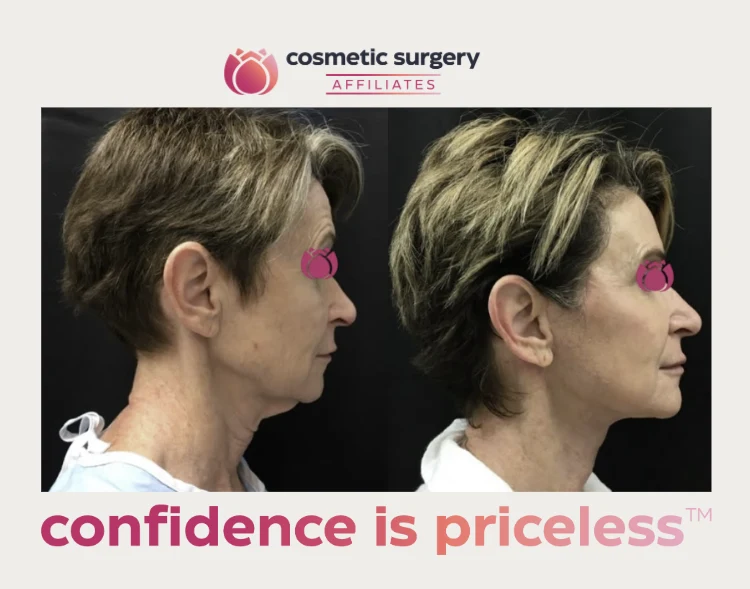
Modern lower face and neck surgery is about much more than pulling skin tight. The lasting results come from working on the deeper structures underneath, then letting the skin re-drape naturally over a firmer foundation.
Tightening the deep support layer
Under your skin sits a sheet of tissue and muscle surgeons call the SMAS. Think of it as the scaffolding that holds the lower face up. Lifting and repositioning this layer, rather than just trimming skin, is what creates a natural look and avoids that overly “done” appearance.
Some surgeons go deeper still, releasing and repositioning tissue in a single, deeper plane. Either way, the goal is to support the structure from within so the result looks like a rested version of you.
The neck corset
Those vertical bands you see in the neck are actually the edges of a muscle called the platysma. A platysmaplasty tightens that muscle by stitching it together down the middle, like cinching a corset, for the sharpest possible angle between chin and neck.
This step is part of essentially every neck lift. It’s the difference between smoother skin and a genuinely sharper, more youthful profile.
Removing fat and re-draping skin
If there’s stubborn fullness under the chin, your surgeon can use liposuction through a tiny opening to clear it away. That’s why patients choose a lipo surgeon in Oklahoma City with facial contouring expertise — the precision matters as much on the face as on the body. Any excess skin is then trimmed and the rest laid smoothly back into place.
Seeing the steps laid out can feel clinical, and that’s okay. Understanding how the result is built makes the recovery ahead feel far less mysterious.
What does recovery look like after a lower face and neck lift?
Recovery is a gradual climb rather than a single hard day, and most people are pleasantly surprised by how manageable it feels. The first stretch asks for rest, and each week after that brings visible improvement.
| Time after surgery | What to expect |
|---|---|
| First few days | A snug dressing or head wrap, mild soreness managed with prescribed medication, resting with your head elevated |
| One to two weeks | Most swelling and bruising fade, and many people feel ready for light activity and desk work |
| Two to three weeks | Comfortable being out in public again, with makeup usually able to cover any lingering color |
| Around six weeks | Strenuous exercise and heavy lifting are back on the table once your surgeon clears you |
For neck-focused work, you’ll wear a supportive wrap under the chin for the first several days, which helps everything settle smoothly. A little bruising that drifts toward the chest in the first week is completely normal and fades on its own.
The first few days can feel frustrating if you’re used to being active, but the worst of it passes quickly.
Nicolette, a patient who stayed close to her care team from start to finish, shared her experience:
“From my very first consultation to my final follow-up appointment, every part of the process was smooth, professional, and beyond my expectations.”
Once you know what healing involves, the practical question most people ask is what all of this actually costs.
What does a lower face and neck lift cost, and what affects the price?
Cost is one of the first things on most people’s minds, and that’s completely understandable when you’re making a meaningful decision about yourself. At Cosmetic Surgery Affiliates, a lower facelift ranges from $9,500 to $12,500, while a combined lower face and neck lift runs $14,500 to $17,500. For a fuller breakdown of what drives facelift pricing overall, our facelift cost guide walks through technique, location, and hidden fees.
One thing makes the math simpler here. Every surgical price is a single, all-inclusive fee covering anesthesia, the facility, supplies, and the surgeon’s work, a policy the practice has kept for more than 24 years.
A few factors move the final number up or down:
- Whether you need the lower face, the neck, or both
- Any added procedures, such as work around the eyes or chin
- The complexity of your anatomy and the technique chosen
- The type of anesthesia used
Combining the two procedures usually costs less than booking them separately, since you pay one facility and anesthesia fee instead of two. Patients also tend to feel good about the decision afterward. A 2024 review found that more than 90 percent of facelift patients rated their procedure as worth it.
If cost is the piece holding you back, you can explore financing through PatientFi and Alphaeon and see what a manageable monthly plan looks like. With the surgical picture clear, it’s worth knowing where non-surgical options fit in.
What non-surgical alternatives exist for treating jowls and neck sagging?
For early, mild laxity, non-surgical treatments can genuinely help, and they’re a smaller commitment of both time and money. They work best when skin has just started to lose its snap, before it’s truly hanging.
Cosmetic Surgery Affiliates offers several of these options for the face and neck. They include Renuvion skin tightening, which firms loose skin with radio-frequency energy and helium plasma, plus laser resurfacing and Morpheus8 to smooth texture. Renuvion starts at $3,500 for the first area, with each additional area $1,500, and Morpheus8 runs about $400 to $1,400 per session.
Injectables and fillers have their place too, but they restore volume rather than lift sagging skin. They can soften early shadows around the jaw without doing much for a loose neck.
Here’s the honest dividing line. When skin is loose enough to hang, surgery is the only way to remove it, because energy treatments tighten skin but can’t take it away. Sorting out which camp you fall into is exactly what a good consultation is for.
How do you decide if it’s right for you, and what happens at a consultation?
Consultations are where all of this stops being abstract and starts being about you and your face specifically. And the nicest part is that it goes both ways.
It’s the surgeon’s chance to get to know your skin, jaw, and neck and to map out a plan that feels realistic for you. Just as importantly, it’s your chance to ask anything that’s on your mind, no question is too small, and to decide whether this feels like the right team for you. There’s no pressure to make any decisions in the room. You’re simply gathering the information you need to feel comfortable and confident, in your own time.
A few things are worth raising while you’re there:
- Whether you need the lower face, the neck, or both
- To see before-and-after results from patients with concerns like yours
- How many of these procedures the surgeon performs each year
- What your recovery will realistically involve
If you’re traveling from outside Oklahoma City, including from the Jacksonville area, a virtual consultation lets you start the conversation from home. An in-person visit then allows the hands-on assessment that careful surgical planning needs.
Mike, a patient who combined a facelift and neck lift, summed up his results:
“Dr. Nuveen is an excellent surgeon! I had a complete facelift to include neck lift, eyes, brow lift and CO2. Dr. Nuveen did an amazing job and I mean amazing!”
When you’re ready, request an appointment and bring your list of questions along with you.
Conclusion
Getting a facelift in Oklahoma City alongside a neck lift addresses different pieces of the same puzzle, the jaw above and the neck below. That’s why they so often work best as a pair. Understanding what each one does, how recovery feels, and what it costs puts you in a stronger position to make a confident choice.
At Cosmetic Surgery Affiliates in Oklahoma City, every patient deserves to feel heard, respected, and confident in their choices, whether they ultimately choose surgery or not. Wherever you are in the process, our team is here to talk it through whenever you’re ready.
Frequently asked questions
How do I know if I need a lower facelift or a neck lift?
It comes down to where your main concern sits. Jowls and a softening jaw point toward a lower facelift, while loose skin and bands below the chin point toward a neck lift. Many people have both, and a consultation is the clearest way to know which fits your goals.
Can a neck lift improve a double chin?
Yes. A neck lift often includes liposuction to remove stubborn fat under the chin, plus tightening of the muscle and skin for a sharper profile. If the fullness is mostly fat with good skin tone, it may be addressed more simply.
Where are the scars from a combined lower face and neck lift?
Incisions are placed where they hide well, usually around the ears and sometimes in a small spot under the chin. Surgeons tuck them into natural creases and the hairline so they settle discreetly, and following your aftercare instructions helps them fade smoothly.
At what age do most people get a lower face and neck lift?
Most patients are between their 40s and 70s, when skin laxity and jawline changes become harder to treat with less invasive options. Still, the right timing is about how your skin and tissue have changed, not a specific birthday.
How painful is recovery after a lower face and neck lift?
Most people describe more tightness and soreness than sharp pain, and prescribed medication keeps it well managed early on. Swelling and bruising are the bigger nuisances, and both ease noticeably within the first one to two weeks.
How long after surgery can I sleep on my side?
Plan to sleep on your back with your head elevated for the first couple of weeks, which protects the healing tissue and helps swelling go down. Most people can ease back to side sleeping once their surgeon confirms things have settled.
How can I bring down swelling faster after surgery?
Keeping your head elevated, wearing any supportive wrap as directed, and avoiding salt and strenuous activity all help your body settle more quickly. Cold compresses in the first days can ease puffiness too. Your care team will give you a personalized aftercare plan so you know exactly what to do at each stage.
Will a lower face and neck lift make me look pulled or unnatural?
That overly tight look usually comes from only pulling skin, which modern technique avoids. By repositioning the deeper support layer underneath, the goal is a refreshed, natural version of you, not a stretched one. Choosing experienced board-certified cosmetic surgeons is the best safeguard for a natural result.
Can I still have surgery if I’ve had fillers before?
In most cases, yes, and previous fillers rarely rule out surgery. Just tell your surgeon what you’ve had and when, so your care team can factor it into your plan at your consultation.
*Disclaimer: This content is for educational purposes only and does not constitute medical advice. A consultation with a qualified board-certified surgeon is required to determine the best treatment plan for your individual needs and any questions you may have about a medical condition or procedure.