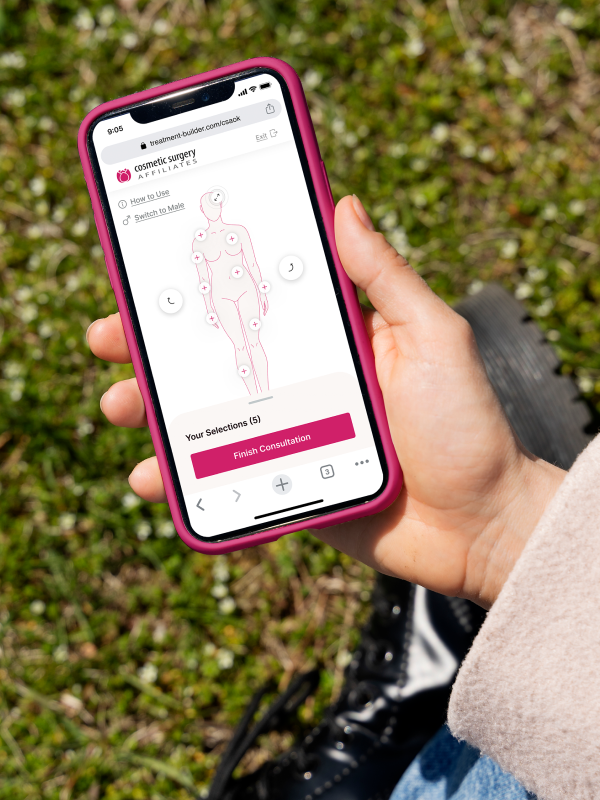


After significant weight loss, excess skin rarely confines itself to one area. It shows up at the abdomen, but also across the back, the hips, the outer thighs, and the upper arms. That is what separates body contouring from a single procedure like a tummy tuck: the excess is circumferential, so the surgical plan has to be as well.
According to the ISAPS 2024 Global Survey, body and extremities procedures accounted for more than 6 million surgical cases worldwide last year. A body lift is among the procedures used to address what remains after the weight is gone.
At Cosmetic Surgery Affiliates in Oklahoma City, our board-certified cosmetic surgeons work regularly with weight loss patients. This guide covers what body contouring involves, who it suits, and which procedures address which areas.
Key takeaways
Here’s the quick version of what this guide covers about body contouring after major weight loss.
- Body contouring is a category of procedures (tummy tuck, body lift, arm lift, thigh lift, breast surgery) that removes excess skin and reshapes underlying tissue. It is the finishing work after stable weight, not a weight loss tool.
- Stable weight matters more than how you got there. Most surgeons want you holding your goal weight within about five pounds for 6 to 12 months before surgery.
- Procedures can be combined to address several regions in one recovery, with strong satisfaction reported across body contouring cases.
- The most common issues are wound-healing concerns and small fluid pockets (seromas), both usually manageable. Stable weight, no nicotine, and following post-op instructions are the biggest levers you control.
- Insurance rarely covers cosmetic body contouring, but a panniculectomy may qualify when documented rashes, infections, or mobility limits show medical necessity.
What is body contouring surgery and why is it needed after weight loss?
Before walking through candidacy and procedures, it helps to understand what body contouring is actually solving for. The procedure category removes excess skin, redistributes fat, and reshapes the underlying tissue. The goal is to reshape the contour, not the number on the scale. Our complete guide to skin removal surgery covers the skin-removal side of that reshaping in more depth.
Elasticity after major weight loss
Skin is elastic, but its stretch has limits. When your body holds a much larger size for years, the skin and deeper supporting tissues remodel to accommodate that size. After significant weight loss, those tissues often cannot snap back.
The amount of excess skin depends on factors you cannot control (genetics, age, time spent at higher weight) and a few you can (skin care, hydration, nicotine use). For many people, years of strength training and dermatology treatments still do not close the gap.
Functional benefits beyond appearance
Excess skin is not only cosmetic. Skin folds trap moisture, which leads to recurring rashes, fungal infections, and breakdowns in chafing zones. Clothing fit becomes a constant negotiation, and physical activity can feel limited.
Body contouring addresses functional issues alongside the visual change. Many patients describe the relief of putting on a t-shirt, sitting down, or exercising without adjusting fabric over folds. That practical comfort is often as meaningful as the new shape.
Surgical versus non-surgical body sculpting
Non-surgical body sculpting (radiofrequency tightening, ultrasound fat reduction, laser tightening) can help with mild skin laxity and small fat pockets. It tightens existing tissue rather than removing it.
After major weight loss, the gap is usually too wide to close without surgery. Once that’s clear, the next question is whether you and your timing are right for it.
Am I a good candidate and when is the right time for body contouring?

Good candidates have completed the weight loss part and are now ready to address what’s left. Surgeons evaluate three things during candidacy, and it’s worth looking at all three before booking a consultation.
Weight loss completed and weight stable
A target of holding your goal weight within about five pounds for 6 to 12 months is the standard most experienced surgeons use. Triple board-certified, fellowship-trained cosmetic surgeon Dr. Erik Nuveen, who focuses on massive weight loss management, applies this standard with his patients. Holding a steady weight protects your healed skin and preserves your final contour.
The path you took to get here matters less than the stability you have maintained since. Patients arrive after bariatric surgery, after semaglutide and tirzepatide injections for weight loss (with newer options such as retatrutide on the horizon), and after committed diet and exercise. All three paths can lead to good outcomes if weight is steady.
Bariatric timing
For bariatric patients, surgeons typically recommend waiting 12 to 18 months after the original weight loss surgery. By then, weight loss has plateaued, nutrition has stabilized, and your body has the protein stores it needs to heal.
Health, lifestyle, and overall readiness
The other half of candidacy is your overall health. Surgeons screen for uncontrolled medical conditions, current smoking, and active substance use. Nicotine in particular shrinks the small blood vessels that healing skin depends on.
What if you still have excess fat along with loose skin? That is common and does not disqualify you. Many procedures combine skin removal with liposuction in the same surgical session.
If you’re wondering whether you’re at the right point in your story, a candid conversation is the fastest way to find out. You can schedule a consultation with one of our surgeons to walk through your specific situation, no commitment required.
What body contouring procedures are available after weight loss?
The category covers a handful of distinct procedures, each one addressing a specific zone. Most post-weight-loss patients need more than one, because skin laxity rarely stays confined to a single area. The table below gives a quick scan.
| Procedure | What it addresses | Surgical time | Initial downtime |
|---|---|---|---|
| Tummy tuck (abdominoplasty) | Lower abdomen skin and fat, separated abdominal muscles | 3 to 5 hours | 2 to 4 weeks before desk work |
| Lower body lift | Abdomen, waist, hips, outer thighs, buttocks, lower back | About 2.5 hours | 2 to 5 days |
| Arm lift (brachioplasty) | Upper arm skin and underlying tissue | 90 minutes to 2 hours | 2 to 4 days |
| Thigh lift (thighplasty) | Inner or outer thigh skin laxity | About 2 hours | 2 to 4 days |
| Upper body lift | Upper chest, back, neck, and arms | About 3 hours | 2 to 4 days |
| Excess skin removal | Loose skin not covered by a specific named lift | 2 to 4 hours | 2 to 4 days |
Our body contouring program is built around this kind of multi-area work. The plan gets customized to whichever regions need attention.
Tummy tuck and the panniculectomy distinction
A tummy tuck, or surgical belly fat and skin removal, removes excess skin and fat across the lower abdomen. It tightens separated abdominal muscles (a condition called diastasis recti) and repositions the belly button for a smooth contour. After major weight loss, the muscles often remain stretched even after the skin is excised.
A panniculectomy is different. It removes only the hanging apron of lower abdominal skin without addressing the muscles or repositioning the navel. Because it is more functional than cosmetic, it is the procedure most likely to be covered by insurance.
Lower body lift (belt lipectomy)
A lower body lift, also called a belt lipectomy, is a lower body contouring surgery that uses a 360-degree incision around the waistline. It addresses the abdomen, hips, outer thighs, buttocks, and lower back in a single procedure. It is the most comprehensive option for patients who lost weight across the entire midsection.
The trade-off is a longer scar that wraps the body, placed where most underwear and swimsuit cuts will cover it. For patients whose excess skin spans the whole circumference, this option often delivers a more balanced result than a tummy tuck alone.
Arm lift (brachioplasty)
An arm lift, or arm cosmetic surgery for skin excess, addresses the inside of the upper arm, sometimes nicknamed “bat wings.” The incision runs from the underarm toward the elbow along the inner arm. It is mostly hidden when your arm is at your side. When excess fat is also present, an arm lift can be combined with stubborn fat reduction surgery in the same session.
Thigh lift (thighplasty)
A thigh lift plastic surgery procedure tightens excess skin around the inner or outer thighs. It removes tissue that often causes chafing and clothing fit problems. The exact incision pattern depends on whether laxity is mostly inner-thigh or wraps the outer thigh. Thigh lifts are commonly combined with a lower body lift.
Upper body lift, breast procedures, and combinations
An upper body lift surgery targets sagging skin across the upper chest, back, neck, and sometimes the arms. It is more common in men, who tend to lose volume in different regions than women do.
Breast tissue is also affected by major weight loss. A breast lift to tighten and firm breast tissue, reducing cup size for a more comfortable fit through reduction, or a breast lift with augmentation can restore shape when the breasts have deflated. Many of these procedures are safely combined in one surgical session.
Brittney, a Cosmetic Surgery Affiliates patient who underwent multiple procedures after a 212-pound weight loss, shared her experience:
“Dr. Nuveen has given me a body lift, skin removal, tummy tuck, bbl, breast lift and augmentation after my 212 pound weight loss. He was very attentive and listened to my concerns and what I wanted! His staff has always treated me like family when I call or walk in the door.”
Once you know which procedures fit your map, the next question is what the experience looks like. Here is the through-line from first conversation to final follow-up.
What should I expect before, during, and right after body contouring surgery?
A body contouring journey is more than the operating room. It starts with a consultation and stretches through preparation, the day itself, the first week, and the months that follow.
Choosing the right surgeon
Body contouring after major weight loss is a specialized area. The surgeon you choose matters. For patients comparing cosmetic surgery options in OKC, that specialization should be the first credential to verify. Look for a board-certified cosmetic surgeon with documented experience in massive weight loss patients. Ask to see before-and-after photos of patients with your starting point.
The consultation is a two-way evaluation. The surgeon assesses your anatomy, skin quality, weight stability, and overall health while you assess their experience, communication, and the plan they propose. Our team offers both in-person consultations at the Oklahoma City office and virtual consultations for patients who want to start from home.
Bring a list of questions, recent medical history, and the concerns you have been sitting with quietly. The right consultation makes space for the practical questions and the emotional ones.
Preparing for surgery
Pre-op weeks include blood work, medical clearance, and instructions on what to stop or start. Common items include:
- Stop nicotine entirely for at least four to six weeks before and after
- Pause blood thinners and anti-inflammatories as directed
- Build up your protein intake to support healing
- Arrange transportation and at-home help for the first few days
The practical day-of pieces also matter. Wear comfortable loose clothing on surgery day, do not eat or drink for at least eight hours before, and shower the morning of using a Hibiclens antiseptic wash.
Surgery day and the first hours
Body contouring is typically performed under general anesthesia, so you are fully asleep through the procedure. Surgical times vary with the scope of work. A single arm lift may take 90 minutes to 2 hours, while a circumferential lower body lift can run 4 to 6 hours or more.
You will wake up in a recovery area with compression garments already on, surgical drains in place if needed, and pain medication on board. Smaller cases often go home the same day, while larger combined surgeries may include an overnight stay.
Drains, compression, and the first two weeks
Most procedures use small surgical drains to clear fluid from beneath the incisions. They feel manageable in practice and most are removed within one to three weeks. Compression garments stay on around the clock for the first several weeks, then shift to daytime-only wear.
The first three to five days are the hardest of the recovery. Most patients can walk gently within a day, which helps prevent blood clots and supports healing.
Return to work, exercise, and final results
Desk work is usually possible within 2 to 4 weeks. Jobs with lifting or constant motion may need 4 to 6 weeks. Strenuous exercise generally resumes around 6 weeks with surgeon clearance.
Final results aren’t visible at week two, or even week four. Swelling settles over 3 to 6 months. The final contour usually emerges at the 9 to 12 month mark. Scars continue to mature and flatten for 12 to 18 months after surgery.
Alta, a patient who had a full lower body lift and breast lift, described her experience with our team:
“I cannot say enough wonderful things about Dr. Tessa Meyer and the entire team at Cosmetic Surgery Affiliates. Dr. Meyer is a true artist — she understands the form, lines, and natural balance of the human body, and that expertise is evident in her results.”
Ready to talk through the timeline that fits your situation? You can book your consultation and walk through what your specific recovery would look like.
What are the risks, complications, and scarring from body contouring?
Going into surgery informed makes the whole process less daunting, not more. Body contouring is well-established and the vast majority of patients go through it without serious issues. Understanding what is possible puts you in the strongest position.
Most common surgical concerns
The issues that come up most often are wound-healing concerns at the incision lines and small fluid pockets called seromas. Seromas usually reabsorb on their own over a few weeks. Minor bruising under the skin is also common. Serious concerns like infection, deep vein blood clots, or major wound separation are genuinely uncommon.
Surgeons take active steps to minimize each: compression, early walking, careful incision technique, and tight follow-up. Patients who follow this protocol describe their satisfaction as high.
Scarring after body contouring
Scars are part of the trade. Every body contouring procedure leaves a scar where the skin was excised. Surgeons place those incisions where clothing covers them whenever possible.
Tummy tuck scars sit low along the bikini line. Arm lift scars run on the inner arm. Lower body lift scars wrap around the waist where most underwear and swimsuit cuts hide them. Scars look red and obvious in the first three to six months, then fade and flatten over the next 12 to 18 months.
Sun protection, scar massage, and silicone sheeting all help the scar settle into a thinner, lighter line. For stubborn scarring, revision options like laser treatments are available later.
Weight loss patients and higher-risk variables
Patients who lost a lot of weight are sometimes at slightly higher risk for wound-healing concerns. The skin and nutrition are still recovering from years of carrying the weight and the rapid loss. Bariatric patients can also have lower protein stores or vitamin deficiencies.
The good news: those variables are screenable and modifiable. Pre-op labs catch nutritional gaps. The patients who do best are the ones who arrived prepared.
Warning signs during recovery
Most surgical experiences are quiet. Still, knowing what’s worth a call to the office gives you peace of mind. Reach out if you notice:
- Increasing redness, warmth, or pus at an incision
- A sudden change in pain that worsens instead of improving
- Fluid that fills back up after a drain was removed
- Calf pain, swelling, or shortness of breath
- A fever above 101°F
Most calls turn out to be reassurance calls. The office would rather hear from you once too often than not enough.
How much does body contouring cost and will insurance cover it?
Cost is the question almost every patient is sitting with quietly. We know the financial side feels heavy, especially after years of investment in the weight loss part. The honest answer is that body contouring is a significant investment, and it is one that can be planned and financed.
Published price ranges at our practice
Every procedure at Cosmetic Surgery Affiliates is quoted as a single, all-inclusive fee that covers anesthesia, facility, supplies, and professional fees. This single-fee policy has been in place for more than 24 years.
The published ranges for body contouring:
- Mini abdominoplasty: $4,500 to $9,500
- Full tummy tuck (abdominoplasty): $11,000 to $14,000
- Full tummy tuck with liposuction in the treatment area: $17,000 to $20,000
- Arm lift (brachioplasty): $12,500 to $15,500
- Arm lift with liposuction: $5,000 to $12,000
- Thigh lift: $14,000 to $17,000
- Lower abdomen body lift: $20,000 to $23,000
- Circumferential lower body lift: $20,000 to $23,000
- Maxi body lift: $16,000 to $19,000
- Upper back lift: $7,700 to $10,700
- Breast lift: $9,500 to $13,500
- Mommy makeover (combined): $9,000 to $12,000
- Single area of liposuction (first area): $5,000 to $8,000
- Each additional liposuction area: $2,500 to $5,500
For procedures not listed here, pricing varies based on your individual treatment plan. The consultation gives you a specific quote tied to your anatomy and goals.
Insurance and panniculectomy coverage
Insurance rarely covers body contouring because most of it is classified as cosmetic. The exception is a panniculectomy. Coverage can apply when documented chronic rashes, recurring infections, or mobility limits show medical necessity.
Even when a panniculectomy is approved, the muscle repair and umbilicus repositioning that come with a full tummy tuck are not covered. Many patients combine an insurance-covered panniculectomy with an out-of-pocket tummy tuck upgrade.
Financing through PatientFi and Alphaeon
To help make body contouring more accessible, our team offers flexible financing through PatientFi and Alphaeon. Both providers offer monthly payment plans with no up-front cost and no pre-payment penalties. You can prequalify with no impact to your credit score before you commit.
Michelle, a patient who chose a mommy makeover after drastic weight loss and four pregnancies, shared what it meant to her:
“Words can not express how grateful I am for the care and transformation I received. Having drastic weight loss and four pregnancies, I decided to proceed with a mommy makeover. Dr Nuveen and Brenda provided me with exemplary care.”
Conclusion
Body contouring after major weight loss is the work of finishing what you started. It addresses what diet, exercise, or bariatric surgery cannot reach on their own. Surgeons can mix and match procedures to fit your specific map of skin and reshaping needs.
At Cosmetic Surgery Affiliates in Oklahoma City, our team has spent more than two decades walking alongside post-weight-loss patients. We believe every patient deserves to feel heard, respected, and confident, whether that means requesting a consultation today or simply gathering information for the right moment.
Frequently Asked Questions
Is body contouring the same as liposuction?
No. Liposuction removes pockets of fat from beneath the skin, while body contouring is the broader category that removes excess skin and reshapes tissue. For post-weight-loss patients, liposuction alone rarely solves the problem because the issue is loose skin, not fat.
Will body contouring help me lose more weight?
No, body contouring is not a weight loss tool. Some procedures remove tissue weight (a panniculectomy can remove several pounds of excess skin), but the goal is reshaping, not weight loss. Patients who want lasting results need to reach a stable weight first.
How soon after gastric bypass surgery can I have body contouring?
Most surgeons recommend waiting 12 to 18 months after bariatric surgery before scheduling body contouring. By then, weight has stabilized, nutrition has rebuilt, and the body has the protein stores it needs to heal. Waiting for that window gives your body the strongest foundation for a smooth, lasting result.
Can I have multiple body contouring procedures done at the same time?
Often yes, depending on which procedures are involved and your overall health. Combining two to three procedures in one operation is common and well-studied, and it can mean one recovery instead of two or three. Your surgeon will weigh the safety side carefully.
How long do I need to wear compression garments after body contouring?
Most patients wear compression around the clock for the first 4 to 6 weeks, then shift to daytime-only wear for another 4 to 6 weeks. Your surgeon will tailor the timeline to which procedures you had and how your healing is progressing.
*Disclaimer: This content is for educational purposes only and does not constitute medical advice. A consultation with a qualified board-certified surgeon is required to determine the best treatment plan for your individual needs and any questions you may have about a medical condition or procedure.