

You’ve put in the work. The meal prep, the gym sessions, the patience it took to reach a weight you’re proud of. But when you look down, there’s still loose skin that no amount of crunches will change, and it feels like your body didn’t get the memo.
That frustration is more common than you’d think. Abdominoplasty, the medical term for a tummy tuck, ranks as the fourth most popular cosmetic surgical procedure worldwide according to ISAPS.
At Cosmetic Surgery Affiliates in Oklahoma City, our board-certified cosmetic surgeons have performed over 3,000 weight-loss procedures, tailoring every surgical plan to each patient’s body and goals. This article covers who makes a good candidate for a tummy tuck, the different types available, what happens before and during surgery, risks, recovery, and what kind of results you can realistically expect.
Key takeaways
- A tummy tuck removes excess skin and fat while repairing weakened abdominal muscles, addressing problems that diet and exercise alone can’t fix.
- There are several types of tummy tucks, including mini, full, and extended, and the right one depends on how much skin laxity you have and which areas need attention.
- Most patients return to desk work within two weeks, with full activity resuming around six weeks. Final results typically appear within three to six months as swelling resolves.
- Tummy tuck results can be long-lasting when you maintain a stable weight, and scars are placed along the bikini line where they’re easily concealed.
- A consultation is a two-way conversation where you evaluate the surgeon just as much as they evaluate you, so come with questions and don’t feel pressured to commit on the spot.
Am I a good candidate for a tummy tuck?
The best candidates are adults in overall good health who’ve reached a stable weight but still have excess abdominal skin, stubborn fat, or weakened muscles that won’t respond to diet and exercise. It’s not a weight-loss procedure. A tummy tuck works best as a finishing step after you’ve already done the hard work of reaching your goal weight.
Weight stability matters more than a specific number on the scale. Most surgeons look for weight that hasn’t fluctuated more than five pounds over the past three to six months. Significant weight gain after surgery can stretch the skin and weaken the muscle repair, so reaching a place you can comfortably maintain is important before moving forward.
If you’re planning future pregnancies, it’s generally worth waiting. Pregnancy stretches the abdominal muscles and skin that surgery repairs, which could undo your results. The same applies if you’re planning additional major weight loss.
Prior abdominal surgeries, like a C-section, don’t automatically disqualify you. In many cases, a tummy tuck can even incorporate or improve existing scars. Your surgeon evaluates how previous procedures affect your skin, tissue, and muscle structure during your consultation.
Conditions like diastasis recti, where the abdominal muscles separate during pregnancy, are one of the most common reasons patients seek a tummy tuck. The procedure repairs that separation, restoring core strength along with a flatter appearance. Stretch marks located on the lower abdomen may also be removed along with the excess skin, though marks above the belly button typically remain.
The board-certified cosmetic surgeons at CSA take the time to assess your health history, anatomy, and goals to help you determine whether a tummy tuck is the right fit for your situation.
| Candidate factor | Good candidate | May want to wait |
|---|---|---|
| Weight | Stable for 3-6 months | Planning significant weight loss |
| Family planning | Done having children | Considering future pregnancy |
| Health | Generally good overall health | Uncontrolled chronic conditions |
| Smoking | Non-smoker or willing to quit | Unable to stop smoking |
| Expectations | Understands it removes skin, not a weight-loss tool | Looking for a quick-fix solution |
If you’re wondering where you stand, reach out to our team for a one-on-one conversation about your goals and whether a tummy tuck makes sense for you right now.
What are the different types of tummy tuck procedures?
Not every tummy tuck looks the same. The right type depends on where your excess skin sits, how much needs to be removed, and whether your abdominal muscles need repair.
| Type | Best for | Incision | Muscle repair | Recovery |
|---|---|---|---|---|
| Mini tummy tuck | Small amount of skin below the belly button | Short, along bikini line | Optional, limited | Shorter, around 6 weeks |
| Full tummy tuck | Excess skin above and below the belly button | Hip to hip, plus around navel | Yes, full plication | 6-8 weeks |
| Extended tummy tuck | Skin laxity reaching the flanks and hips | Hip to hip, extending to sides | Yes, full plication | 8-12 weeks |
Full tummy tuck
The full, or traditional, tummy tuck is the most commonly performed type, accounting for roughly 91 percent of all abdominoplasty procedures. Your surgeon makes an incision from hip to hip, just above the pubic area, and a second small incision around the belly button.
From there, excess skin and fat are removed from both the upper and lower abdomen. The abdominal muscles are stitched together, pulled tight like a corset, to restore a firm core. The belly button is repositioned through a new opening in the tightened skin.
Mini tummy tuck
A mini tummy tuck uses a smaller incision and targets only the lower abdomen, below the belly button. It’s a good option when there’s a small amount of loose skin, sometimes called a “pooch,” that won’t budge despite exercise.
Because the incision is shorter and the procedure is less involved, recovery tends to be quicker. The belly button usually doesn’t need to be repositioned, and scarring is more limited. Patients with isolated lower-belly fullness often find how a mini tummy tuck can flatten your lower belly is the most direct path forward.
Extended tummy tuck
When excess skin wraps around to the love handles and flanks, an extended tummy tuck addresses a wider area. The incision stretches further to the sides, allowing your surgeon to contour the abdomen, waist, and hips in a single procedure.
This type is often recommended after major weight loss, when skin laxity extends beyond just the front of the abdomen. Recovery takes a bit longer because of the larger treatment area.
The role of liposuction
Liposuction is frequently combined with a tummy tuck to refine the flanks and create smoother contours. Combined abdomen and thigh contouring surgery takes that further, addressing adjacent areas in a single recovery period. After pregnancy, a full tummy tuck is the most common choice because it repairs diastasis recti and removes skin from the entire abdomen. For patients who’ve lost 100 pounds or more, an extended approach or even a circumferential body lift may be a better fit, depending on where the skin laxity is most pronounced. Reviewing what to expect from body lifts surgery can help patients decide between an extended tummy tuck and a full body lift.
What happens before and during your tummy tuck?
Understanding the full process, from your first appointment to the day of surgery, makes the experience feel much more manageable. Here’s what each stage looks like.
Your consultation
Think of the consultation as a two-way conversation. It’s not just a chance for the surgeon to evaluate you. It’s equally your chance to evaluate them. When preparing for your tummy tuck consultation in okc, bring a list of questions and your medical history so the conversation covers what matters most to you.
During this visit, your surgeon reviews your medical history, performs a physical exam, and listens while you talk about your goals. They present treatment options and, together, you decide on the approach that best fits your body and your expectations. There’s no pressure to commit on the spot.
At Cosmetic Surgery Affiliates, patients can start with either an in-person visit at the Oklahoma City office or a virtual consultation from home. Both options give you the space to ask questions and get honest, personalized answers.
If cost is on your mind, the practice offers flexible financing through Cherry, PatientFi, and Alphaeon, which can help make the procedure more manageable.
Preparing for surgery
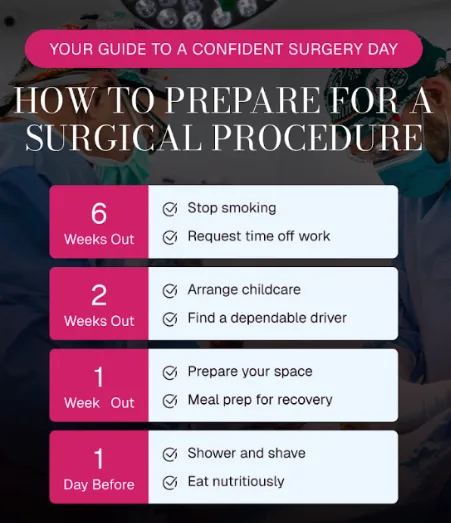
Once you’ve decided to move forward, your surgeon gives you specific instructions to follow in the weeks before your procedure. Quitting smoking at least four to six weeks beforehand is one of the most important steps, since smoking significantly slows healing. Taking this step well ahead of surgery is one of the most effective ways to protect your results and support a smooth recovery.
You’ll also need to stop taking aspirin, anti-inflammatory medications, and certain supplements about two weeks before surgery. On the morning of your procedure, shower with an antibacterial cleanser and avoid eating or drinking for at least eight hours.
Arrange for someone to drive you home afterward and stay with you for the first night. Having a helper for the first week, especially if you have young children or pets, makes a real difference in how comfortably you recover.
The procedure itself
A tummy tuck is typically performed under general anesthesia and takes about 90 minutes for a standard procedure, though more extensive cases can take two to four hours. It’s usually done as an outpatient surgery, meaning you go home the same day.
Your surgeon makes the main incision from hip to hip in the suprapubic crease, just above the pubic area. Excess skin and fat are removed, and the abdominal muscles are tightened with permanent stitches. If needed, the belly button is repositioned through a small new opening, and drainage tubes may be placed to reduce fluid buildup. For a deeper look at what really happens during tummy tuck surgery step by step, our walkthrough covers each phase from anesthesia through closure.
Combining with other procedures
Many patients pair a tummy tuck with additional procedures for more comprehensive results. A mommy makeover plastic surgery plan, for example, typically combines abdominal contouring with breast enhancement, with augmentation added when desired.
Your surgeon can create a combined surgical plan during your consultation. One larger study found that overall concern rates for combined procedures remained low at around 4 percent across more than 25,000 cases.
Keith Marker, a patient who had excess stomach skin removed in Oklahoma City, shared their experience:
“I had an absolutely amazing experience with Cosmetic Surgery Affiliates in Oklahoma City. I had a procedure to remove excess skin from my stomach, and from the very first consultation through recovery, the entire team made the process smooth, comfortable, and reassuring. Every nurse and staff member was incredibly kind, professional, and attentive.”
Once you know what the procedure involves, the next question most people have is about what could go wrong.
What are the risks and safety concerns of a tummy tuck?
Every surgical procedure carries some level of risk, and being informed about those possibilities is actually one of the most empowering steps you can take. Knowing what to watch for helps you prepare and gives you confidence going in.
The most common concern after a tummy tuck is seroma, a small pocket of fluid that can collect beneath the skin. Studies show this occurs in roughly 12 to 24 percent of patients, and it’s typically managed with drainage or your body reabsorbs the fluid naturally over time.
Scarring is a normal part of any surgery, and tummy tuck scars are placed along the bikini line where underwear or a swimsuit easily covers them. The scar starts out pink or red and gradually fades over 12 to 18 months into a thin, flat line that blends with your natural skin tone. Following your surgeon’s scar care instructions helps the healing process along.
More serious concerns like blood clots are genuinely uncommon, occurring in fewer than 0.2 percent of patients in a large study of over 55,000 cases. Your surgical team takes preventive steps, including compression devices and early walking, to minimize that risk even further.
Smoking is the single biggest controllable risk factor. Research shows that smokers face significantly higher rates of wound healing issues compared to non-smokers. Quitting well before surgery is one of the best things you can do to protect your results and your safety.
When choosing a surgeon, look for board certification, a track record of tummy tuck procedures, and a willingness to answer your questions thoroughly. The right surgeon welcomes your questions rather than rushing through them.
What is tummy tuck recovery really like?
Recovery is where patience pays off. Most patients describe the first week as the most challenging, but each day gets noticeably easier. Here’s a realistic look at what to expect.
| Timeline | What to expect |
|---|---|
| Days 1-3 | Most discomfort, limited mobility, rest with help |
| Week 1 | Drains removed, short walks encouraged, off heavy pain meds |
| Weeks 2-4 | Return to desk work, compression garment 12 hours/day |
| Weeks 4-6 | Light exercise, most swelling resolves |
| 3-6 months | Final results visible, scars continuing to fade |
The first week
The first few days are the tightest, both literally and figuratively. You’ll feel soreness around your midsection, and standing fully upright takes a few days as your body adjusts. Most patients find that pain peaks around days two and three, with average discomfort rated around 5 out of 10 on a pain scale.
Your surgeon prescribes pain medication, and most patients transition to over-the-counter options by the end of the first week. Walking short distances is encouraged right away, even on day one, because it helps circulation and reduces the chance of blood clots.
If drains were placed, they typically come out within about a week. Your compression garment stays on around the clock for the first two weeks.
Weeks two through six
By week two, many patients feel well enough to return to desk work. Compression garments shift to about 12 hours a day during weeks three and four, and become optional after about a month.
Light exercise, like easy walks, usually gets the green light around week three or four. Your surgeon asks you to avoid anything strenuous, including lifting, intense stretching, or core exercises, until the six-week mark.
The long view
Most of the swelling resolves within the first month, but three to six months is the realistic window for seeing your final results. Early on, you might notice some skin puckering or unevenness, which is completely normal and smooths out as your body continues to heal.
Watch for warning signs like fever above 100.5 degrees, increasing redness, unusual swelling in your legs, or discharge from the incision site. These are uncommon, but they warrant a call to your surgeon.
Francesca Morris, who had a breast lift and tummy tuck in OKC, shared their experience:
“I had a breast lift and tummy tuck with Cosmetic Surgery Affiliates in OKC, and I couldn’t be happier with my experience. Dr. Meyer was absolutely amazing — she made me feel comfortable and confident from day one. She’s warm, fun, and incredibly honest, always putting your best interests first.”
Once the healing phase wraps up, the results are where the real payoff lives.
What results can I expect from a tummy tuck?
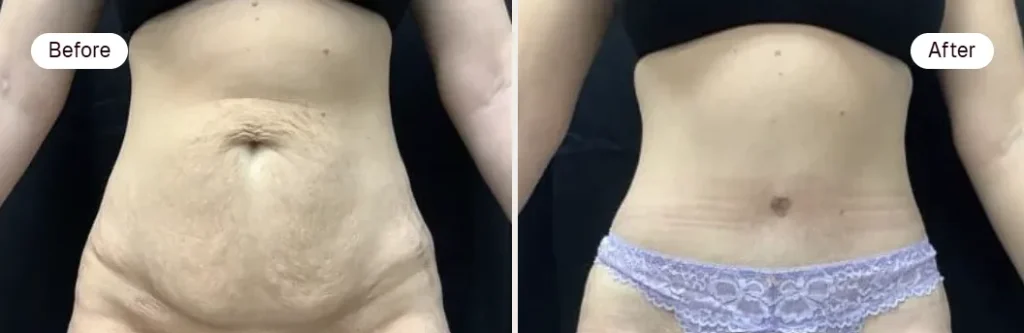
You’ll notice a dramatic difference as soon as the procedure is finished, even with the initial swelling. But the result you’ll really love takes shape gradually over the following months as your body heals.
Most swelling resolves within the first month. By three months, the majority of patients see results close to their final outcome. Full maturation, including scar fading and complete skin settling, continues for up to a year. At the time of surgery, some skin pleating or puckering is normal, but it smooths out with time.
The scar sits horizontally along your bikini line, typically between six and 13 centimeters at the midline. It starts out pink or raised, then fades into a thin, flat line over 12 to 18 months. Your surgeon places incisions strategically so they’re hidden beneath underwear or a swimsuit.
Maintaining your results comes down to a stable weight. Fluctuations of more than five to 10 pounds can stretch the skin and affect your contour. One study of 188 patients found that those who kept their weight stable actually lost an average of nearly 10 additional pounds in the five years after surgery.
Tummy tuck results can last a lifetime with consistent habits. In a large tracking study of nearly 9,000 procedures, 92 percent of patients never needed a revision. Balanced nutrition, regular exercise, and avoiding future pregnancy help preserve what surgery achieved.
At CSA, our board-certified cosmetic surgeons have performed thousands of body contouring procedures and can show you real patient before-and-after photos during your consultation so you can get a clear picture of what’s possible for your body. If you’re still exploring beyond a tummy tuck specifically, our overview of popular cosmetic surgery okc procedures explained gives you a sense of the broader menu.
Conclusion
A tummy tuck addresses what no amount of willpower can fix on its own — excess skin, separated muscles, and stubborn fat that sticks around after weight loss, pregnancy, or simply the passage of time. If you’ve been putting in the work and still not seeing the results you deserve, that’s not a failure. It’s just where surgery can pick up where effort leaves off.
Understanding the different types of procedures, what recovery actually looks like, and what results you can realistically expect, puts you in a much stronger position to make a decision that feels right, not rushed.
At Cosmetic Surgery Affiliates in Oklahoma City, we believe every patient deserves to feel heard, respected, and confident in their choices. If you’re ready to book your consultation, we’d love to help you take that next step. And if you’re still thinking it over, that’s perfectly okay too — our team is here whenever you are.
Frequently asked questions
Can I get pregnant after a tummy tuck?
Yes, pregnancy is still possible after a tummy tuck. However, it can stretch the skin and separate the muscles that were repaired during surgery, potentially affecting your results. Most surgeons recommend waiting until you’re done having children before scheduling the procedure.
What’s the difference between a tummy tuck and liposuction?
Liposuction removes fat but doesn’t address loose skin or repair separated muscles. A tummy tuck does all three: removes excess skin, eliminates stubborn fat, and tightens the abdominal wall. Many patients benefit from having both procedures done together for the most complete result.
Does a tummy tuck remove stretch marks?
Stretch marks located on the lower abdomen, below the belly button, are often removed along with the excess skin. Marks above the belly button or on the sides typically remain, though they may shift position as the skin is pulled tighter.
When can I exercise after a tummy tuck?
Light walking starts on day one to keep circulation moving. Most patients can begin easy exercise around weeks three to four, with full activity, including core work and heavy lifting, cleared around the six-week mark.
Is tummy tuck surgery safe?
A tummy tuck is considered a safe procedure when performed by a qualified, board-certified cosmetic surgeon. Serious concerns are genuinely uncommon. Choosing an experienced surgeon, following pre-op instructions, and attending all follow-up appointments are the best ways to minimize risk.
Can a tummy tuck fix diastasis recti?
Absolutely. Diastasis recti, where the abdominal muscles separate during pregnancy or weight gain, is one of the most common reasons patients seek a tummy tuck. The surgeon stitches the muscles back together during the procedure, restoring both core strength and a flatter profile.
How big are tummy tuck scars?
The main scar runs horizontally along the bikini line, typically from hip to hip. It starts out more visible but fades significantly over 12 to 18 months. Your surgeon places the incision low enough that underwear or a swimsuit covers it completely.
What’s the difference between a tummy tuck and a mommy makeover?
A mommy makeover is a combination of procedures designed to restore your body after pregnancy and breastfeeding. It typically includes a tummy tuck alongside breast work, like a lift or augmentation. A standalone tummy tuck focuses only on the abdomen.
Does insurance cover tummy tuck surgery?
In most cases, a tummy tuck is considered cosmetic and isn’t covered by insurance. If your surgeon determines the procedure is medically necessary, for example to repair a hernia or relieve severe skin irritation, partial coverage may be possible.
*Disclaimer: This content is for educational purposes only and does not constitute medical advice. A consultation with a qualified board-certified surgeon is required to determine the best treatment plan for your individual needs and any questions you may have about a medical condition or procedure.