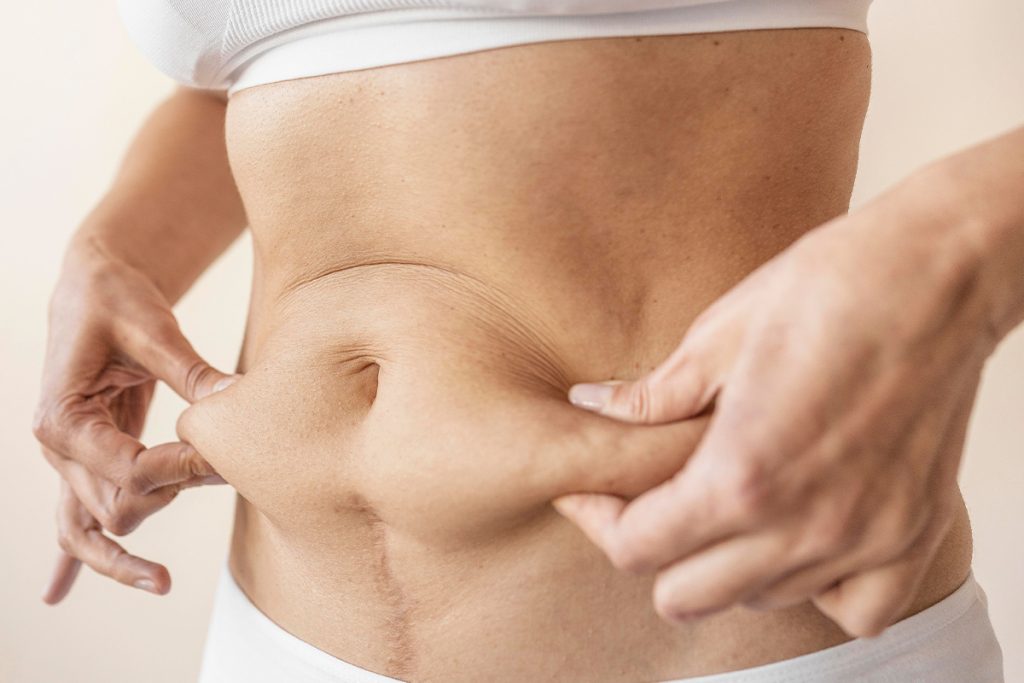


Excess skin after major weight loss comes with its own daily adjustments and challenges that you may not have expected when you started your weight loss journey. Tucking a fold into a waistband before leaving the house. Powder after a shower so the skin underneath doesn’t get raw. Sitting a certain way so nothing bunches.
If that describes your routine, you aren’t alone; it’s common for people who have lost weight. Removing loose skin after weight loss has moved well into the mainstream. Abdominoplasty, the formal name for a tummy tuck, ranked among the most common surgical cosmetic procedures in the world in 2024, according to ISAPS.
At Cosmetic Surgery Affiliates in Oklahoma City, our board-certified cosmetic surgeons work with people who reached a hard-won goal and now want to finish what their body started. Loose belly skin is one of the most common reasons they walk through the door. This article covers why that skin sticks around and your surgical and non-surgical options. We’ll also walk through recovery, how cost and insurance work, and how to know when you’re ready.
Key takeaways
Short on time? Here’s the gist of what this guide covers about excess belly skin and your real options for removing it.
- Loose belly skin after major weight loss happens because stretched collagen and elastin can’t fully bounce back, and larger or faster losses tend to leave more behind.
- It’s not only a cosmetic concern. A heavy skin overhang can trigger recurring rashes, chafing, and trouble with movement and hygiene.
- Surgery is the only way to physically remove excess skin. A panniculectomy takes off the hanging apron, a tummy tuck also tightens muscle, and a lower body lift treats skin that wraps around the torso.
- Non-surgical treatments like radiofrequency can firm mild looseness by building collagen, but they can’t remove significant hanging skin, where a procedure is the definitive answer.
- A medically necessary panniculectomy may be partly covered by insurance, while a cosmetic tummy tuck is usually self-pay, and a stable weight for several months sets up the most reliable result.
Why do you have excess belly skin after weight loss?
The short answer is that skin can only stretch and bounce back so far. When you carry extra weight for a while, the skin over your abdomen expands to keep up. Two proteins do the heavy lifting here: collagen, which gives skin its structure, and elastin, which lets it spring back.
The longer that skin stays stretched, the more those fibers get worn down. When the weight comes off, especially a large amount, there often isn’t enough healthy collagen and elastin left for the skin to fully retract. What’s left behind drapes instead of snapping back.
How much loose skin you end up with depends on a handful of things working together. None of them are about doing something wrong.
- How much weight you lost, with larger losses (often 100 pounds or more) leaving more redundant skin
- How quickly the weight came off, since fast loss gives skin less time to adjust
- Your age, because collagen production naturally slows over time
- Genetics and skin quality, which set your starting elasticity
- Whether you smoke, since smoking restricts blood flow to the skin and slows healing
The speed factor is why this question comes up so often with newer weight loss medications. Rapid weight loss from GLP-1 weight loss injections like semaglutide leaves the skin little time to keep pace, a 2025 review noted. That’s why sagging often shows up around the abdomen.
The medication isn’t damaging your skin. The pace of the change simply outruns it.
Here’s the part people most want to know. Mild looseness can improve on its own over several months, particularly after smaller losses. But moderate to severe hanging skin, the kind that folds over itself, rarely tightens up without help, no matter how many crunches you do.
And it’s not purely cosmetic. Excess belly skin can trap moisture and lead to recurring rashes, skin infections, and irritation, and a heavy overhang can make movement and hygiene genuinely harder. Understanding why the skin behaves this way is the first step. The next is knowing what you can actually do about it.
What are your surgical options for removing excess belly skin?

When loose skin won’t retract on its own, surgery is the only way to remove it. Here’s the good news. You have several options, and the right one depends on how much skin you have and where it sits.
Triple board-certified, fellowship-trained cosmetic surgeon Dr. Erik Nuveen counts massive weight loss management among his main areas of focus. Matching the procedure to your anatomy is really the whole game.
Here’s a quick look at how the main procedures compare before we get into each one.
| Procedure | What it removes | Tightens muscle? | Best suited for |
|---|---|---|---|
| Panniculectomy | The hanging apron of skin and fat (the pannus) | No | Functional relief from a heavy overhang |
| Tummy tuck (abdominoplasty) | Excess skin and fat | Yes | Loose skin plus separated abdominal muscles |
| Lower body lift (belt lipectomy) | Skin and fat around the entire lower torso | Yes | Sagging that wraps around the flanks and back |
Panniculectomy
A panniculectomy, a form of cosmetic surgery for sagging skin, removes the pannus, the apron of skin and fat that hangs over the lower abdomen, without tightening the underlying muscle. It’s a more functional procedure, often chosen by people whose overhang causes rashes, hygiene struggles, or trouble moving.
Because it focuses on relief rather than sculpting, a panniculectomy doesn’t reposition the belly button or flatten the muscle wall. For some people that’s exactly enough. For others, it’s one piece of a larger plan.
Tummy tuck
A tummy tuck as body contouring after weight loss goes a step further than a panniculectomy. It removes excess skin and fat, tightens the abdominal muscles that often separate after major weight changes, and repositions the navel for a natural look. The incision typically runs low, from hip to hip, where underwear or a swimsuit can cover it.
If you have a smaller amount of lower-belly skin, a mini tummy tuck may be enough, while extensive loose skin may call for an extended approach. Your surgeon decides based on how much skin needs to come off.
Lower body lift, or belt lipectomy
When loose skin wraps all the way around, not just across the front, a belt lipectomy procedure addresses the whole lower torso in one stage. Also called a lower body lift, it uses an incision around the beltline to lift and tighten the abdomen, flanks, buttocks, and outer thighs together.
It’s a bigger procedure with a longer recovery, but for circumferential sagging after a very large weight loss, it delivers a result that spot treatments can’t.
Liposuction and combined procedures
Fat removal surgery near me is worth understanding here because of what it can’t do. It removes fat, not skin, so on its own it won’t fix loose skin and may even leave a treated area looking softer. It shines as a complement, refining contours during a skin-removal surgery rather than replacing it.
A Fleur-de-Lis abdominoplasty adds a vertical incision to remove skin sideways as well as up and down. Some surgeons use it for significant upper-belly looseness, though it isn’t right for everyone. Many people also combine procedures to treat more than one area in a single recovery.
If you’re weighing several of these, reach out to our team to talk through what fits. Then comes a question many people ask first: can any of this be done without surgery?
Can you tighten loose belly skin without surgery?
This is one of the most hopeful questions people ask, and the honest answer is a mix of yes and no. Non-surgical treatments can genuinely improve mild skin laxity, but they can’t remove skin the way a procedure can. Knowing the difference saves you money and disappointment.
Energy-based treatments are the most studied non-surgical route for the abdomen. They work by heating the deeper layers of skin to stimulate fresh collagen, which firms things up gradually over a series of sessions. A few approaches come up most often:
- Radiofrequency treatments, which use heat to tighten and prompt collagen renewal
- Renuvion skin tightening, a minimally invasive option that firms the skin’s support network
- Building muscle through strength training, which fills out the space beneath loose skin
- Topicals like retinol, which can modestly improve skin texture and firmness over time
For mild looseness, these can make a real, visible difference, and they come with little to no downtime. The catch is scope. If you have hanging folds or an apron of skin after a big weight loss, non-surgical tightening simply can’t keep up, and surgery remains the definitive answer.
Think of it like the difference between tailoring a shirt and taking it in at the seams. A little excess can be eased away. A lot has to be removed.
The clearest way to know which camp you’re in is simple. Assess how much skin you’re working with, and whether it still snaps back when you pull it.
Keith, a patient who had excess skin removed from his stomach, shared his experience:
“I had an absolutely amazing experience with Cosmetic Surgery Affiliates in Oklahoma City. I had a procedure to remove excess skin from my stomach, and from the very first consultation through recovery, the entire team made the process smooth, comfortable, and reassuring.”
Once you know surgery is the route, the next worry is usually the price tag and whether insurance will pitch in.
How much does stomach skin removal cost, and will insurance help?
Cost is one of the most stressful parts of this decision, and you deserve straight answers rather than a runaround. What you’ll pay depends on which procedure you need, how much skin is removed, and whether any part of it qualifies as medically necessary.
Cost factors
A panniculectomy, a tummy tuck, and a lower body lift sit at different price points because they involve different amounts of surgery, time, and complexity. A procedure that also tightens muscle or wraps around the body takes longer and costs more than one that removes a single overhang.
At Cosmetic Surgery Affiliates, pricing is refreshingly simple. The practice has used a single, all-inclusive fee for more than 24 years. One number covers anesthesia, the facility, supplies, and the surgeon’s fee, with no surprise line items afterward.
| Procedure | Single all-inclusive fee |
|---|---|
| Mini abdominoplasty | $4,500–$9,500 |
| Maxi tummy tuck | $9,000–$12,000 |
| Full tummy tuck (abdominoplasty) | $11,000–$14,000 |
| Full tummy tuck with liposuction (one area) | $17,000–$20,000 |
| Lower body lift (circumferential) | $20,000–$23,000 |
The insurance route
Here’s where it gets interesting. A panniculectomy is sometimes covered by insurance when it’s considered medically necessary, while a cosmetic tummy tuck almost never is. The dividing line is function, not appearance.
Insurers like Anthem spell out the criteria in their 2026 clinical policy. They look for documented rashes or infections under the overhang that didn’t respond to treatment, a pannus that limits daily activities, and a stable weight. When those boxes are checked, much of the cost may be covered, leaving a smaller share for you.
Financing your procedure
For the cosmetic portion, or when insurance isn’t in the picture, financing makes the math more manageable. You can spread payments over time instead of paying all at once. To see what fits your budget, view financing options through PatientFi and Alphaeon. With the money questions settled, it’s natural to wonder what the weeks after surgery actually feel like.
What is recovery like after stomach skin removal surgery?

Recovery is a gradual climb, not a single event, and knowing the milestones ahead makes the early days far less daunting. Most people are surprised by how much better they feel each week once they’re past the first stretch.
You’ll go home in a compression garment that supports the area and helps your skin re-drape smoothly. Arranging for someone to stay with you that first night keeps things easy. Walking will feel stiff at first, and that’s normal as the muscles relax.
| Timeframe | What to expect |
|---|---|
| First few days | Rest at home, soreness and swelling, help with daily tasks |
| 1 to 3 weeks | Most desk jobs feel manageable again |
| 6 weeks | Clearance for strenuous activity and heavier lifting |
| 3 months and beyond | Swelling settles and your contour keeps refining |
Two things tend to worry people most: drains and scars. Small drains may stay in for a week or two to prevent fluid from collecting, and they come out at a quick follow-up visit. Wearing your compression garment as directed shortens swelling and supports a smoother result, so it’s worth the few weeks of commitment.
Scars are part of the deal with any skin removal, but they’re planned with care. Surgeons place incisions low and where clothing hides them, and following your scar-care instructions helps the line soften and fade over the months that follow. Take the recovery slowly and your body rewards patience.
Of course, every surgery carries some risk, and being a good candidate is part of keeping recovery smooth.
What are the risks, and how do you know if you’re a good candidate?
Reading about surgical risks can feel intimidating, but understanding them is one of the most empowering things you can do before making a decision. The vast majority of people come through skin removal surgery without any serious issues, and good planning is what keeps it that way.
Understanding the risks
The most common things to watch for are minor and manageable: a small pocket of fluid that the body usually reabsorbs, temporary swelling, or slower healing along the incision. Your surgeon lowers these odds with careful technique, drains, and clear aftercare, and most concerns settle with simple follow-up.
Staying healthy going into surgery helps too. Not smoking, keeping conditions like diabetes well managed, and reaching a steady weight all support strong, predictable healing. None of this is about judgment. It’s about giving your body the best possible foundation.
Timing and candidacy
The single biggest factor in a lasting result is a stable weight. Most surgeons want your weight steady for several months first, and for people who lost weight through bariatric surgery, that often means waiting 12 to 18 months. Letting your weight settle protects your final contour for the long run.
Body weight itself is less rigid than many people expect. While candidates often have a BMI under 30, our surgeons can sometimes work with patients at a higher BMI who are otherwise healthy and stable. Every person is evaluated individually. A short self-check of where you stand:
- Your weight has held steady for several months
- Any health conditions are well managed
- You’re a non-smoker, or willing to pause before and after surgery
- You’re bothered by the skin functionally, cosmetically, or both
Choosing a surgeon and your consultation
Choosing a cosmetic surgery provider in OKC matters as much as choosing the procedure. Look first at a surgeon’s before-and-after results, then at their board certification, their experience with body contouring after weight loss, and the accreditation of their surgical facility. Some patients also weigh whether surgery is the right route at all — our liposuction without surgery guide walks through the non-surgical alternatives worth considering. You can browse real patient results to see the kind of outcomes a practice delivers.
A consultation isn’t just the surgeon evaluating you. It’s equally your chance to evaluate them.
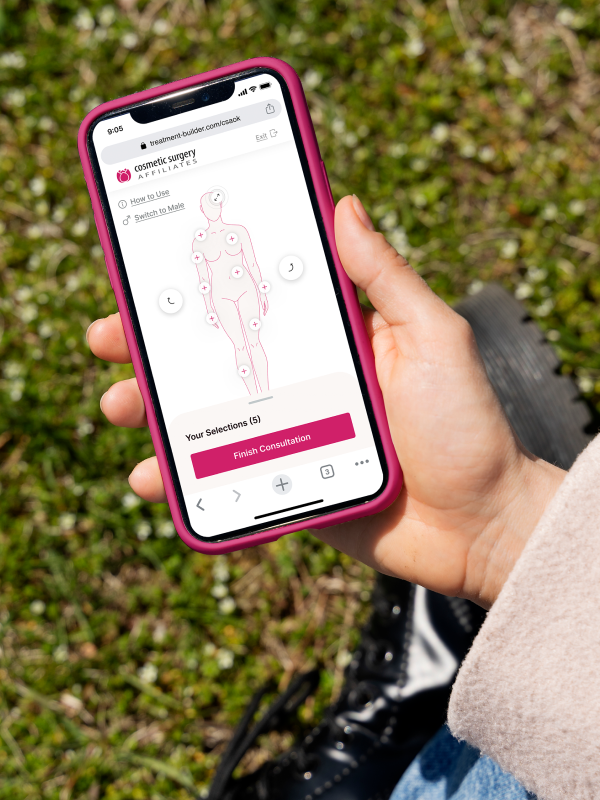
You’ll talk through your goals, get a recommendation tailored to your anatomy, and ask anything you want. That can happen in person at the Oklahoma City office, or through a virtual consultation if you’re starting from a distance.
When you’re ready for that conversation, you can book your consultation with Cosmetic Surgery Affiliates and bring every question on your list.
Francesca, a patient who chose a tummy tuck after weighing her options, shared her experience:
“I had a breast lift and tummy tuck with Cosmetic Surgery Affiliates in OKC, and I couldn’t be happier with my experience. Dr. Meyer was absolutely amazing, she made me feel comfortable and confident from day one.”
With the risks understood and your readiness clearer, the decision starts to feel a lot less overwhelming.
Conclusion
Excess belly skin after weight loss is common, and it’s rarely just cosmetic. Once it reaches a certain point, it usually won’t disappear on its own. The path forward depends on how much skin you have.
Non-surgical tightening helps mild looseness, while a panniculectomy, tummy tuck, or lower body lift removes skin that won’t retract. Stable weight, good health, and an honest consultation set you up for a result you’ll be glad you pursued.
You worked hard for this chapter, and finishing it should feel supportive, not stressful. The team at Cosmetic Surgery Affiliates in Oklahoma City believes every patient deserves to feel heard, respected, and confident in their choices. When you’re ready to talk it through, request an appointment and start the conversation on your terms.
Frequently asked questions
Can exercise get rid of excess belly skin?
Exercise builds muscle and burns fat, but it can’t restore elasticity to skin that has already been stretched out. Excess folds are essentially impossible to correct with diet or workouts alone. Once the looseness is significant, removing the skin surgically is the only way to address it.
How long should I wait after weight loss before surgery?
Most surgeons want your weight stable for several months before skin removal surgery. If your weight loss came from bariatric surgery, the typical recommendation is to wait around 12 to 18 months. A steady weight gives you the most reliable, lasting result.
What is the difference between a panniculectomy and a tummy tuck?
A panniculectomy removes the hanging apron of skin and fat but leaves the muscle alone. A tummy tuck removes excess skin and fat and also tightens separated abdominal muscles and repositions the belly button. The tummy tuck does more sculpting, while the panniculectomy focuses on functional relief.
Can radiofrequency treatments remove excess belly skin?
Radiofrequency and similar energy-based treatments can tighten mild laxity by stimulating new collagen, but they can’t remove actual excess skin. They’re best for people with minor looseness and good remaining elasticity. Our surgeons offer options like Renuvion for milder cases, while significant hanging skin needs surgery.
How long is recovery after skin removal surgery?
Most people return to a desk job within one to three weeks and get clearance for strenuous activity around six weeks. Swelling settles over the following months as your contour refines. Your exact timeline depends on the procedure and how your body heals.
*Disclaimer: This content is for educational purposes only and does not constitute medical advice. A consultation with a qualified board-certified surgeon is required to determine the best treatment plan for your individual needs and any questions you may have about a medical condition or procedure.