

Loose skin is the part of major weight loss that tends to come as a surprise for a lot of people. The weight comes off, and the skin that remains hangs where it used to fill out. It doesn’t respond to more training or a longer plateau, because it’s skin, not fat, and the elasticity that would let it retract is gone.
Before and after photos are where most people go next, and they’re worth looking at with a critical eye. What matters is not whether someone’s after photo looks good, but whether their starting point resembles yours: how much weight they lost, how long the skin was stretched, and where on the body the excess skin sits.
In the United States alone, surgeons performed 172,826 abdominoplasty procedures in 2024, according to ISAPS, along with tens of thousands of arm lifts and body lifts. Behind a lot of those numbers are people finishing a major weight loss chapter.
At Cosmetic Surgery Affiliates in Oklahoma City, our board-certified cosmetic surgeons treat skin removal after weight loss as a focus, not a footnote. This article walks you through what results from excess skin removal procedures actually show, how scarring works, what recovery feels like, and how candidacy and cost come together. The goal is a clear, honest picture of what to expect.
Key takeaways
- Loose skin after major weight loss happens because stretched collagen and elastin lose the springiness that lets skin snap back, so larger or faster losses tend to leave more behind.
- Good candidates have held a steady weight, usually within about five pounds for six to twelve months, which protects the contour your surgeon creates.
- The most intensive recovery happens in the first one to two weeks, with drains and compression garments, and most people ease back into normal activity over six to twelve weeks.
- Results are visible right away, but swelling hides the final shape. The complete picture can take several months to two years to settle as scars fade and tissue softens.
- Scars are permanent but planned to sit in discreet places like the bikini line or inner arm, and viewing a surgeon’s before and after gallery is one of the best ways to judge their work.
Why does loose skin hang around after major weight loss?
The short answer is that skin is not as elastic as we’d like to believe. When you carry extra weight, your skin and the tissue beneath it stretch to make room. After a large loss, that stretched envelope often can’t shrink back to fit your smaller frame.
Two proteins explain most of it. Collagen gives skin its firmness, and elastin is what lets it bounce back into place after being stretched. Hold skin in a stretched position long enough, through years of extra weight, and those fibers lose the springiness that pulls everything taut again.
A few things shape how much loose skin you’re left with. The total amount of weight lost matters, and so does how quickly it came off, whether through bariatric or gastric bypass surgery, GLP-1 medications, or steady diet and exercise. Age and genetics play a part too, since collagen naturally thins as the years go on.
Excess skin isn’t only a cosmetic concern. A heavy fold, sometimes called a pannus when it hangs over the lower abdomen, can trap moisture and lead to recurring rashes, chafing, and skin infections. For some people it makes everyday movement and even basic hygiene harder.
So when does surgery become the real answer?
Creams, targeted workouts, and skin-tightening gadgets can do a little for mild looseness. Once skin has truly lost its elasticity and hangs in folds, though, surgical removal is the only way to take the excess away. If loose skin is wearing on your comfort or confidence, a conversation with a board-certified cosmetic surgeon is a sensible first step toward understanding your options.
Which skin removal procedures are available, and which one fits your body?
There isn’t one skin removal surgery. There’s a family of procedures, each built for a specific area. The right choice depends on where your loose skin lives and how much of it there is.
Most patients end up combining a couple of these, because weight loss rarely affects just one zone. The table below gives you the quick map, and the sections under it fill in the detail.
| Procedure | Where it helps most | Where the scar sits |
|---|---|---|
| Tummy tuck or panniculectomy | Lower and upper abdomen | Along the bikini line |
| Lower body lift | Abdomen, hips, buttocks, outer thighs | Circling the waistline |
| Arm lift (brachioplasty) | Upper arms | Inside or back of the upper arm |
| Thigh lift | Inner and upper thighs | Groin crease, sometimes down the inseam |
| Breast or chest lift | Sagging breast or chest tissue | Around the areola and breast fold |
Patients with weight-loss-related chest changes can review what to expect from a surgical breast lift to see whether it belongs in your combined plan.
Tummy tuck and panniculectomy
The abdomen is the most common request after weight loss. A panniculectomy removes the overhanging apron of skin and fat below the belly button. A tummy tuck goes a step further by also tightening the abdominal muscles for a flatter, firmer core.
At our practice, tummy tuck surgeons in OKC offer abdominoplasty in mini, full, and extended versions. A mini tummy tuck in OKC area addresses a small amount of skin below the navel, and a full tummy tuck treats the upper and lower abdomen. An extended version uses a longer hip-to-hip incision for the heavier loose skin that follows a major weight loss. Our tummy tuck vs panniculectomy comparison walks through when each procedure is the better fit based on the type of loose skin you’re dealing with.
Body lift
When loose skin wraps all the way around, a body lift treats several areas in one operation. An upper body lift handles the area from the waist up, including the back. A lower body lift addresses the abdomen, hips, buttocks, and outer thighs through a single circling incision.
These are the bigger procedures, and they’re often the best fit for someone who lost a hundred pounds or more. Your surgeon combines skin removal with liposuction to refine the shape as they go. Working with an experienced body lift surgeon is what makes the difference in balancing that skin-and-fat coordination through such a large procedure. An experienced lipo surgeon in Oklahoma at the same practice keeps the two techniques working from a single surgical plan rather than parallel visits.
Arm and thigh lifts
Sagging upper-arm skin, the kind sometimes called bat wings, comes from lost elasticity rather than fat. An arm lift, a form of plastic arm surgery, trims that excess through an incision tucked along the inner or back surface of the upper arm.
A thigh lift does the same for the legs, which is why before and after weight loss legs photos are such a common search. The incision usually sits in the groin crease, and for heavier skin laxity it can extend down the inner thigh to remove more. Working with the best thigh lift surgeon available in your area matters here, since incision placement determines how well the scar hides in daily wear.
Combining procedures
One of the most common questions is whether all of this can happen at once. In many cases it can. Our skin removal surgeries often involve at least two experienced surgeons working together, so the upper and lower body can be addressed in a single trip to the operating room.
Whether to combine or stage your procedures depends on your health, the surgical time involved, and your goals. That balance is exactly what the candidacy conversation sorts out.
Are you a good candidate, and how do you get ready?

The honest answer is that good candidacy is less about your starting point and more about stability. A board-certified surgeon wants to see that your weight has settled, because a steady weight is what protects the result they create.
As a general guideline, our team recommends maintaining your goal weight within about a five-pound range for at least six months, and ideally closer to twelve, before surgery. Letting your weight settle first preserves your final contour and gives the newly tightened skin its best chance to stay smooth.
Beyond weight, a few health factors set you up for the smoothest experience:
- Good overall health, with any conditions like diabetes or bleeding disorders discussed openly so your surgeon can plan around them.
- A commitment to a nutritious diet and regular movement, which supports healing and helps maintain your result.
- Being tobacco-free, since not smoking helps your skin heal and your incisions close cleanly.
- Realistic, specific goals, meaning you understand that surgery removes loose skin rather than acting as a weight loss tool.
This is also where the consultation earns its keep. Think of it as a two-way evaluation. Your surgeon assesses your skin quality, anatomy, and health, and you get to decide whether this is the right team for something this personal. Triple board-certified cosmetic surgeon Dr. Erik Nuveen, whose focus includes massive weight loss management, will talk through which procedures fit your body and whether to combine or stage them.
Getting ready is practical and manageable. You’ll complete any lab work your surgeon orders, pause certain medications and supplements as directed, and arrange for someone to stay with you the first night. Many patients find the preparation period is when nervous excitement turns into genuine confidence.
Cory, who came in after losing more than 150 pounds, shared his experience:
“I had gastric weight loss surgery in March 2008. After a dramatic weight loss of over 150 lbs, I had a significant amount of sagging skin that I wanted removed around my waist line and buttocks. Dr. Nuveen and his staff are impressive. I felt comfortable from the time I walked in the door.”
If you’re wondering where you stand, you can reach out to our team for a candid look at your options. Once you and your surgeon agree on a plan, the next thing on your mind is usually recovery.
What does recovery look like week by week?
Recovery from skin removal surgery is gradual, and knowing the rhythm ahead of time takes a lot of the worry out of it. The general arc moves from rest, to gentle motion, to a slow return to the things you love.
The timeline below is a general guide. Your surgeon gives you a personalized version based on which procedures you had and how your body heals.
| Timeframe | What’s happening | Activity level |
|---|---|---|
| First 1 to 2 weeks | Swelling, bruising, drains, compression garment | Rest, short gentle walks |
| Weeks 3 to 6 | Swelling easing, standing taller, drains removed | Light daily activity, desk work |
| Weeks 6 to 12 | Tissue settling, energy returning | Gradual return to exercise |
| Beyond 3 months | Scars maturing, final shape emerging | Most normal activity resumed |
The first week or two
This is the most hands-on stretch. You’ll have some swelling, bruising, and soreness, which are normal parts of healing rather than signs that anything is wrong. Thin drainage tubes are often placed to clear fluid and keep things comfortable, and they usually come out within the first one to two weeks.
A compression garment does a lot of quiet work here. Wearing it as directed helps control swelling and supports your skin as it re-drapes over your new shape. Short, gentle walks are encouraged early to keep your circulation moving.
Weeks three through six
By this point most people are noticeably more comfortable and standing taller. After an abdominal procedure you may have started a bit hunched to protect the incision, and that eases as the days pass. Many patients return to desk work and light routines in this window.
Heavier lifting and strenuous activity still wait a little longer. Your surgeon will give you the green light based on how your incisions are sealing.
Past the six-week mark
This is when life starts feeling normal again. Exercise generally resumes around six to eight weeks for most procedures, building back gradually rather than all at once. Swelling continues to fade quietly over the following months, which is why your shape keeps refining well after you feel recovered.
One reassuring note: your care team is a phone call away the entire time. Knowing what’s normal, and who to ask when you’re unsure, is what makes the early weeks feel manageable. With recovery mapped out, the question most people really want answered is what the results actually look like.
What do real before and after results look like, and what about scarring?
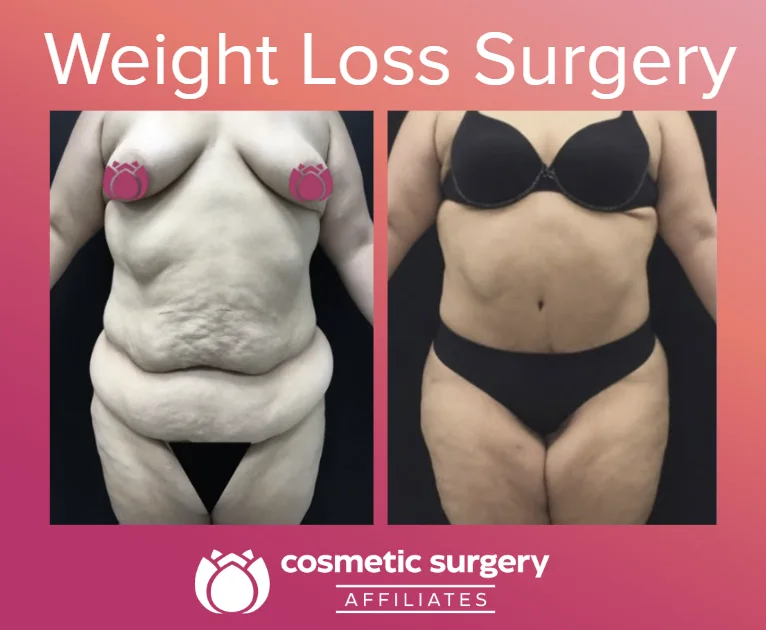
This is the heart of it. Excess skin removal before and after photos show something striking, because the change is structural rather than subtle. Loose, hanging skin is gone, and the underlying shape you worked for finally shows.
Here’s the honest part about timing, though. You’ll see a dramatic difference the moment your dressings come off, but swelling masks the final result for a while. According to ASPS, it can take as long to fully see body contouring results as it took to lose the weight, with the complete picture emerging over many months. Loose skin surgery results are a slow reveal, not an overnight switch.
Reading before and after photos
Real galleries are the best tool you have for setting expectations, and learning to read them helps. Look for consistent lighting, angle, and distance between the before and after shots, since honest photos don’t rely on flattering tricks. Look for bodies that resemble yours in the type and amount of loose skin.
The team at Cosmetic Surgery Affiliates has performed more than 3,000 weight-loss procedures, and the variety in a gallery tells you a surgeon has seen a range of patients. You can browse real patients before and after photos to see how loose skin before and after a procedure actually compares.
Scars and how they fade
Every skin removal surgery leaves a scar, and an honest surgeon will tell you that upfront. The skill is in placement. Incisions are planned to sit where clothing and swimwear naturally cover them. Think the bikini line for a tummy tuck, or the inner surface of the upper arm for an arm lift.
Fresh scars look pink and firm before they soften and fade, a process that unfolds over many months. Following your aftercare, protecting the area from sun, and using any scar treatment your surgeon recommends all help the lines mature into thin, pale marks. For most patients, trading a heavy fold of skin for a discreet scar is a trade they’d make again.
Brittney, whose surgery followed a 212-pound weight loss, described her results:
“Dr. Nuveen gave me a body lift, skin removal, tummy tuck, BBL, breast lift and augmentation after my 212-pound weight loss. He was very attentive and listened to my concerns and what I wanted, and he gave it all to me. His staff has always treated me like family.”
Keeping your result looking its best comes down to the same habits that got you here: steady weight, good nutrition, and regular movement. To picture what’s realistic for your body, you can schedule a consultation and review results in person. Once you can see the outcome, the practical questions about cost and coverage usually come next.
How much does skin removal surgery cost, and will insurance help?
Cost is one of the first things on most people’s minds, and that’s completely understandable when you’re already making a big personal decision. The total depends on which procedures you choose, whether you combine areas, and the complexity of your case.
At CSA, one of the best plastic surgeons Oklahoma City OK has to offer, pricing is a single, all-inclusive fee that covers anesthesia, facility, supplies, and professional fees, a transparency policy the practice has kept for more than 24 years. To give you a realistic sense of the ranges, a full tummy tuck runs $11,000 to $14,000, an arm lift $12,500 to $15,500, and a thigh lift $14,000 to $17,000. A lower body lift, which addresses several areas at once, ranges from $20,000 to $23,000.
Combining procedures in one operation can be efficient, since you share a single anesthesia and facility fee across the areas treated. Your personalized estimate comes together during your consultation, once your surgeon knows exactly what your plan involves.
Insurance and medical necessity
Sometimes, and the distinction is medical necessity. A panniculectomy may be considered medically necessary, rather than cosmetic, when a hanging skin fold causes documented problems. That includes recurring rashes, infections, or non-healing irritation that doesn’t resolve with standard treatment.
If you think you might qualify, documentation is everything. Keeping a record with your doctor of chronic skin issues over several months, including photos and treatments tried, builds the case your insurer will want to see. Procedures done purely to refine shape are considered cosmetic and aren’t typically covered.
To make the rest more manageable, we offer flexible financing through PatientFi and Alphaeon, so you can spread the investment into payments that fit your budget. Neither requires an impact to your credit just to see if you prequalify.
Risks and how they’re managed
The vast majority of patients move through skin removal surgery without any serious issues, and understanding the risks is genuinely empowering rather than scary. There are a few things to be aware of. These include temporary swelling, a small pocket of fluid your body usually reabsorbs, or areas that feel less sensitive for a few weeks as nerves settle.
Your surgeon’s planning is your best protection. Careful technique, attentive aftercare, and the weight-stability and health steps covered earlier all work together to keep your experience smooth and your result strong. Your care team monitors your healing closely and is reachable whenever a question comes up.
Conclusion
Skin removal surgery is the finishing chapter for many people after a major weight loss, turning loose, hanging skin into the shape they worked so hard to earn. The before and after change is real and often dramatic. The scars are planned to stay hidden, and the full result reveals itself gradually as swelling fades and lines soften. Stable weight, good health, and an honest consultation are what set the stage for a result you’ll be proud of.
At Cosmetic Surgery Affiliates in Oklahoma City, our board-certified cosmetic surgeons believe every patient deserves to feel heard, respected, and confident about this deeply personal choice. Whenever you’re ready to talk through what’s realistic for your body, you can start the conversation with our team.
Frequently asked questions
When will I see my final results?
You’ll notice a dramatic difference as soon as your dressings come off, but swelling hides the final shape for a while. The complete result settles gradually over several months, and for larger procedures it can take up to two years for everything to fully refine.
How much skin is typically removed?
It varies widely with how much weight you lost and where the skin sits. Some patients have 15 to 35 pounds of loose skin and fat removed, especially after a very large weight loss, while others need far less to reveal the contour underneath.
When can I go back to work?
Many patients return to a desk job within about two weeks, depending on which procedures they had. Jobs that involve lifting or physical effort usually need more time, and your surgeon gives you a personalized timeline based on your healing.
Is skin removal surgery painful?
You’re kept comfortable during surgery under general anesthesia, and afterward most discomfort is described as tightness and soreness rather than sharp pain. Oral pain medication usually manages it well over the first several days, and it eases steadily from there.
Can multiple procedures be done at the same time?
In many cases, yes. Our skin removal surgeries often involve two experienced surgeons working together, so the upper and lower body can be treated in one operation. Your surgeon will confirm what’s safe based on your health and goals.
*Disclaimer: This content is for educational purposes only and does not constitute medical advice. A consultation with a qualified board-certified surgeon is required to determine the best treatment plan for your individual needs and any questions you may have about a medical condition or procedure.