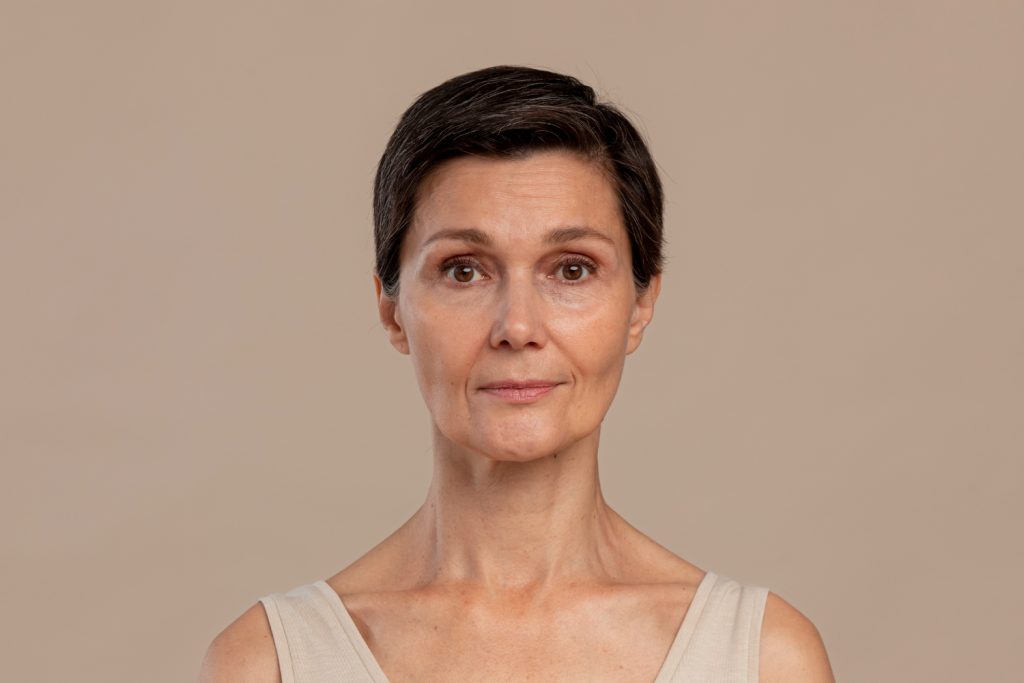

Patients who say they don’t want to look “done” are usually describing tension on skin. That flat, swept-back quality comes from lifting in a single plane, and it’s a technique issue more than an inevitability of surgery. Repositioning the SMAS and the descended deep fat pads puts volume back where it sat fifteen years earlier, so the change registers as looking natural rather than looking altered.
Facial rejuvenation has never been more common. According to ISAPS, facelift procedures grew by 75.9% from 2020 through 2024, making it one of the most requested facial surgeries anywhere. Behind that number are real people who simply want to look as awake as they feel.
At Cosmetic Surgery Affiliates in Oklahoma City, our board-certified cosmetic surgeons have guided patients through this exact decision for more than two decades. This guide walks you through how a facelift works, from the aging changes it corrects to the steps on surgery day, recovery week by week, and how to protect your results. Think of it as the conversation you wish you could have before your first consultation.
Key takeaways
- A facelift, medically called a rhytidectomy, lifts and repositions the deeper muscle and connective tissue layer of the face, not just the skin, which is why results look natural rather than stretched.
- The right technique depends on your anatomy. Options range from a limited mini lift for early jowling to a deep plane lift for more advanced sagging, often paired with a neck lift for the jawline.
- Surgery is typically an outpatient procedure lasting around two and a half hours, performed under IV sedation or general anesthesia, with incisions hidden around the ears and hairline.
- Most patients take it easy for the first 7 to 10 days, return to social activities within a few weeks, and see swelling settle into final results over the following months.
- A facelift refreshes the lower face, jawline, and neck, but it does not erase fine surface lines or restore lost volume on its own, which is why surgeons often combine it with other treatments.
How do the layers of your face change with age, and what does a facelift actually fix?

To understand the surgery, it helps to know what is actually sagging. Your face is built in layers: skin on top, then fat, then a sheet of muscle and connective tissue, and finally the bone underneath. A facial rejuvenation surgery in OKC works mainly on that deeper muscle-and-tissue layer.
That layer has a name worth knowing: the SMAS, short for superficial musculoaponeurotic system. It is the supportive hammock that holds your cheeks and jawline in place. Over time it loosens and slides downward, which is what creates jowls and a heavy lower face.
Aging also shifts the soft fat pads that once sat high in your cheeks. They drift down and settle along the jaw, flattening the upper face and adding weight below. Skin plays a role too, but here is the key distinction.
Loose skin and deeper structural sagging are two different problems. Smoothing the skin alone, the old “pull it tight” approach, ignores the dropped SMAS and rarely lasts. Lifting the SMAS first, then redraping the skin over it, is what gives a result that looks like you, only fresher.
So what can a facelift realistically do, and what falls outside its job? Here is a quick way to think about it.
- Improves: sagging cheeks, jowls along the jawline, a loose or banded neck, and deep folds running from the nose to the mouth.
- Does not address on its own: fine surface wrinkles, crow’s feet, brow position, under-eye bags, or lost cheek volume.
That second list is not a disappointment, it is just a map. Many of those concerns are easily handled by pairing the lift with another procedure, which is exactly where the different facelift types come in.
What are the different types of facelifts, and how do they compare?
There is no single facelift. The term covers a family of techniques, and the right one depends on how much sagging you have and which part of the face bothers you most. Our facelift guide walks through the mini, SMAS, and deep plane options side by side. Choosing well is the difference between a result that fits your face and one that looks done.
A traditional SMAS facelift is the workhorse. The surgeon lifts and tightens that deep tissue layer, then trims and redrapes the skin, addressing the cheeks, jowls, and upper neck. A deep plane facelift goes a step further, releasing the SMAS from the structures below so the whole unit can be repositioned, which suits more advanced sagging.
For someone in their forties with early jowling, a limited-incision mini lift, sometimes called a Smart Lift, may be all that is needed. When the concern is mostly below the jaw, a standalone neck lift procedure or a muscle-tightening technique called platysmaplasty targets the neck directly. Many patients also weigh the brow lift surgery benefits or professional eyelid surgery care to refresh the upper face at the same time.
| Technique | What it targets | Best suited for |
|---|---|---|
| Mini lift / Smart Lift | Early jowls, lower face | Mild, earlier sagging |
| Traditional SMAS lift | Cheeks, jowls, upper neck | Moderate sagging |
| Deep plane lift | Midface, jowls, deeper folds | More advanced sagging |
| Neck lift / platysmaplasty | Jawline, banded neck | Neck-focused concerns |
Surgeons increasingly combine the lift with surgical fat transfer to restore volume that aging takes away. That pairing has grown steadily over the past 15 years, according to a review of thousands of facelift cases.
This is also why technique selection is so personal. Triple board-certified, fellowship-trained cosmetic surgeon Dr. Erik Nuveen examines your skin quality, the degree of sagging, and your goals before recommending an approach. He does not apply one method to every face.
What happens step by step on the day of your facelift surgery?

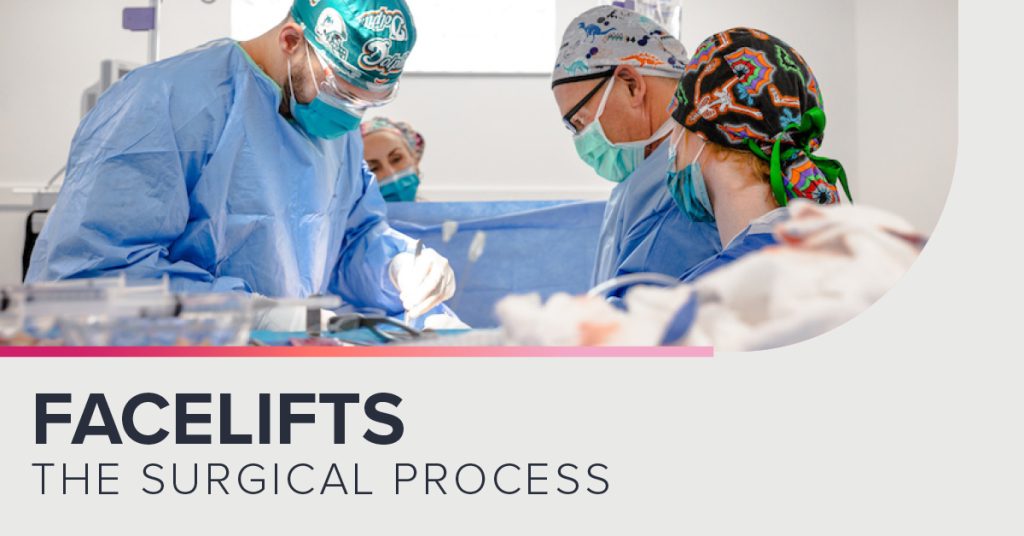
Once you know your technique, the day itself becomes far less mysterious. A facelift follows a clear sequence, and understanding it tends to settle a lot of nerves. Here is how the procedure unfolds from the moment you arrive.
Anesthesia and getting comfortable
Most facelifts are done under either IV sedation, where you are deeply relaxed and comfortable, or general anesthesia, where you are fully asleep. You and your surgeon decide which fits you during preparation, weighing the pros and cons of each. When the time comes, it happens in a fully accredited outpatient surgical facility, so you go home the same day rather than staying overnight.
Incisions placed where they hide
The surgeon makes small openings, usually starting in the hairline at the temple, curving down in front of the ear, and continuing behind it into the hairline. These lines follow the natural creases and shadows around your ear, which is where scars settle most discreetly. A small opening under the chin is sometimes added when the neck is being treated.
Lifting and repositioning the deeper layer
This is the heart of the surgery. The surgeon carefully separates the skin from the SMAS, then lifts and secures that deeper layer upward and slightly back, restoring support to the cheeks and jaw. If fat needs repositioning or grafting, that happens here too.
Sculpting, redraping, and closing
With the foundation set, any excess fat is refined and the skin is gently redraped over the new contour. Only then is the small amount of truly extra skin trimmed, so nothing is pulled tight. The openings are closed in layers with sutures, and the whole process usually takes around two and a half hours.
Choosing an accredited surgical setting matters more than most patients realize. It is the kind of behind-the-scenes detail that quietly protects you, the same standard of care you would want for any operation.
Nicolette, a patient who valued a smooth, supported experience from her first visit through follow-up, shared:
“I can’t say enough good things about my experience. From my very first consultation to my final follow-up appointment, every part of the process was smooth, professional, and beyond my expectations. The entire team was kind, attentive, and made me feel comfortable.”
Once the surgery is done, attention shifts entirely to healing, and that is where knowing the timeline pays off.
What does facelift recovery and healing look like week by week?

Recovery from a facelift is gradual and predictable, which is reassuring once you know the rhythm. The first few days ask the most of your patience, and things improve steadily from there. You will feel a sense of tightness and see some swelling and bruising early on, all normal parts of healing.
For the first day or two you rest with your head elevated, which keeps swelling down, and any discomfort is managed with prescription medication. Most people feel surprisingly sore rather than in sharp pain. A follow-up visit lets your surgeon check your healing and remove sutures.
The first week is the quiet, cozy stretch where you let your body do its work. By the two to three week mark, the most visible bruising has faded and many patients feel ready to be out in public again. Final results keep refining for months as the last swelling resolves and tissues settle.
| Time frame | What to expect |
|---|---|
| First 24 to 72 hours | Peak swelling and tightness, rest with head elevated |
| Days 7 to 10 | Sutures removed, bruising fading, light activity returns |
| Weeks 2 to 3 | Comfortable in public, back to most daily routines |
| Months 1 to 3+ | Swelling fully settles, natural final contour emerges |
Because the calendar matters, many patients plan a facelift for the fall or winter and book it three to six months before a big event. That timing leaves plenty of room to heal without rushing. With the practical side mapped out, the last piece is making sure the whole experience is as safe as possible.
What are the risks, safety steps, and preparation that protect your results?
Every surgery carries some risk, and a facelift is no exception, but the reassuring reality is that serious problems are uncommon in skilled hands. Most patients experience nothing beyond the expected swelling, bruising, and temporary numbness as nerves settle over a few weeks. Knowing what is normal makes the recovery far less worrying.
The rarer concerns, like a small collection of fluid or a temporary change in sensation, are exactly what your surgeon plans around with careful technique and close follow-up. Even nerve-related effects are unusual. A meta-analysis of more than 15,000 facelift patients found lasting motor nerve injury to be a rare event, and most temporary changes resolve on their own.
A smooth result also starts before surgery day, and a few simple steps protect your outcome. Following them helps your tissues heal cleanly and your skin re-drape the way it should.
- Complete any pre-operative tests your surgeon orders so your plan is built around your health.
- Pause aspirin and other anti-inflammatory medications as directed to support steady healing.
- Stopping nicotine well ahead of surgery protects blood flow to the skin and speeds recovery.
- Arrive with a clean face, no makeup or lotions, and arrange a ride and a helper for the first day.
Here is where the choice of surgeon does the heavy lifting. A consultation is genuinely a two-way street: it is your surgeon’s chance to assess your anatomy, and just as much your chance to evaluate them, ask questions, and see their results. At Cosmetic Surgery Affiliates, you can begin that conversation with a virtual consultation from home or an in-person visit at the Oklahoma City office.
Cost shouldn’t be the reason to not explore your options. Flexible financing is available through PatientFi and Alphaeon, so you can choose a payment plan that fits your budget.
Katie, a patient who compared surgeons across several states before deciding, shared:
“Dr. Courtney Caplin is truly amazing and has so much talent! CSA was the third cosmetic surgery facility I received a consult from, as I had done extensive research on procedures and doctors in the OKC area and out of state. The entire process was so simple, I shared my insecurities with my consultant and felt completely cared for.”
Conclusion
A facelift is not about pulling skin, it is about restoring the deeper support that time loosens, then letting the skin settle naturally over a refreshed foundation. Once you understand the layers it addresses, the techniques available, the steps on surgery day, and the healing that follows, the procedure stops feeling intimidating and starts feeling like an informed choice.
The right plan with your cosmetic surgeon OKC always begins with a real conversation about your face, your goals, and your timeline. At Cosmetic Surgery Affiliates, we believe every patient deserves to feel heard, respected, and confident in their decision, whether you are ready to move forward or simply gathering information. When the time feels right, reach out to our team and take the first step on your terms.
Frequently asked questions
What is the best age to get a facelift?
There is no single right age, though most patients are between 40 and 70. What matters more than the number is the degree of sagging and your overall health. Our surgeons assess both during a consultation to confirm the timing is right for you.
Will a facelift get rid of my wrinkles, crow’s feet, and fine lines?
A facelift smooths deeper folds and loose skin around the lower face and neck, but it is not designed for fine surface lines or crow’s feet. Those respond better to resurfacing, injectables, or skin treatments. Many patients combine a lift with one of these for a fuller refresh.
What is the difference between a surgical facelift and a liquid facelift?
A surgical facelift physically lifts and repositions deeper tissue for lasting structural change. A liquid facelift uses injectable fillers to soften lines and restore volume without surgery. They solve different problems, and the right choice depends on whether your concern is sagging or lost volume.
Will I have permanent, visible scars around my ears after healing?
Incisions are placed in the natural creases around and behind the ear and within the hairline, where they heal discreetly. As with any surgery, some scarring is part of the process, but it is designed to be easy to conceal. Following aftercare instructions closely helps the lines fade well.
How much does a full facelift cost?
A facelift typically ranges from $9,500 to $12,500, while a full facelift combined with a neck lift runs $14,500 to $17,500. Our pricing is a single, all-inclusive fee covering anesthesia, the facility, supplies, and surgeon fees, so there are no surprise add-ons. A consultation gives you an exact figure based on your plan.
Can a facelift be combined with eyelid surgery or a brow lift?
Yes, and this is very common. Because a facelift focuses on the lower face and neck, pairing it with eyelid surgery or a brow lift refreshes the upper face in the same session. Combining procedures often means a single recovery period rather than two.
Does smoking affect my eligibility or recovery from a facelift?
Yes, nicotine narrows blood vessels and slows healing of the skin, so surgeons ask patients to stop 6 weeks before surgery. Doing so protects blood flow to the lifted tissue and supports a cleaner recovery.
*Disclaimer: This content is for educational purposes only and does not constitute medical advice. A consultation with a qualified board-certified surgeon is required to determine the best treatment plan for your individual needs and any questions you may have about a medical condition or procedure.