
If you’ve spent any time researching breast augmentation, you’ve probably seen ads for non-surgical options: fuller breasts with no incisions, no scars, and no downtime, often at a fraction of the cost of surgery. The results in the photos can look convincing, which is exactly why it’s worth asking whether these treatments are safe and whether they work. Here’s what the evidence shows.
According to the ISAPS 2024 Global Survey, non-surgical aesthetic procedures now outnumber surgical ones worldwide, with 20.5 million non-surgical procedures performed in 2024 alone. That trend helps explain why ‘no-surgery’ breast augmentation marketing resonates with so many patients, even when the science doesn’t support it for breast tissue.
At Cosmetic Surgery Affiliates in Oklahoma City, we’re committed to evidence-based medicine and patient safety, which means being honest about procedures that sound appealing but carry serious risks.
In this article, we break down every type of injectable breast augmentation: what’s actually FDA-approved, what’s off-label, what’s outright illegal, and how each option stacks up against surgical alternatives. For a broader look at the trade-offs of surgical breast augmentation itself, our breast augmentation pros and cons guide covers the full decision framework.
5 Things You Should Know About Injectable Breast Augmentation
- All use of fillers like Juvederm, Restylane, Sculptra, or Radiesse in breast tissue is off-label and carries unknown long-term risks.
- Liquid silicone injections for breast augmentation are illegal in the United States and have led to federal criminal prosecutions, hospitalizations, and deaths.
- Autologous fat transfer, which uses your own fat harvested via liposuction, is the only FDA-recognized injectable method for breast augmentation.
- Injectable fillers can interfere with mammograms and breast cancer screening for years or even decades, potentially leading to unnecessary biopsies.
- Board-certified surgeons recommend implants or fat transfer over dermal fillers for breast augmentation due to safety, cost, and predictability.
What Exactly Is Injectable Breast Augmentation?
Injectable breast augmentation is an umbrella term for any procedure where substances are injected directly into breast tissue to increase volume or improve shape, without traditional breast implants. The catch? It covers everything from legitimate medical procedures to outright dangerous, illegal ones. Knowing the difference isn’t just helpful. It could protect your health.
There are three main categories, and they couldn’t be more different from each other.
Off-Label Dermal Filler.
These include hyaluronic acid fillers (Juvederm, Restylane), poly-L-lactic acid (Sculptra), and calcium hydroxylapatite (Radiesse). All are FDA-approved for facial use only. When marketed for breasts, you’ll hear phrases like “non-surgical breast enhancement” or “collagen-stimulating breast lift”—but none of these products have been studied or approved for breast tissue.
Autologous Fat Transfer (Fat Grafting)
This uses your own fat, harvested via liposuction from areas like the abdomen or thighs, purified, and carefully re-injected into the breasts. This is the only FDA-recognized injectable method for breast augmentation, and a legitimate procedure offered by board-certified surgeons.
Liquid Silicone Injections.
Free liquid silicone injected directly into breast tissue is illegal for breast augmentation in the United States. Despite that, it’s still performed by unlicensed practitioners in underground settings.
The distinction is important: fat transfer is legitimate, dermal fillers are off-label, and liquid silicone is dangerous and illegal.
What Is FDA Approval, and Why Does It Matter for Breast Procedures?
You may wonder why a product that’s FDA-approved for your face can’t just be used on your breasts. The answer is simple. The FDA evaluates medical devices, including fillers and implants, for safety and effectiveness for use in specific body areas.
Approval for one area doesn’t automatically transfer to another. Breast tissue behaves differently from facial tissue. For instance, your breast tissue has a different blood supply, sits near vital organs, and requires regular cancer screening through imaging. These aren’t minor details.
| Injectable Type | FDA-Approved For | FDA Status for Breasts |
| Hyaluronic acid fillers (Juvederm, Restylane) | Facial wrinkles, lips, cheeks, hands | NOT approved, off-label use |
| Sculptra (poly-L-lactic acid) | Facial wrinkles, HIV-related lipoatrophy | NOT approved, off-label use |
| Radiesse (calcium hydroxylapatite) | Facial wrinkles, hands | NOT approved, off-label use |
| Autologous fat transfer | Recognized medical procedure | FDA-recognized (not a “device”) |
| Liquid injectable silicone | Retinal detachment (eyes only) | ILLEGAL for breast augmentation |
When a doctor uses an FDA-approved product for an unapproved purpose, that’s called “off-label” use. It’s legal for physicians to do, but there’s a catch. The doctor assumes all liability, there’s no safety data specific to that use, no long-term studies exist, and insurance won’t cover complications.
How Do Injectable Breast Augmentation Procedures Actually Work?

Understanding how the procedure works, how much it costs, and what results to expect is where you start to see the full picture.
Hyaluronic acid filler injections (off-label)
Multiple syringes of HA filler are injected into the breast tissue to add immediate volume. Your body gradually absorbs the filler over 12 to 24 months, meaning results are temporary and require ongoing treatments.
Here’s where the math gets eye-opening: a typical breast implant provides 250 to 400cc of volume. Each syringe contains just 1cc and costs $600 to $1,000. Achieving even a modest 150cc per breast would require 150 syringes at $90,000 to $150,000. For temporary results. That’s why most board-certified surgeons simply don’t offer it.
Sculptra breast “enhancement” (off-label)
Instead of adding volume directly, poly-L-lactic acid stimulates your body to produce new collagen through a controlled inflammatory response. Results develop over three to six months, require multiple sessions, and last 18 to 24 months. While technically legal as off-label use, Sculptra stimulates collagen production through a controlled inflammatory response in breast tissue, with unknown long-term effects on mammograms and cancer detection.
Autologous fat transfer (the evidence-based injectable option)
Your surgeon removes fat from a donor area like the abdomen, thighs, or flanks through liposuction, purifies it, and injects small amounts throughout the breast tissue. Your body reabsorbs 30 to 50 percent of the transferred fat, so the average result is about a one cup size increase (100 to 200cc per breast). Multiple sessions may be needed, but the fat that survives is permanent and feels completely natural.
What Are the Serious Risks of Injectable Breast Procedures?
Reading about potential complications can feel intimidating, but understanding the risks is actually one of the most empowering steps you can take. The more you know, the better equipped you are to protect yourself.
When it comes to off-label dermal fillers like HA, Sculptra, and Radiesse, short-term risks include swelling, bruising, pain, infection, uneven distribution, and allergic reactions. But the long-term risks are what concern plastic surgeons most. A 2024 systematic review in JPRAS Open documented significant complications, including granuloma formation (hard lumps requiring biopsy or surgery), filler migration beyond the injection site, chronic inflammation, and interference with mammograms, where fillers can mimic cancer on imaging.
On the other hand, autologous fat transfer carries its own risks, though they’re far better understood. Fat necrosis occurs in roughly 16 to 25 percent of patients, oil cysts can appear on mammograms, and calcifications may require biopsy to rule out cancer.
The critical difference is that fat transfer does not increase breast cancer risk, and experienced radiologists can reliably distinguish these benign changes from actual cancer. Filler complications in breast tissue, on the other hand, are poorly understood, simply because there isn’t enough data yet.
Why Are Liquid Silicone Injections Illegal, and Why Are They Still Happening?
The FDA warns that these injections can lead to serious, potentially life-threatening complications, including permanent tissue damage and systemic reactions.
These aren’t hypothetical. In one federally prosecuted case, a patient experienced fatal complications after silicone migrated beyond the injection site. These tragedies are precisely why board-certified surgeons don’t offer this procedure, and why choosing a qualified provider is so important.
So why does it still happen? Cost is the biggest driver. Illegal silicone injections run $1,000 to $3,000 compared to $8,000 to $12,000 for implants. They’re performed by unlicensed practitioners in underground clinics, at “pumping parties” in non-medical settings, and through medical tourism in countries with lax regulations.
Removal is nearly impossible. Liquid silicone infiltrates and adheres to the surrounding tissue. According to the ASPS, because silicone doesn’t dissolve in the body, patients who develop complications may be stuck with it permanently. This is exactly why prevention matters most, and why board-certified surgeons will always steer you toward safe, evidence-based options instead.
Can Injectable Breast Augmentation Interfere with Mammograms?
The honest answer is yes, and if early cancer detection matters to you (it should), this deserves your full attention. Virtually all injectable substances can affect breast imaging. The severity varies by type, and the differences matter.
| Injectable Type | Imaging Impact | Reversible? |
| Hyaluronic acid fillers | Visible on MRI and mammography, can appear similar to breast lesions | Yes (hyaluronidase enzyme) |
| Sculptra (poly-L-lactic acid) | Stimulates scar tissue visible on mammogram; unknown long-term screening impact | No |
| Radiesse (calcium hydroxylapatite) | Highly problematic: calcium shows up on mammograms, can mimic suspicious calcifications | No |
| Autologous fat transfer | Oil cysts and calcifications in ~16% of patients are visible on imaging | No, but radiologists are trained to distinguish |
| Liquid silicone (illegal) | Makes mammography nearly non-diagnostic; snowstorm appearance on ultrasound | No, MRI required for screening |
After any injectable breast procedure, always inform your mammogram technician and radiologist, provide documentation of what was injected and when, and bring surgical records to all screening appointments. If you can’t confidently tell your radiologist what’s been injected into your breasts, you shouldn’t proceed with the injection.
How Does Injectable Breast Augmentation Compare to Traditional Implants?
It’s easy to feel overwhelmed when every option seems to come with trade-offs. Here’s everything side by side.
| Factor | Dermal Fillers (Off-Label) | Autologous Fat Transfer | Breast Implants |
| FDA Status | Not approved for breasts | FDA-recognized procedure | FDA-approved |
| Volume Increase | Minimal (prohibitively expensive) | Modest (~1 cup size) | Significant (1–3+ cups) |
| Longevity | 12–24 months (temporary) | Permanent (surviving fat) | 10–20+ years |
| Cost | $90,000–$150,000 for equiv. volume | $6,000–$10,000 | $7,000–$12,000 |
| Downtime | Minimal | 1–2 weeks | 1–2 weeks |
| Imaging Issues | Significant, understudied | Well-studied, distinguishable | Minimal, clearly visible |
| Reversibility | HA: yes; Sculptra/Radiesse: no | Not reversible | Fully removable |
| Long-term Safety | No data | Extensively studied | 20+ years of data |
When you look at the numbers, the case for dermal fillers in the breasts essentially collapses. They cost dramatically more, last a fraction of the time, lack safety data, and interfere with cancer screening. The two evidence-based options are fat transfer for subtle, natural enhancement and implants for significant, predictable size increase.
Want to see what real results look like? Browse our before-and-after gallery to compare outcomes from fat transfer and implant procedures.
And the results speak for themselves. Patients who choose evidence-based procedures walk away with outcomes that go far beyond what they expected.
Tanya Mitchell, who had a breast lift and augmentation along with a tummy tuck, put it best:
“Absolutely thrilled with my results. Had a tummy tuck, breast lift and augmentation at the age of 55. My body almost looks like I am a teenager again, and I have the attitude to match it. Absolutely recommend Dr. Nuveen! The doctor and the nurses were absolutely compassionate and caring. Their focus on detail and results did not disappoint.”
What Questions Should You Ask If a Provider Offers Injectable Breast Augmentation?
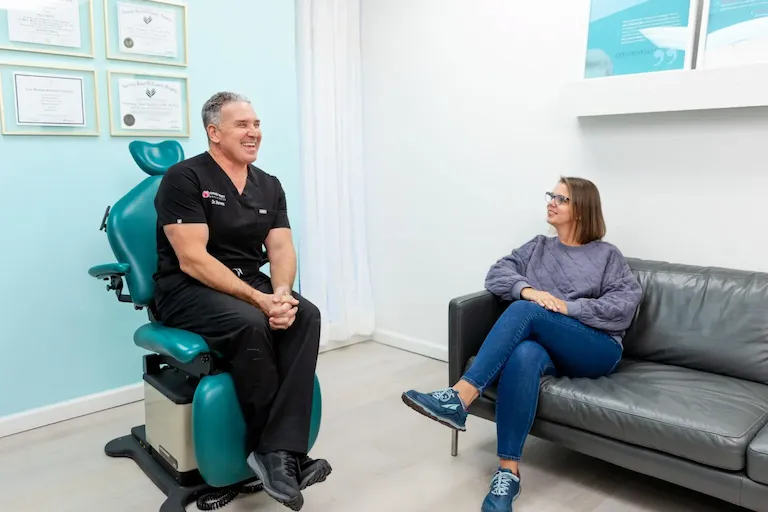
The right questions can protect you from a serious mistake. If any provider offers you injectable breast augmentation, here’s how to evaluate whether it is legitimate.
About FDA status:
- Is this product FDA-approved specifically for use in breasts? (If not, that’s a red flag.)
- What long-term safety data exists for this filler in breast tissue? (The honest answer is likely: none.)
- Am I using this product off-label, and what does that mean for coverage if complications arise?
About the provider:
- Are your surgeons certified by a reputable board?
- How many injectable breast procedures have you performed, and can I see before-and-after photos?
About risks:
- How will this affect my future mammograms?
- Can this be reversed if I’m unhappy or develop complications?
- What is your complication rate for this specific procedure?
So, what are the red flags that should make you walk away? “This is completely safe and FDA-approved” (it’s not, for breasts), “Results are permanent” (not true for most fillers), “Won’t interfere with mammograms” (all injectables can), or any pressure to decide quickly.
That kind of honesty is exactly what you should expect from any board-certified practice. At Cosmetic Surgery Affiliates in Oklahoma City, informed consent means giving you complete, honest information, even when that means recommending against a trendy procedure that lacks safety data. It also means being there for every question, every concern, and every step of the process.
Sandi experienced that firsthand:
“I have so many wonderful things to say about Dr. Meyer and Candice at CSA. I have enjoyed working with them so very much. They have been kind and reassuring, and they treat me with genuine interest and care. They have listened to my concerns and questions throughout my process, and I have felt supported and well taken care of. I highly recommend this wonderful team.”
What Are the Safest Alternatives to Injectable Breast Augmentation?
If you’ve made it this far and you’re wondering what board-certified cosmetic surgeons in Oklahoma City actually recommend, here’s the straightforward answer. The safest paths to breast augmentation depend entirely on your goals.
For a significant size increase (1–3+ cup sizes), safe breast augmentation OKC with silicone or saline implants remains the gold standard. They’re backed by more than 20 years of safety data, produce predictable and long-lasting results, are fully FDA-approved, show clearly on mammograms, and are completely removable.
For a subtle, natural enhancement of about 1 cup size, natural fat volume restoration through fat transfer is the best option. This process uses your own tissue for a natural feel and appearance. It’s extensively studied, radiologists are trained to interpret the resulting imaging, and the fat that survives is permanent.
For patients who want both volume and lift, a breast augmentation combined with a personalized breast lift surgery plan (augmentation-mastopexy) addresses both size and sagging in a single surgery with a well-established safety profile.
What your surgeon won’t recommend: dermal fillers for breast augmentation (off-label, expensive, temporary), liquid silicone injections (illegal, dangerous), any injectable breast procedure in non-medical settings, or procedures by non-board-certified providers. If a breast augmentation method sounds too good to be true, with no surgery, no downtime, no scars, and a low price tag, it almost certainly is.
What Should You Expect During a Breast Augmentation Consultation?
A consultation isn’t a commitment. It’s a conversation, and it should feel like one. The best consultations are a two-way evaluation: your surgeon assesses your anatomy, medical history, and goals, and you evaluate whether they’re the right fit for you.
At Cosmetic Surgery Affiliates, your consultation starts with a one-on-one conversation with our board-certified surgeons with credentials in cosmetic surgery, facial cosmetic surgery, and oral and maxillofacial surgery. They’ll listen to what you’d like to change and walk you through all of your best options so you can make a confident decision.
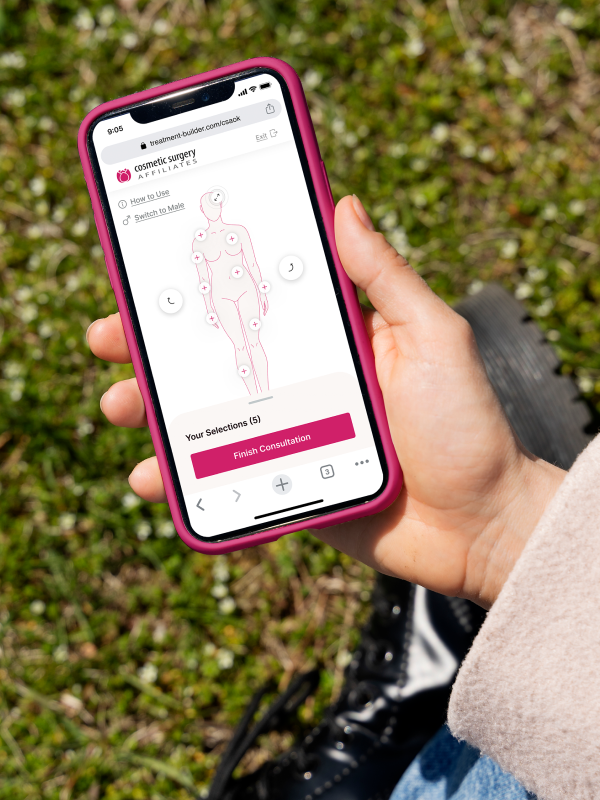
Whether you’re considering implants, fat transfer, or simply want to understand why injectable fillers aren’t the right choice, a qualified surgeon will give you honest answers. You can also explore your options from home using the virtual consultation tool before scheduling an in-person visit.
Come prepared with questions. Write down your goals, your concerns, and anything you’ve read that you want clarified. At CSA, every question you have is welcome, and we’ll never rush you toward a decision. That’s not just something we say — it’s something our patients feel from the moment they walk in.
Jessica described her experience this way:
“I had the absolute best Doctor and nurses anyone can ask for here at this facility! They thoroughly explained everything along the way and treated me like an absolute princess while I was there, I HIGHLY RECOMMEND this cosmetic surgery center and ALL of its people!”
What Are Your Next Steps?
You’ve done the research, and that puts you ahead. But here’s how to move forward with confidence.
- Research board-certified surgeons in your area and verify their credentials
- View before-and-after galleries to see real results from real patients
- Read patient reviews and look for consistency in care quality
- Schedule consultations with two or three surgeons to compare approaches
- Prepare your questions in advance, especially about FDA status and safety data
- Take time to reflect before making any decisions
And if you’re ready to talk with someone who will give you a straight answer, reach out to our team anytime.
Conclusion
No injectable option currently matches surgical breast implants for significant size increase, predictable outcomes, or long-term safety data. The safest path forward always starts with consulting a board-certified surgeon who will give you the full picture, not just the version that’s easiest to sell.
At CSA, your safety always comes first. Our board-certified surgeons have performed over 26,000 successful cosmetic surgeries since 2003, and they’ll take the time to help you understand every option available. Because every patient deserves to feel heard, respected, and confident in their choices.
Frequently Asked Questions
Are injectable breast fillers cheaper than implants?
Not when you factor in the volume needed. Achieving even modest breast enhancement with dermal fillers would require 100 or more syringes per breast, costing $90,000 to $150,000 compared to $7,000 to $12,000 for implants.
If dermal fillers are FDA-approved for the face, why aren’t they safe for breasts?
FDA approval is specific to body areas. Breast tissue behaves differently from facial tissue and requires regular cancer screening through mammograms that fillers can interfere with.
Can I get Sculptra injections for breast enhancement?
While technically legal as off-label use, Sculptra stimulates scar tissue formation in breast tissue with unknown long-term effects on mammograms and cancer detection. Most surgeons advise against it.
How can I tell if someone is offering illegal silicone injections?
Warning signs include non-medical settings, prices that seem unusually low, providers who aren’t board-certified physicians, and anyone who can’t show you the labeled product they’re injecting.
Is fat transfer to breasts the same as injectable filler augmentation?
No. Fat transfer uses your own living tissue harvested via liposuction, making it an FDA-recognized procedure with extensive safety data. Our surgeons offer fat transfer as a safe, natural option for patients seeking subtle breast enhancement.