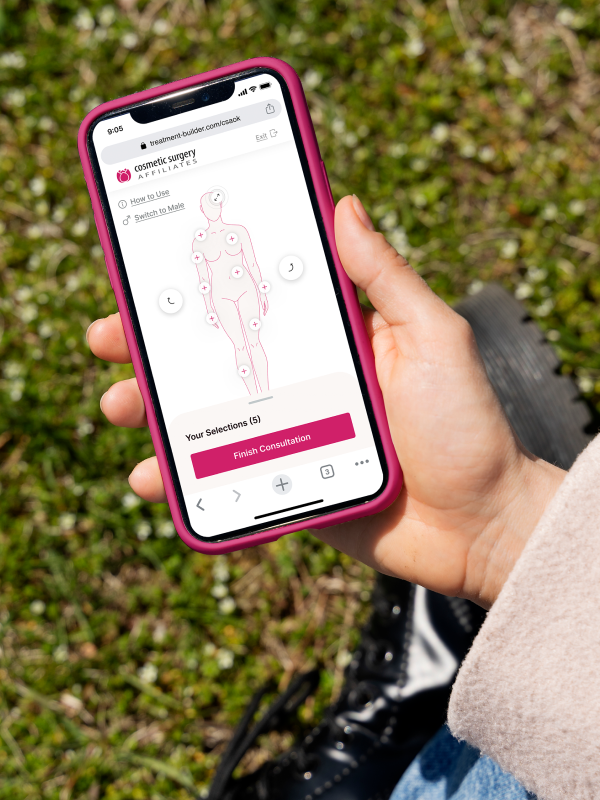


Abdominoplasty carries real risk, and safety questions are the most common reason people stall on scheduling one. So what are the risks, and how common are they? What can you do to lower the chances of something going wrong?
It’s completely understandable to have these questions. They might feel almost embarrassing to ask out loud, but please know this: there is nothing wrong with asking. In fact, asking is a sign that you’re being careful and thoughtful about a decision that matters deeply to you.
A 2024 study that followed 55,596 tummy tuck patients found a serious complication rate of 2.1 percent, meaning roughly 98 of every 100 patients came through without a major issue. That figure is a starting point rather than the full picture, since your own risk depends on your health history, your BMI, and whether the procedure is combined with anything else.
At Cosmetic Surgery Affiliates in Oklahoma City, we sit across from patients carrying these exact worries every single week. We never rush past them. We believe the best thing we can offer you isn’t just surgical skill, it’s the kind of genuine information that helps you feel steady and clear about your choice. Our board-certified cosmetic surgeons would always rather give you the full picture than a sales pitch.
This article is our way of sitting down with you and walking through everything: the most common risks, the rare but serious ones, who might face higher odds, what you can do to protect yourself, and what healing actually feels like, week by week.
Key takeaways
- The overall major complication rate for tummy tucks is between 2.1 and 4 percent depending on the study, and mortality is virtually zero across large patient series exceeding 55,000 procedures.
- Seroma, which is a pocket of fluid under the skin, is the most common local issue at roughly 10 to 11 percent, but it typically resolves on its own or with a simple in office drain.
- Smoking, a BMI of 30 or above, combining multiple procedures, and being over age 55 are the strongest risk factors you can actually control or plan around before surgery.
- Choosing a board-certified cosmetic surgeon who operates in an accredited facility is one of the most effective ways to reduce your overall risk.
- Most patients return to desk work within two to three weeks and resume full activity by six weeks, with final results appearing within three to six months.
The most common risks and why most of them are manageable
We know that reading a list of side effects can make your stomach drop. So before we walk through each one, we want you to hold onto this: the vast majority of these are temporary, treatable, and things your surgical team is deeply experienced in handling. Most tummy tuck patients move through recovery without anything serious happening at all.
A study of 25,478 patients gives us a clear, evidence based picture of where the risks actually land:
| Risk | Approximate frequency | How it’s managed |
|---|---|---|
| Seroma (fluid pocket) | 10-11% of patients | Usually resolves on its own or with simple aspiration |
| Infection | 0.6-1.1% | Preventable with antibiotics and wound care |
| Hematoma (bruising under skin) | 0.7-1.3% | Drainage if needed, compression garments help |
| Scarring | Universal (bikini line) | Fades over 12 months with scar management |
| Numbness or sensation changes | Common, temporary | Nerves typically recover within several months |
| Pain and swelling | Expected post-surgery | Prescription management first week, resolves gradually |
Fluid buildup (seroma)
This is the side effect you’ll hear about most often, so let’s take a moment to really understand it. During surgery, your surgeon gently separates layers of tissue to reshape your abdomen. Sometimes clear fluid collects in that space as your body heals, kind of like how a blister fills with fluid. It usually shows up about a week to ten days after your procedure.
A review of nearly 28,000 patients found this happens in about 10.9 percent of cases. Here’s the reassuring part: most seromas resolve entirely on their own as your body naturally reabsorbs the fluid. And if one does form and needs attention, your surgeon can drain it during a brief, straightforward office visit. It’s not a setback, just a quirk of the healing process.
Infection and wound healing
We understand that the word “infection” can feel scary. So let’s start with the numbers: infections after tummy tucks are genuinely rare, between 0.6 and 1.1 percent in large studies. Your surgical team actively works to keep that number low by prescribing antibiotics and giving you detailed wound care instructions tailored to your body.
Slower wound healing can sometimes happen when factors like smoking, diabetes, or too much tension on the incision line interfere with your body’s natural repair process. This is one of the reasons your surgeon’s pre-surgery instructions matter so much. They’re not just suggestions on a checklist, they’re small, specific things that give your body the best possible head start.
Bleeding and hematoma
A hematoma is when a small amount of blood collects beneath the skin instead of draining normally. It happens in roughly 0.7 to 1.3 percent of patients according to large studies, and your surgeon monitors carefully for this in the hours right after your procedure; it’s one of the reasons they keep a close eye on you during early recovery.
Wearing your compression garment and following activity restrictions, even when you’re feeling eager to get back to normal, are simple, meaningful steps that help keep this risk low.
Scarring, numbness, and swelling
Every tummy tuck leaves a scar along the bikini line, running roughly from hip to hip. Your surgeon places the incision so underwear or a swimsuit conceals it, and with proper scar management, the line fades significantly over the first year.
Numbness or changes in abdominal sensation are normal and expected. Your nerves were disrupted during surgery, and they need time to recover. Most patients feel sensation gradually returning over several months. Pain and swelling peak in the first one to two weeks, with most patients transitioning off prescription medication within the first seven days.
What serious complications can occur from a tummy tuck?
It’s completely normal to want to know about the worst case scenarios. Knowing the full picture is important for making good choices. Understanding the risks puts you in a better position to prevent them, but keep in mind that serious complications from a tummy tuck are rare.
Blood clots and pulmonary embolism
This is probably the risk that weighs heaviest on people’s minds, and we completely understand why. A blood clot in the leg (doctors call it deep vein thrombosis, or DVT) is concerning because, in rare cases, it can travel to the lungs, a condition called a pulmonary embolism.
Here’s what the research actually shows: a national survey of over 20,000 tummy tuck procedures found a blood clot rate of 0.04 percent and a pulmonary embolism rate of 0.02 percent. A more recent 2024 study of 55,596 patients reported the blood clot rate at 0.18 percent. To put that in perspective: for every thousand patients, fewer than two experienced this.
Your surgeon doesn’t leave this to chance. They take active, proven steps to protect you: gentle walking starting the very day of surgery, compression stockings, and sometimes blood thinning medication tailored to your individual risk. These precautions are a standard part of every surgery we perform, and they’re a key reason the rates stay so low.
Fat necrosis and skin loss
Sometimes the blood supply to the tissue being reshaped isn’t quite sufficient, which can cause some tissue to break down (doctors call this fat necrosis) or a small area of skin to not heal as expected. We know that sounds alarming, so let’s put it in context.
A literature review published in Archives of Plastic Surgery found skin healing issues in about 3 to 4.4 percent of cases. The single biggest factor that raises this risk is smoking, which triples the likelihood. This is one of the most important reasons surgeons ask you to quit well before your procedure.
The good news: newer surgical techniques, including something called progressive tension sutures, have reduced these rates meaningfully by doing a better job of protecting blood flow to the tissue during surgery. Surgeons today have tools that simply weren’t available a decade ago.
Heart, lung, and mortality risks
Mild, temporary breathing related issues can occur after any surgery that involves general anesthesia and time spent lying still. One study of nearly 3,000 patients found these occurred in about 2.3 percent of cases, and most were minor, manageable, and resolved quickly.
And the question you’re really asking: can a tummy tuck be fatal?
We hear you, and we’re glad you’re asking. Here’s the most reassuring number in all the research: the mortality rate from a tummy tuck is essentially zero.
Multiple large scale studies tracking tens of thousands of patients, including studies of 20,000 and 55,000 procedures, have reported zero deaths. You were brave to ask, and we hope the answer gives you real peace of mind.
Revisional surgery
Some patients need a second procedure to refine their results. A study of 562 patients found that about 13 percent had secondary work done. The most common reason was refining the area around the belly button, along with minor contour adjustments.
For some patients, a small touch up is simply the final step in getting the result they envisioned. Outcomes after these procedures are generally very positive.
If any of these risks feel particularly relevant to your situation, we’re here to talk through them openly. Reach out to our team for a candid, unhurried conversation about your health history and what it means for you.
Who is at higher risk for tummy tuck complications?
One of the most best things you can do before surgery is understand your own risk profile, not to scare yourself, but so you’re prepared. Not everyone faces the same odds, and the encouraging reality is that most of the biggest risk factors are things you have the power to change or plan around.
| Risk factor | Effect on complication rate | Source |
|---|---|---|
| Smoking | Up to 3.7x higher overall complications | Harris & Pepper, 2013 |
| BMI 30 or above | 15.2% vs 7.3% complication rate | Meta-analysis, 2025 |
| Diabetes | 1.63x higher overall risk | Li et al., 2025 |
| Combined procedures | Up to 10.4% with multiple surgeries | Winocour et al., 2015 |
| Age 55 or older | 1.4x relative risk | Winocour et al., 2015 |
| Male sex | 1.8x relative risk | Winocour et al., 2015 |
Smoking
If there’s one risk factor you have the most power over, it’s this one. We bring it up not to judge, we know quitting is incredibly hard, but because the data is so clear. Smoking tightens your blood vessels and starves your tissue of oxygen, which is exactly what your body needs most to heal.
A study of 415 plastic surgery patients found that smokers had 3.7 times the overall complication rate. Most surgeons ask you to quit at least four to six weeks before and after your procedure. This isn’t an arbitrary rule. It’s one of the single most impactful things you can do to protect both your safety and your results.
BMI and overall health
We want to approach this one gently, because we know weight is personal. The reason it matters medically is that carrying extra weight increases the strain on your body during and after surgery.
A meta-analysis of 24,861 patients found that those with a BMI of 30 or above had a complication rate of about 15.2 percent, compared to 7.3 percent for patients below that number. Diabetes adds another layer: a 2025 review of 15 studies found that patients with diabetes had 2.54 times the risk of wound healing issues.
If any of this applies to you, please don’t feel discouraged. This doesn’t mean the door is closed. It means your surgical team will plan more thoughtfully, and reaching a stable, healthier weight before surgery meaningfully improves your odds of a smooth recovery. Many of our happiest patients took that step first and are so glad they did.
Combined procedures
Combining a tummy tuck with another procedure, like liposuction or a breast lift, is extremely common. Historically, adding procedures has been linked to somewhat higher complication rates. A 2015 study of 25,478 patients found that a tummy tuck alone had a 3.1 percent complication rate, while adding liposuction raised it to 3.8 percent. Adding body contouring plus liposuction pushed it to 10.4 percent.
But here’s the hopeful part: a 2024 analysis of 55,596 patients found no significant added risk for major complications when a cosmetic procedure was combined with a tummy tuck. Researchers believe this reflects how much surgeons have refined their techniques and patient selection over the past decade. The combination of tummy tuck and lipo specifically benefits from these advanced body reshaping techniques, which let our team layer procedures with less added risk than older approaches.
For patients considering a tummy tuck alongside other procedures, it helps to see the full picture. Reviewing the range of body surgery options in OKC, from liposuction and arm lifts to thigh contouring and butt augmentation, makes it easier to plan a single procedure or a staged combination that fits your goals and recovery comfort.
At Cosmetic Surgery Affiliates, our surgeons routinely combine tummy tucks with liposuction in outpatient settings. What matters most is an honest conversation about what’s right for your specific body, and sometimes the safest, smartest plan is staging procedures rather than doing everything at once.
Francesca M. chose to combine a breast lift with her tummy tuck, and she shared what that experience was like:
“Dr. Meyer was absolutely amazing—she made me feel comfortable and confident from day one. She’s warm, fun, and incredibly honest, always putting your best interests first.”
Reviewing what to expect from mommy makeover plastic surgery helps frame the combined-procedures conversation with realistic risk awareness.
Age and sex
Patients over 55 face about 1.4 times the average risk, and male patients carry about 1.8 times the risk according to the same large analysis. These aren’t reasons to give up on the idea. They’re simply things your surgeon factors into your plan to make sure you’re as protected as possible.
Knowing your risk profile isn’t meant to be discouraging. It’s meant to be empowering; it’s the information that lets you and your surgeon take the right precautions before surgery day even arrives.
How can I minimize risks and make my tummy tuck safer?

The single most important decision you’ll make isn’t about the procedure itself. It’s about who performs it and how you prepare your body.
Choosing the right surgeon
Board certification matters more than any other factor. Look for a surgeon certified by a recognized board who has specific experience with abdominoplasty, operates in an accredited facility, and can show you before-and-after results from real patients. An experienced plastic surgeon in okc ticks every one of those boxes and welcomes the questions that come with making a careful decision.
Triple board-certified, fellowship trained cosmetic surgeon Dr. Erik Nuveen holds certifications from The American Board of Cosmetic Surgery, The American Board of Facial Cosmetic Surgery, and The American Board of Oral and Maxillofacial Surgery. That level of training, combined with 6-8 years of residency and 1-2 years of fellowship, reflects a commitment to safety that directly affects your outcome.
Research shows that accredited office suites actually have lower complication rates than hospitals, partly because patients in accredited outpatient settings tend to be healthier and the environments are purpose built for cosmetic procedures.
Pre-surgery preparation
What you do in the weeks leading up to surgery has a real, measurable impact on how smoothly everything goes. Your team will give you a personalized checklist, and following it closely is one of the most loving things you can do for yourself:
- Quit smoking at least four to six weeks before and after surgery
- Reach a stable weight within 10–15 pounds of your goal for at least three months
- Stop blood thinners, aspirin, and anti-inflammatory medications as directed
- Use antimicrobial soap like Hibiclens the morning of your procedure
- Arrange for someone to stay with you the night after surgery and help for the first few days
- Set up a cozy recovery space at home with pillows, medications, water, and loose clothing within arm’s reach
Post-op care that prevents complications
Every single item on your surgeon’s aftercare list exists for a reason. These aren’t just suggestions; each one is tied to a specific risk reduction. Think of them as your safety net:
- Wear your compression garment around the clock for the first two weeks, then 12 hours daily for weeks three and four
- Walk gently starting the day of surgery, this is one of the most effective ways to prevent blood clots
- Avoid strenuous activity and lifting over 10 pounds for four to six weeks
- Keep incision sites clean and dry, and follow all wound care instructions exactly
- Monitor your drain output if applicable; drains usually come out when output drops below 30 mL per day
- Take stool softeners as recommended to avoid straining
Keith M. followed his aftercare plan carefully, and he wanted others to know what the experience was really like:
“From the very first consultation through recovery, the entire team made the process smooth, comfortable, and reassuring.”
When you’re ready to start building your own safety plan, schedule a consultation to talk through your goals in a comfortable, no-pressure setting. There’s no obligation, just a conversation.
What about tummy tuck recovery and long term safety?
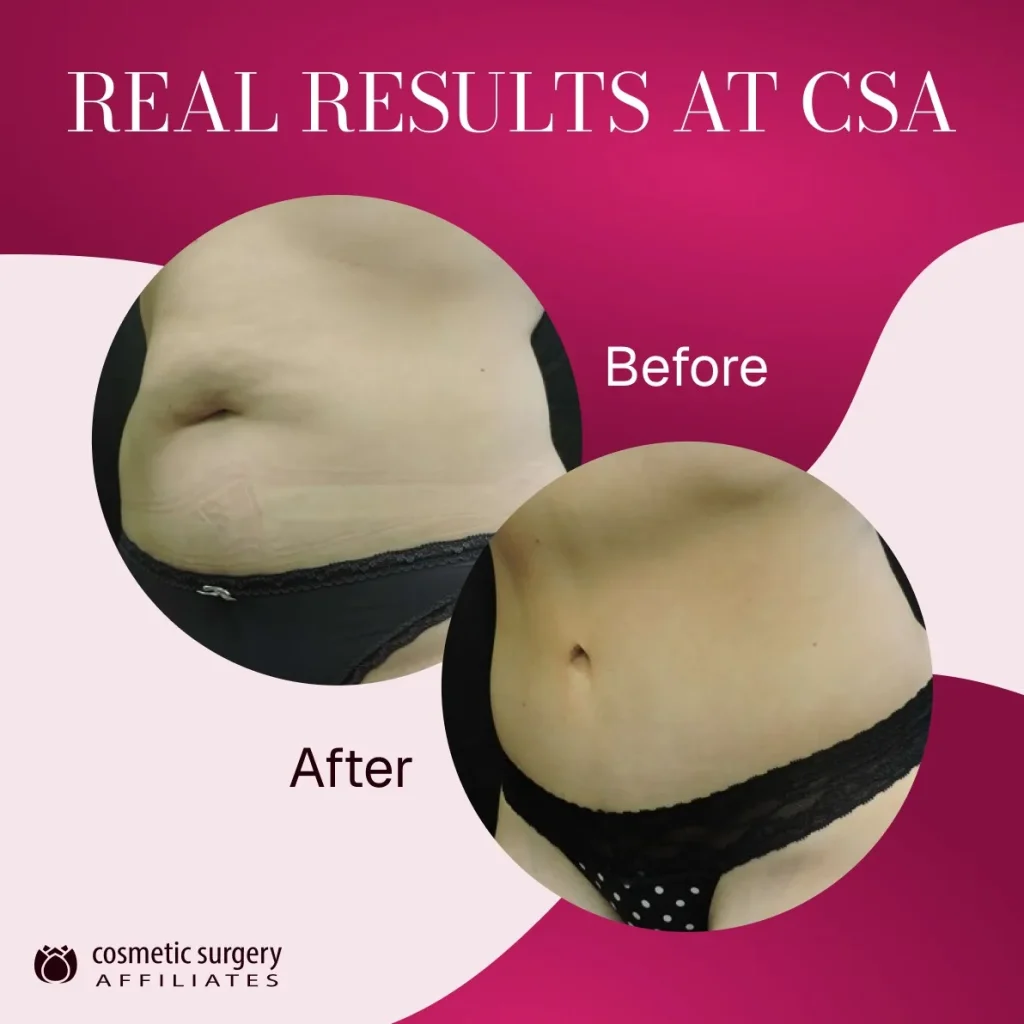
Recovery is where patience and self compassion really matter. The good news is that most patients tell us they feel noticeably better each week, and knowing the timeline in advance helps you plan with confidence instead of worry.
| Recovery milestone | Timeline |
| Light walking | Day of surgery |
| Off prescription pain medication | Within first week |
| Return to desk work | 2-3 weeks |
| Resume most daily activities | 4 weeks |
| Full exercise and strenuous activity | 6 weeks |
| Most swelling resolved | 1 month |
| Final contour visible | 3-6 months |
The first few weeks
Walking starts the day of surgery. It’ll feel slow and shuffly, and that’s completely okay. Even that gentle movement is one of the most important things you can do for yourself, because it gets your blood flowing and significantly lowers the risk of clots.
Most patients find they can transition from prescription pain medication to over the counter options like Tylenol within the first week. By week two, you’ll likely be up for light activities around the house, though your body will still be gently reminding you to rest. Listen to it.
Drains and compression
If your surgeon places drains (small tubes that help fluid exit the body), you’ll monitor the output at home. It’s simpler than it sounds, and your team will show you exactly what to do. Drains typically come out about a week after surgery, once the flow slows to less than 30 mL per day.
Compression garments become your constant companion, and most patients are surprised to find they actually feel comforting, like a supportive hug. The typical schedule is 24 hours a day for the first two weeks, then 12 hours daily for weeks three and four. After a month, they become optional. The garment supports your healing tissues, reduces swelling, and helps your new shape settle in.
Long term results and durability
The results of a well performed tummy tuck are designed to last. If you maintain a stable weight and follow your aftercare instructions, your results can be permanent. Most swelling resolves within the first month, but your final contour takes three to six months to fully reveal itself, so please be patient with yourself during that process. The best is yet to come.
Significant weight gain, pregnancy, or natural aging can alter your results over time. That’s why most surgeons recommend completing your family and reaching a weight you feel good maintaining before having the procedure.
Warning signs to watch for
Knowing what’s normal and what’s not will give you peace of mind throughout your recovery. Please contact your surgeon right away if you notice any of the following:
- Sudden or lopsided swelling on one side
- Pain that feels severe and isn’t responding to your medication
- A fever above 101°F
- Redness, warmth, or any unusual smell around the incision
- Shortness of breath or chest pain
- Pain, swelling, or tenderness in one calf
These symptoms are uncommon, but catching them early means they can be treated quickly and easily. Cosmetic Surgery Affiliates offers both virtual and in-person follow-up appointments to make sure your healing stays on track. You’re never alone in this process.
Karley B., at nearly a year out from multiple procedures, wanted to share what the full journey meant to her:
“My experience has been nothing but positive, and I would love for my journey to inspire you to feel the same trust and confidence that I do.”
What happens during a tummy tuck consultation?
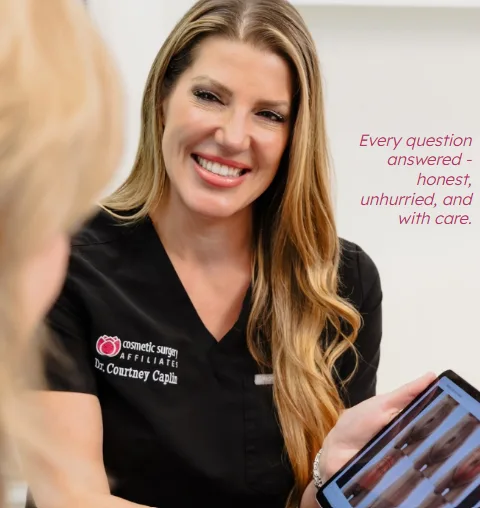
A consultation isn’t a commitment. It’s a conversation, and just as much for you as it is for us.
During your visit, your surgeon will gently examine your abdominal area, the skin, any muscle separation, your overall build, and sit down with you to talk about your goals, what concerns you most, and what outcomes are realistic for your unique body. They’ll explain which type of tummy tuck (a mini, full, or extended procedure) would be the best fit for your situation.
This is your time to ask the hard questions. Complication rates. Recovery expectations. What happens if something goes wrong? Nothing is off limits. In fact,we welcome these kinds of questions.
Both virtual and in person consultations are available, so you can start the conversation from the comfort of your own home if that feels more comfortable. To help make your goals more accessible, flexible financing through Cherry, PatientFi, and Alphaeon lets you choose a payment plan that works for your budget.
If you’re thinking about a tummy tuck and want an honest, unhurried conversation about what’s right for your body, request an appointment to take that first step. Our guide on everything you need to know before getting a tummy tuck covers what to bring up during that conversation. No pressure, no obligation, just clarity.
Conclusion
A tummy tuck is a well studied, commonly performed procedure with a strong safety record. The vast majority of patients come through without a serious issue. The risks that do exist are well documented, largely predictable, and significantly reduced when you prepare properly and choose your surgeon with care.
If you came to this article carrying worry, we hope you’re leaving with something different: clarity, and maybe a little relief. You don’t have to have all the answers right now. You just have to take the next small step.
At Cosmetic Surgery Affiliates in Oklahoma City, we believe every patient deserves to feel heard, respected, and genuinely cared for. Our team is here to give you the honest answers you’re looking for, not the ones we think you want to hear.
Whether you’re ready to book your consultation or you just want to keep learning, that conversation is always free and completely pressure free. We’ll be here whenever you’re ready.
Frequently asked questions
Is tummy tuck surgery dangerous?
A tummy tuck is not considered dangerous when performed by a qualified, board-certified cosmetic surgeon in an accredited facility. Large studies tracking tens of thousands of patients report zero mortality, and the overall major complication rate ranges from 2.1 to 4 percent. Like any surgical procedure, it carries risks, but proper preparation and surgeon selection keep those risks very low.
What percentage of tummy tucks have complications?
Major complications occur in roughly 2.1 to 4 percent of tummy tuck patients depending on the study and patient population. Minor issues like seroma, a pocket of fluid under the skin, are more common at around 10 to 11 percent but typically resolve without any lasting problems.
How do I avoid blood clots after a tummy tuck?
Walking early, starting the day of surgery, is the most effective prevention. Your surgeon may also recommend compression stockings and blood thinning medications based on your individual risk level. Staying hydrated and avoiding long periods of immobility during recovery further reduces your risk.
Does tummy tuck increase risk if I’m overweight?
Yes, a BMI of 30 or above roughly doubles the complication rate compared to patients with a lower BMI. This doesn’t mean you can’t have a tummy tuck, but your surgeon may recommend reaching a stable, lower weight first to improve your safety and results.
What is the most common tummy tuck complication?
Seroma is the most frequently reported local complication, occurring in roughly 10 to 11 percent of patients. It’s a collection of clear fluid under the skin that usually reabsorbs naturally or can be drained during a brief office visit. Most patients find it more inconvenient than concerning.
Will my tummy tuck scars fade?
Yes. Every tummy tuck leaves a scar along the bikini line, but it fades significantly over the first 12 months with proper scar management. Your surgeon places the incision in a location that underwear or a swimsuit can conceal. Following scar care instructions closely produces the best long term results.
Is tummy tuck safe with other surgeries?
Combining a tummy tuck with another procedure like liposuction or a breast lift is common and generally safe for healthy patients. The complication rate does increase with each additional procedure, from 3.1 percent alone to 3.8 percent with liposuction. Your surgeon evaluates your health to determine whether combining is appropriate.
What if I get pregnant after a tummy tuck?
Pregnancy after a tummy tuck is physically possible and safe, but it will likely stretch the abdominal skin and muscles that were tightened during surgery. Most surgeons recommend completing your family before having a tummy tuck to preserve your results long term.
How to choose the best surgeon for a low risk tummy tuck?
When choosing a skilled plastic surgery tummy tuck specialist, look for board certification, facility accreditation, specific experience with abdominoplasty, and a willingness to show you before and after results. During your consultation, ask about their complication rates, how they handle complications, and what their aftercare protocol includes. Surgeons who welcome those questions are the ones worth trusting.
Is a mini tummy tuck safer than a full tummy tuck?
A mini tummy tuck uses a smaller incision and targets only the lower abdomen below the belly button. The recovery is typically shorter and the overall risk profile is slightly lower since the surgical area is smaller. Your surgeon can determine which approach is right for your specific anatomy. Our overview of mini tummy tuck plastic surgery options breaks down candidacy, recovery, and what to expect from each option.
*Disclaimer: This content is for educational purposes only and does not constitute medical advice. A consultation with a qualified board-certified surgeon is required to determine the best treatment plan for your individual needs and any questions you may have about a medical condition or procedure.