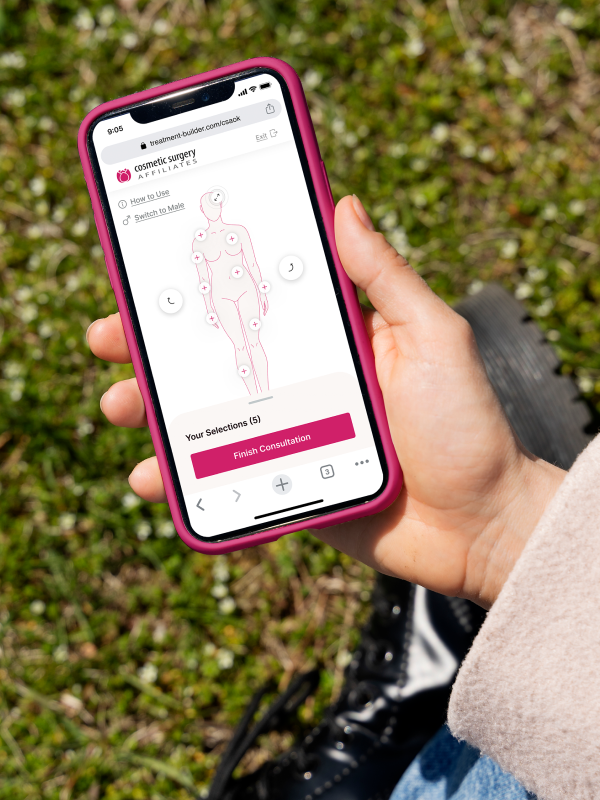

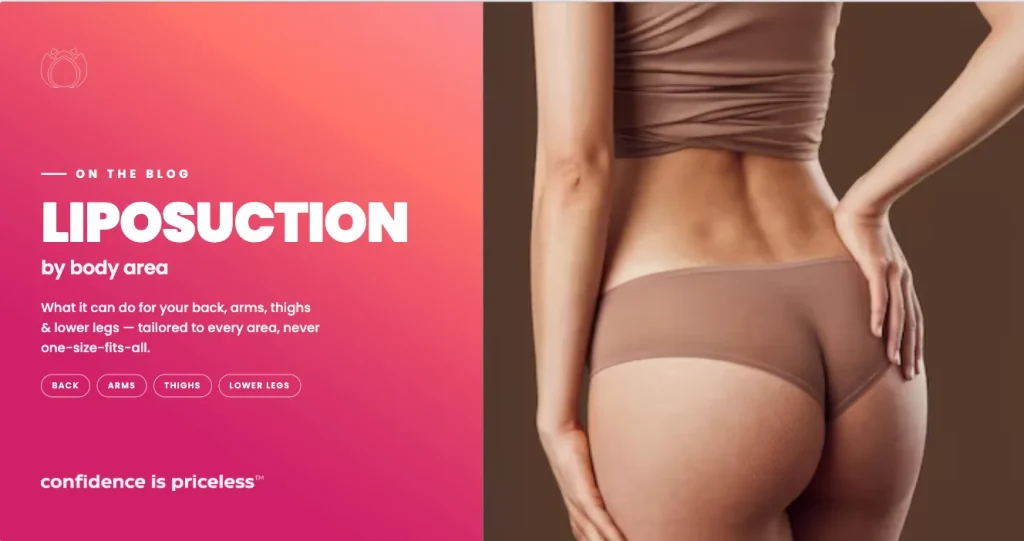
Liposuction is often a good solution for problem areas that are small, specific, and stubbornly resistant to exercise. The roll that shows across the back where a bra strap sits. Softness on the back of the arms. Inner thighs that rub on a warm day.
Liposuction doesn’t treat all of those the same way. According to ISAPS, more than 2 million liposuction procedures were performed worldwide in 2024, spread across the body from chins and arms to backs, thighs, knees, and ankles. Each of those areas behaves differently, so the technique, the recovery, and the result all shift depending on where you’re treating.
At Cosmetic Surgery Affiliates in Oklahoma City, our board-certified cosmetic surgeons tailor liposuction to the specific area being treated rather than taking a one-size-fits-all approach. This article walks you through how liposuction works on the back, arms, thighs, and lower legs, who tends to be a good fit, what it costs, and how combining areas works. Think of it as a map of your options, so you can walk into a consultation already knowing the right questions to ask.
Key takeaways
- Liposuction is a body-contouring procedure, not a weight-loss method. It removes pockets of stubborn fat that diet and exercise haven’t touched, in areas like the back, arms, thighs, and lower legs.
- The best candidates are at or near a stable weight with firm, elastic skin and localized fat. Skin quality matters as much as the fat itself, because skin needs to re-drape smoothly after fat is removed.
- Fat behaves differently by area. Back and outer-thigh fat tends to be dense and fibrous and often responds best to ultrasound- or power-assisted techniques, while inner arms and inner thighs hold softer fat.
- When loose skin is the main concern, an arm lift or thigh lift may suit your goals better than liposuction alone. Many people benefit from a combination, which a surgeon assesses during a consultation.
- Liposuction is priced per area, so treating several zones in one session is common and often more efficient than booking them separately. Surgeons typically treat three to four areas safely in a single appointment.
Which body areas can liposuction treat, and am I a good candidate?

Almost any area where stubborn fat collects can be a candidate for okc liposuction procedures, which is part of what makes them so versatile. The procedure removes localized fat, the kind that sits just under the skin and resists your best efforts at the gym. It works on far more than the belly.
Here’s a quick look at the areas covered in this guide and what liposuction tends to address in each.
| Body area | What liposuction targets there |
|---|---|
| Back and flanks | Bra rolls, mid-back bulges, and the muffin top along the waistline |
| Upper arms | Fullness along the back of the arm and the inner arm |
| Thighs | Inner-thigh fullness and outer-thigh saddlebags |
| Knees, calves, and ankles | Inner-knee bulges and lower-leg fullness caused by fat |
| Abdomen and waist | Stubborn belly fat and side rolls |
| Chin and neck | A double chin and fullness under the jawline |
The single most important thing to understand is what liposuction is not. It’s a contouring procedure, not a weight-loss treatment. Per ASPS, the best results come when you’re already at or near a stable, healthy weight and simply want to refine a specific area.
Signs of a good candidate
Two factors matter most: your skin and your fat. Firm, elastic skin tends to re-drape smoothly over the new contour once fat is removed, which protects a clean, natural result. When skin has lost some of its bounce from aging or significant weight changes, a surgeon may suggest pairing liposuction with a skin-tightening step to support the outcome.
Staying near a stable weight before your procedure also helps preserve your result for the long run. The fat cells removed are gone, but the cells that remain can still grow or shrink with weight changes. Working with your trusted OKC cosmetic surgery team helps you plan that timing right the first time.
Fat type and technique
Not all fat is the same. Softer fat, common on the inner arms and inner thighs, suctions gently. Denser, more fibrous fat, often found on the back and the male flanks, holds more connective tissue and takes a more deliberate technique to release evenly.
This is exactly why an experienced surgeon matters. Triple board-certified cosmetic surgeons Dr. Erik Nuveen and Dr. Courtney Caplin assess your skin quality, your fat type, and the specific areas you want treated before recommending an approach built around your body. There’s also a safety ceiling worth knowing: surgeons generally keep fat removal to about five liters, roughly ten pounds, in a single session to keep recovery smooth and your result balanced.
If you’re not sure whether your goals line up with what liposuction can do, reach out to our team for a candid, no-pressure conversation about where you stand.
Once you know you’re in the right ballpark, the next question is usually about a specific trouble spot. For a lot of people, that starts with the back.
How does liposuction work on the back, flanks, and bra rolls?
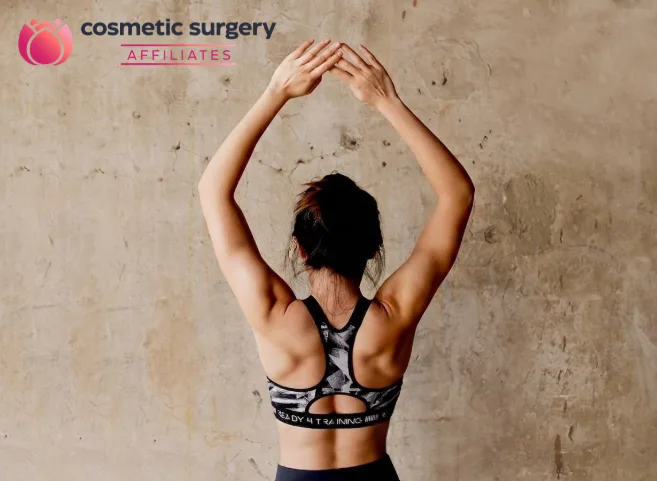
Back fat is one of the most common reasons people look into back lipo, and it’s also one of the most satisfying areas to treat because results show up clearly in clothing. The back isn’t one uniform zone, though. A surgeon usually thinks of it in distinct sections, each treated a little differently.
| Back sub-zone | What it addresses |
|---|---|
| Upper back | Fullness around the shoulders and below the neck |
| Bra rolls (mid-back) | The bulges that spill over and under the bra band |
| Flanks and lower back | The posterior waistline and the muffin top at the hips |
The bra-roll and mid-back area
The bra rolls are the folds that appear above and below your bra strap, and they can show through almost any fitted top. This fat sits close to the skin, without a deeper cushion beneath it. So the technique here is precise, working right against the underside of the skin to smooth the area evenly.
Fixing the muffin top and waistline
A muffin top is really a flank issue, where fat spills over the waistband at the sides and lower back. Liposuction on the muffin top aims to create a gentle indentation at the waistline, restoring a smoother curve from the side and the back. For many people, treating the flanks is what finally makes a waist reappear.
Matching technique to dense back fat
Back fat earns its reputation for being thick and fibrous, meaning it’s denser and held in place by more connective tissue than softer fat elsewhere. That density is why surgeons often reach for ultrasound-assisted or power-assisted methods here. Both gently break up the firm fat first so it can be removed evenly, which helps the final contour look smooth rather than patchy. The incisions are tiny and usually tucked into the bra line or a natural crease, so they stay discreet as they fade.
The back sets you up beautifully from behind. The arms, on the other hand, are front and center every time you reach, hug, or wave.
What should I know about liposuction for the upper arms?
Arm fullness shows itself in everyday moments, reaching for a seatbelt, raising a hand in a meeting, slipping into a sleeveless dress. Upper arm liposuction targets the soft fat that collects here, and getting a natural result depends on treating the arm as a rounded shape rather than a single flat surface.
Which parts of the arm get treated
The largest pocket of arm fat usually sits along the back of the upper arm, over the triceps, with additional fullness on the inner arm. A skilled surgeon contours around much of the arm’s circumference, blending the back, inner, and outer zones so the result looks even from every angle. Treating only one side of the arm is a common reason results can look incomplete.
Arm lift versus liposuction
Here’s a distinction that saves a lot of disappointment. If your main concern is fat with good skin tone, liposuction alone can do the job. If the bigger issue is loose, hanging skin, often after significant weight loss, then an arm lift, known medically as brachioplasty, removes the excess skin that liposuction can’t tighten.
Cosmetic Surgery Affiliates offers both arm liposuction and arm lift surgery, so the recommendation is matched to what your arm actually needs rather than to a single available option. Sometimes the best plan combines the two, removing fat and trimming skin together.
Nicolette, a patient who valued a smooth experience from start to finish, shared her impression:
“Absolutely Incredible Experience! I can’t say enough good things about my experience with Cosmetic Surgery Affiliates. From my very first consultation to my final follow-up appointment, every part of the process was smooth, professional, and beyond my expectations. The entire team was kind and attentive.”
Scarring
Liposuction incisions are tiny, just large enough for a thin tube, and they fade into the background over time. An arm lift involves a longer incision along the inner arm, which a surgeon places thoughtfully in a natural contour so it stays as discreet as possible. The trade-off, tighter and smoother arms, becomes visible right away.
Arms and back share a lot of technique. The thighs, though, bring their own challenges that are worth understanding before you decide.
How is liposuction performed on the thighs, and what results can I expect?
Thigh liposuction is one of the most requested body-area treatments, and also one of the most technically demanding, which is a good reason to choose your surgeon carefully. The thighs split naturally into two very different zones, and each calls for its own approach.
Inner thigh versus outer thigh
The inner thigh holds softer fat, and treating it can reduce the rubbing and chafing that makes warm-weather walking miserable. It can also create a modest thigh gap, though how much is ultimately set by your pelvic bone structure, not by how much fat is removed.
The outer thigh, where saddlebags form, is a different story. This fat is denser and more fibrous, so surgeons often use tumescent, power-assisted, or ultrasound-assisted techniques to release it smoothly and refine the hip-to-thigh line.
A technically demanding area
The thighs contain what surgeons call zones of adherence, areas where the tissue is naturally tethered down to deeper layers. These zones give the leg its shape, and a careful surgeon deliberately works around them, since over-treating them can create dents or unevenness. Skin elasticity, cellulite, and the way the leg holds swelling all add to the complexity. When loose skin is the dominant issue rather than fat, a thigh lift may be the better route to smoother contours.
Results over time
Patience pays off with the thighs. Swelling here tends to linger a bit longer than in other areas because your legs do so much of the work of standing and walking. As that swelling settles over several weeks, your true contour gradually emerges, and staying active and stable in weight helps that result hold.
If your thighs are the spot you keep coming back to, request an appointment to talk through whether liposuction, a lift, or a combination fits your goals.
The upper legs are well-traveled territory for liposuction. The lower legs are where things get genuinely specialized.
Can liposuction treat the lower legs, knees, calves, and ankles?
Yes, and for the right person the results can be transformative, but the lower legs demand more precision than almost anywhere else on the body. The instruments are smaller, the margins are finer, and patient selection is everything.
Knees
The inner knee is one of the most rewarding lower-leg areas to treat. That little bulge on the inside of the knee, the one that shows in shorts and dresses, responds well to liposuction. In fact, knee fat removal is widely considered the go-to solution for medial knee fullness, done through tiny incisions with quick visible refinement.
Calves and ankles
Calves and ankles are more nuanced. Before anything else, your surgeon checks whether the fullness comes from fat or muscle, often using a simple pinch test. Liposuction can address fat, but it can’t reshape a naturally large calf muscle, so this step sets honest expectations from the start.
So-called cankles, the lack of definition between the calf and ankle, can come from genetics, fat distribution, or fluid retention. When fat is the cause, careful liposuction can restore a visible taper between the calf and the ankle.
The need for precision
Because the calves and ankles are small, delicate areas with less cushion, surgeons use smaller cannulas, the thin tubes used to remove fat, and work in finer movements. This precision protects the smooth, even result you’re after.
If you’d rather slim your lower legs without surgery, you can always ask your surgeon about non-surgical options. The right fit depends on whether your fullness comes from fat, muscle, or fluid. A good surgeon will tell you honestly which approach suits you.
Knowing what each area needs naturally leads to two practical questions: what does this cost, and can you treat more than one spot at once?
How much does liposuction cost by body area, and can I combine multiple areas?
Cost is one of the most common questions, and it’s a fair one, especially when you’re already weighing a big personal decision. The honest answer is that price depends on which areas you treat and how many, because liposuction is priced per body area rather than as a flat fee.
At our Oklahoma City practice, liposuction generally runs from $2,500 to $5,000 for a single area, whether that’s your arms, back, inner thighs, knees, or calves. For people wanting a fuller change, Lipo 360, which contours the entire midsection in a circle around the waist, ranges from $9,000 to $12,000. For a deeper look at that circumferential option, our lipo 360 midsection guide covers what the procedure involves from start to finish.
Several things influence where a given area lands in that range.
| What affects your cost | Why it matters |
|---|---|
| Size of the treatment area | Larger zones take more time and care |
| Fat density | Fibrous areas like the back take more skill to suction evenly |
| Number of areas | Each added area has its own price |
| Symmetry demands | Paired areas, like both arms, are treated together |
| Anesthesia and facility | The setting and sedation type factor into the total |
Combining areas in one session
Treating several areas at once is both common and practical. Surgeons can typically address three to four areas safely in a single appointment. That means many people tackle complementary zones together, say, the flanks and the back, or the inner and outer thighs.
This is also where full body lipo and whole body liposuction enter the conversation. Those terms describe staged or combined plans that contour multiple regions, and a surgeon will map out what can be done safely in one session versus what’s better spaced out. To help make a plan more accessible, you can view financing options through PatientFi and Alphaeon and choose a payment approach that fits your budget.
Bundling complementary areas also means one recovery period instead of several, which many people find easier to plan around their work and family. Your surgeon will help you weigh which combinations make sense for your goals and your timeline.
Numbers and techniques only take you so far on paper. The part that turns all of this into a real plan is sitting down with a surgeon.
What should you expect at a liposuction consultation?
A consultation is where the gaps in the general information in this guide will be filled in with specifics about your body. Your surgeon examines your skin and tissue, reviews your medical history, and takes standardized photos. Then they tell you what those findings mean for the result you have in mind. Some of what you have read here will apply to you. Some of it won’t, and this is where you find out which is which.
During the visit, your surgeon assesses your skin quality, the fat in the areas you care about, and your overall health. You’ll talk openly about your goals and what’s been bothering you, and you’ll get a clear, tailored sense of which techniques and which areas make sense for your body. Nothing about it should feel rushed or one-size-fits-all.
You can start with a virtual consultation from home or come into our Oklahoma City office in person, whichever feels more comfortable. That flexibility helps a lot if you’re traveling from outside the area. Cost questions are welcome here too, including flexible financing through PatientFi and Alphaeon, so you can plan without pressure.
Katie, a patient who researched her options carefully before choosing CSA, shared her experience:
“Dr. Courtney Caplin is truly amazing and has so much talent! CSA was the third cosmetic surgery facility I received a consult from as I had done extensive research on procedures and doctors in the OKC area and out of state. The entire process was so simple, I shared my insecurities with my consultant and felt completely heard.”
Conclusion
Liposuction isn’t a single fix applied the same way everywhere. It’s a family of tailored approaches. The back, the arms, the thighs, and the lower legs each call for their own technique, their own instruments, and their own realistic expectations. Understanding those differences is what lets you walk into a consultation as an informed partner rather than a passenger, ready to ask the questions that matter for your body.
At Cosmetic Surgery Affiliates in Oklahoma City, we believe every patient deserves to feel heard, respected, and genuinely confident in their choices. Whether you’re ready to map out a plan or simply want to understand your options, we’re here to help. When you’re ready, connect with our team to start the conversation on your terms.
Frequently asked questions
Will liposuction on my back fix my muffin top?
Often, yes. A muffin top is usually fat spilling over the waistband at the flanks and lower back, and liposuction in that area can create a smoother indentation at the waistline. Your surgeon will confirm whether the fullness is fat that liposuction can address during your evaluation.
Can I get liposuction on my back and arms at the same time?
Yes. Surgeons can typically treat three to four areas safely in one session, and the back and arms are a common pairing. Combining areas in a single appointment is often more efficient than scheduling them separately, and your surgeon will confirm what’s safe for you.
Will I need an arm lift instead of arm liposuction if I have loose skin?
It depends on whether fat or loose skin is the bigger issue. When skin still has good elasticity, liposuction alone can contour the arm nicely. When there’s significant loose, hanging skin, an arm lift removes the excess that liposuction can’t tighten, and sometimes the two are combined.
Is liposuction on the calves and ankles safe?
Yes, when performed by an experienced surgeon who selects patients carefully. These areas are smaller and more delicate, so they call for smaller instruments and finer technique. The board-certified cosmetic surgeons performing these treatments first confirm the fullness comes from fat rather than muscle.
How much fat can be safely removed in a single liposuction session?
Surgeons generally keep removal to about five liters, roughly ten pounds, in one session. Staying within that limit supports a smoother recovery and a more balanced result. Removing more than that in a single appointment raises the chance of complications, which is why the ceiling exists.
Can liposuction on the inner thighs create a thigh gap?
It can create a modest gap by removing inner-thigh fat, but the final result is shaped largely by your pelvic bone structure. Liposuction can reduce the fullness and the chafing that come with full inner thighs, while the size of any gap is individual.
How long do I need to wear a compression garment after arm or thigh liposuction?
Most patients wear a compression garment for a few weeks, with the exact timeline set by your surgeon. Wearing it as directed helps reduce swelling and supports your skin as it re-drapes over the new contour, which protects your result.
*Disclaimer: This content is for educational purposes only and does not constitute medical advice. A consultation with a qualified board-certified surgeon is required to determine the best treatment plan for your individual needs and any questions you may have about a medical condition or procedure.