

For most people, the hardest part of a tummy tuck isn’t the operating room. It’s the weeks afterward at home, wondering whether the tightness, the slow shuffle to the kitchen, and the on-and-off swelling are all normal. That uncertainty is often worse than the recovery itself.
Here’s the reassuring part. Recovery from a tummy tuck (abdominoplasty) is more predictable than it feels in the moment.
Many patients are back to a normal home routine within about four to five days, and to office work in roughly 10 to 14 days, according to ISAPS. Light exercise usually returns around six to eight weeks, and most patients wait about 12 weeks before rigorous activity. Knowing those milestones ahead of time takes a lot of the fear out of them.
At Cosmetic Surgery Affiliates in Oklahoma City, our board-certified cosmetic surgeons have cared for more than 27,000 patients. Patients come to us from across the metro, including Edmond and Norman, and recovery questions come up in nearly every consultation. This guide covers what changes your timeline and what each week really looks like, then walks through drains, compression, aftercare habits, and the signs worth a quick call.
Key takeaways
- Your timeline depends on the type of tummy tuck, whether your muscles were repaired, and habits like nicotine use and nutrition. No two recoveries look exactly alike.
- Healing happens in stages. The first week brings the most swelling, desk work is realistic around two weeks, and the contour keeps refining for six to twelve months.
- Caring for your drains and wearing your compression garment are two of the biggest things you control. Both support smoother, more comfortable healing.
- Small aftercare habits add up. Sleeping propped up, walking early, eating enough protein, and protecting your scar from the sun all shape how well you heal.
What can change your personal tummy tuck recovery timeline?
Before you can picture your own recovery, it helps to know why timelines differ so much from one person to the next. The single biggest factor is how much surgery you had. A mini tummy tuck asks less of your body than a full or extended one, so it heals faster.
| Type of tummy tuck | Incision | Typical return to desk work | Strenuous activity |
|---|---|---|---|
| Mini | Smaller, low on the abdomen | About 1 to 2 weeks | Around 5 to 6 weeks |
| Full | Hip to hip, above the pubic line | About 2 to 3 weeks | Around 12 weeks |
| Extended | Longer, wrapping toward the flanks | About 4 to 6 weeks | Around 12 weeks |
To put that in context, abdominoplasty was the third most common cosmetic surgical procedure in the country in 2024, with more than 171,000 performed, per the ASPS 2024 report. The timelines below reflect a very well-traveled path.
Muscle repair for separated abdominals
If your surgeon repairs separated abdominal muscles, a common issue called diastasis recti, your deep tissues need extra time to knit back together. That internal work flattens and tightens your core, which is why lifting and straining are off the table early on. Giving the repair time to strengthen is what locks in your flatter result.
Combining liposuction or other procedures
Many patients pair their tummy tuck with liposuction to sculpt the waist and flanks in the same operation. Adding contouring work can mean a bit more bruising in those areas at first. The tradeoff is a more refined shape that a standalone full tummy tuck can’t quite reach.
Health habits that speed healing
A few things you control have an outsized effect. Staying nicotine-free before and after surgery keeps blood flowing well to your healing skin, which supports cleaner, faster wound healing.
Eating enough protein gives your body the raw material to rebuild tissue, and staying close to a stable weight protects your new contour. A mini tummy tuck candidate and a full tummy tuck candidate can both heal beautifully when these basics are covered. With those variables in mind, here’s how the weeks tend to unfold.
What does the tummy tuck recovery timeline look like week by week?

Recovery is a series of milestones, not one long stretch of feeling unwell.
Each week tends to feel better than the last, and the table below maps the general arc.
| Timeframe | What is happening | What you can usually do |
|---|---|---|
| Week 1 | Most swelling and tightness, drains in place, a slightly bent posture | Rest, take short frequent walks, sleep propped up |
| Weeks 2 to 3 | Posture straightens, bruising fades, drains often removed | Return to a desk job for many people |
| Weeks 4 to 6 | Tissues soften and energy returns | Light cardio around week 6 |
| Weeks 6 to 12 | Deep muscle repair keeps strengthening | Low-impact cardio first, with core and higher-impact exercise usually cleared around week 12 |
| Months 3 to 6 | Major swelling resolves | Most normal activity, near-final contour |
| 6 to 12 months | Scar matures and softens | Full return to life as the line fades |
The first week
The first few days are the most demanding, with tightness, swelling, and a stomach that feels like it needs protecting. You’ll walk hunched at first, and that’s completely normal, not a setback. Those early short walks matter more than they seem, because gentle movement keeps your circulation going and lowers the risk of a blood clot.
Surgical drains are usually in place this week, doing quiet, useful work. When drains are used, they typically come out within a few days, and light activity often resumes in the first one to three weeks. Rest, hydration, and following your instructions carry you through.
Weeks two through six
By the second and third week, your posture straightens, and many people with desk jobs head back to work. Bruising fades, the sharp tightness eases into a milder pulling feeling, and you start to feel more like yourself. This is often the turning point where recovery stops feeling like a full-time job.
Around week six, low-impact cardio usually gets the green light. Core work and higher-impact exercise usually wait until about week 12 to protect your muscle repair. Our leading surgeon, triple board-certified, fellowship-trained cosmetic surgeon Dr. Erik Nuveen, has focused much of his career on body contouring, and routine follow-up visits confirm you’re ready before you push harder.
Months three through twelve
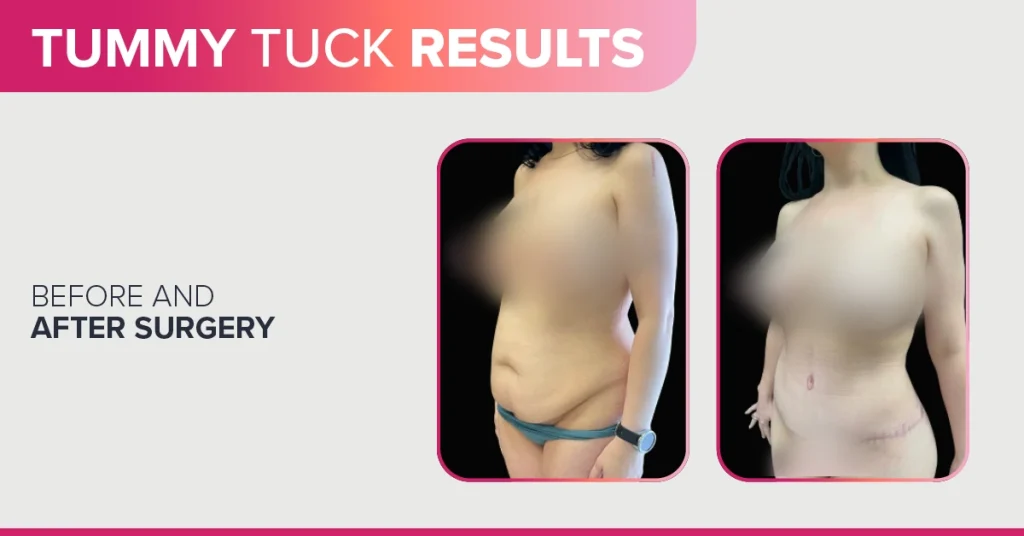
The last phase is the quiet one. Major swelling settles by around three months, your near-final contour shows by six months, and the scar keeps maturing from raised and pink to flat and pale. You’re living normally well before this point, while your body refines the result in the background. That gradual finish is visible in real before-and-after photos, and it’s exactly why patience pays off.
How do you manage surgical drains and compression garments at home?

Drains and compression garments feel intimidating from the outside and turn out to be the most manageable part once you know the routine. Both do the same job: keeping fluid from collecting under your skin so your tissues can settle and heal.
Caring for your drains
Your drains are thin tubes that pull away extra fluid into a small bulb. Emptying them is simple once you’ve done it once or twice, and keeping a log helps your surgeon decide when they can come out.
- Empty each drain at least twice a day, or whenever the bulb is about half full.
- Wash your hands, open the stopper, and pour the fluid into a measuring cup.
- Write down the amount in milliliters so your team can track your progress.
- Squeeze the bulb flat before you reseal it, which keeps the gentle suction working.
- Gently move any fluid down the tubing toward the bulb so it doesn’t clog.
Drains usually stay in until output drops to a low, steady level for a couple of days in a row. That’s your body’s signal that the fluid is under control.
The role of compression
Your compression garment or abdominal binder does more than hold you together. By gently pressing the healing tissue against your abdominal wall, it limits the space where fluid can gather. A 2023 study found that wearing a compression garment can help reduce pain after abdominal surgery.
Most patients wear a supportive binder around the clock at first. You then shift to a firmer garment as the swelling calms down over the following weeks. Wearing it as directed is one of the simplest ways to speed your comfort and protect your result.
Keith, who had a tummy tuck and was struck by how well her scar healed, shared her experience:
“I would highly recommend CSA, I had a tummy tuck a few years ago from them and my scar looks so good my family doctor was impressed when she saw it and asked where I went! CSA was recommended to me by a very sweet member of their team, Lita. The procedure really changed my confidence and life for the better.”
What aftercare habits make tummy tuck recovery smoother?
The small, daily choices during recovery add up to a big difference in how you feel and how your result settles. None of them are complicated, and most simply protect the work your surgeon did.
Sleeping and moving safely
For the first couple of weeks, sleep propped up with your upper body raised and your knees bent, which keeps tension off your incision. Get in and out of bed by rolling onto your side first, rather than sitting straight up, to protect your core. Walking a little and often keeps your circulation strong, and it’s one of the best things you can do early on.
Eating for healing
What you eat becomes building material for new tissue. Leaning into protein supports faster wound healing, while easing off very salty foods helps keep extra swelling down. Staying well hydrated rounds out a healing-friendly plate, and none of it requires a strict diet, just a little intention.
Caring for your scar and managing comfort
Once your incision is fully closed, usually around the second week, silicone sheets or gel and gentle massage help your scar soften and flatten. Protecting that healing line from the sun with clothing or sunscreen keeps it from darkening. Swelling and bruising can take up to three months to fully settle, so patience with the scar is normal and expected.
Cost shouldn’t be a barrier to healing with confidence. Cosmetic Surgery Affiliates supports you with follow-up visits, both virtual and in-person, the whole way through.
Planning ahead for the expense takes real pressure off your recovery. Flexible financing through PatientFi and Alphaeon can spread the cost into manageable payments. Even with great habits, it helps to know the few signs worth a call.
What recovery warning signs should you watch for?
Most people heal smoothly, and serious issues after a tummy tuck are genuinely uncommon. Knowing a small handful of signs to watch for isn’t about worrying; it’s about feeling like a confident partner in your recovery. Your surgeon would always rather hear from you than have you wonder.
Reach out to your surgeon if you notice any of the following:
- A sudden jump in swelling or a soft, shifting pocket of fluid in your abdomen
- Redness, warmth, or drainage that looks cloudy, especially alongside a fever
- Pain, tenderness, or swelling in one calf or leg
- Sharp, burning, or electric-shock sensations, rather than the usual numbness that slowly fades
That last point is worth softening. Some numbness across your lower abdomen is a normal part of healing, and sensation returns gradually over the months that follow. Your follow-up appointments exist to catch anything early, so you’re never navigating this alone.
Karley, who had an abdominoplasty with flank liposuction, shared her experience:
“Great experience! I had a abdominoplasty with flank lipo! And they were amazing from start to finish! Completely changed my life!”
Conclusion
Tummy tuck recovery unfolds in clear stages, and knowing them turns a stressful stretch into a series of manageable milestones. The first week asks the most of you, and a full tummy tuck result keeps refining for months afterward. The habits you control: compression, drain care, walking early, eating well, and sun protection, are what make the process smoother.
When you’re ready to map out your own recovery, schedule a visit to talk it through in person or by virtual consultation. There’s no pressure and no rush, just a real conversation about your goals. Every step of the way, the team at Cosmetic Surgery Affiliates is there to help you feel heard, respected, and confident.
Frequently asked questions
How long do I sleep elevated after a tummy tuck?
Most patients sleep with the upper body propped up and the knees slightly bent for about the first two to three weeks. This position keeps tension off your incision and helps limit swelling. Once your surgeon confirms your core is healing well, you can gradually return to lying flatter.
How long do surgical drains stay in after a tummy tuck?
Drains usually come out within a few days to about two weeks, depending on how quickly your fluid output drops. Your surgeon removes them once the daily amount stays low for a couple of days in a row.
When is it safe to drive after a tummy tuck?
Plan to hold off on driving until you’re fully off prescription pain medication and can move, brake, and twist without discomfort. For many people, that’s roughly one to two weeks, though it varies. A good rule of thumb is that if an emergency stop would make you hesitate, you’re not quite ready.
How long do I wear my compression garment?
Most patients wear a compression garment or abdominal binder for around six to eight weeks, starting with near-constant wear and easing off as swelling improves. It supports your tissues, helps control swelling, and adds a surprising amount of comfort.
How much time off work do I need for a desk job?
Many people with desk jobs return in about one to two weeks, especially after a mini tummy tuck. A full or extended procedure, or a physically demanding job, usually calls for four to six weeks off. Building in buffer time takes the pressure off your healing.
When can I lift my children or heavy objects again?
Heavy lifting is typically off-limits for at least four to six weeks to protect your muscle repair. For small children, ask your surgeon about safe ways to hold and comfort them without straining, such as sitting down first. Easing back in on schedule is what keeps your internal repair strong.
How long does tummy tuck swelling last?
Some swelling is normal for weeks to months, with the bulk of it resolving by around three months and subtle swelling lingering a bit longer. Wearing your compression garment and staying hydrated help it settle faster. Your final contour usually shows around the six-month mark.
How do I keep my tummy tuck scar from darkening?
Protect the healing incision from the sun with clothing or broad-spectrum sunscreen once it’s fully closed, since sun exposure can darken a scar. Silicone sheets or gel and gentle massage also help the line soften and flatten over time. Consistency over several months matters more than any single product.
Can financing help with the cost of surgery and recovery?
Yes. Our practice offers flexible financing through PatientFi and Alphaeon so you can choose a plan that fits your budget. Both virtual and in-person consultations make it easy to start the conversation and map out your personalized plan.
*Disclaimer: This content is for educational purposes only and does not constitute medical advice. A consultation with a qualified board-certified surgeon is required to determine the best treatment plan for your individual needs and any questions you may have about a medical condition or procedure.