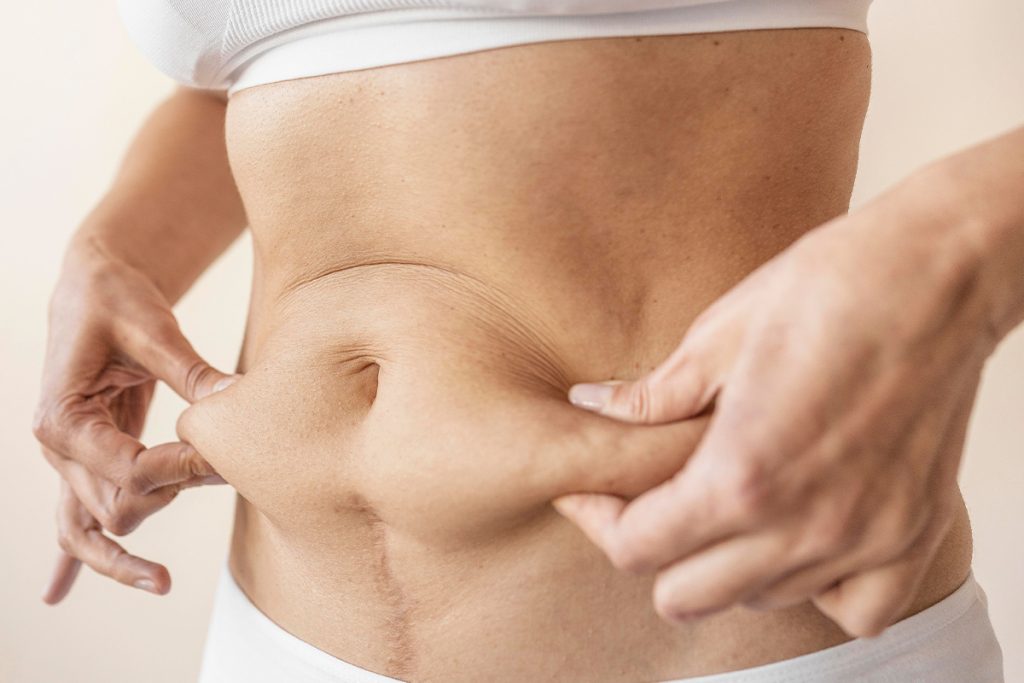

It usually starts with a photo you didn’t pose for. Maybe it’s a candid shot from a family dinner, or your own face staring back at you on a long video call. The jawline looks a little softer than it used to, the neck a little looser, and none of it quite matches how young you still feel on the inside.
If that sounds familiar, you’re not alone. According to ISAPS, surgeons performed more than 737,000 facelift procedures worldwide in 2024, a number that has grown nearly 76% since 2020. The facelift has quietly become one of the most requested facial rejuvenation surgeries in the world.
At Cosmetic Surgery Affiliates in Oklahoma City, our board-certified cosmetic surgeons have helped more than 27,000 patients feel more like themselves again. This guide covers what a facelift can and can’t do, the main techniques available, how to prepare, what recovery looks like, and how to choose a surgeon you can trust.
Key takeaways
- A facelift, medically called a rhytidectomy, lifts and tightens the lower two-thirds of the face and neck. It softens jowls, loose neck skin, and deep folds, but it won’t fix surface texture, sun damage, or volume loss.
- There isn’t one single facelift. Options range from a mini facelift for early sagging to a deep plane facelift that repositions deeper tissue. The right choice depends on your anatomy and goals.
- Preparation matters just as much as the surgery itself. Pausing nicotine, certain medications, and blood-thinning supplements ahead of time gives your tissues the best possible chance to heal well.
- Recovery is gradual and predictable. Most swelling and bruising settle within two to three weeks, with strenuous activity resuming a bit later once your surgeon clears you.
- The single most important decision you’ll make is choosing your surgeon. Looking at real before-and-after results and confirming board certification protects both your safety and your outcome.
What is a facelift, and what can it actually do for your appearance?
A facelift is a surgical procedure that lifts and repositions sagging facial tissue and removes excess skin that has loosened over time. The medical term is rhytidectomy, from the Greek words for “wrinkle” and “removal”. In plain terms, it resets the lower face and neck to a firmer, more rested version of itself.
Most of the aging we notice happens in the lower two-thirds of the face. A facelift targets the cheeks, the jawline, the area along the jaw where jowls form, and the neck. It’s the go-to surgery when skin has started to hang and soften, rather than just wrinkle.
Here’s the part that surprises a lot of people. A facelift is excellent at lifting and tightening, but it isn’t a fix for everything on your face.
| What a facelift improves | What it doesn’t address on its own |
|---|---|
| Sagging cheeks and midface | Fine lines and surface texture |
| Jowls along the jawline | Sun damage and brown spots |
| Loose, banded neck skin | Lost volume in lips or under the eyes |
| Deep folds from the nose to the mouth | Overall skin tone and pigment |
Those gaps are where non-surgical care does its best work. If your main concern is texture, sun damage, or lost volume rather than sagging, you can explore our non-surgical options to see what fits.
To understand why, it helps to know how the face actually ages. Skin gradually loses collagen and elasticity, deeper fat pads deflate and shift downward, and the supportive muscle layer beneath everything begins to loosen. A facelift addresses that structural sagging, which is why creams and lasers can’t replicate the results once tissue has truly descended.
Facelifts aren’t only for women, either. Surgical facial procedures performed on men rose 18% in 2023, according to ISAPS, as more men look for a refreshed, still-natural appearance. If you’re wondering whether your concerns are a good fit, the honest answer comes down to what’s actually happening with your skin and tissue. The next question is usually which kind of facelift makes sense, and there are more options than most people expect.
What are the different types of facelifts, and how do you choose the right technique?

There isn’t a single procedure called “the facelift.” The term covers a family of techniques that differ in how deeply the surgeon works. The right choice depends on your age, how far the tissue has descended, and the result you’re after.
| Technique | Best suited for | How it works |
|---|---|---|
| Mini facelift | Early, mild lower-face laxity | Shorter incisions around the ear, focused on the jawline |
| Traditional (full) facelift | More advanced lower-face and neck sagging | Repositions tissue and removes excess skin |
| SMAS facelift | Jowls and the mid-to-lower face | Lifts and tightens the SMAS muscle layer |
| Deep plane facelift | A unified lift of cheek, jaw, and neck | Releases deeper ligaments and moves tissue as one unit |
| Mid-facelift | Flattened cheeks and the under-eye area | Lifts the descended cheek fat pad |
| Liquid facelift | Early volume loss, not yet ready for surgery | Temporary dermal fillers, no incisions |
You don’t need to memorize all of them before walking into a consultation, but knowing how a couple of the more common approaches work can make the conversation with your surgeon feel a lot less overwhelming.
The SMAS and deep plane techniques
The SMAS layer comes up often for a reason. The superficial musculoaponeurotic system is the sheet of muscle and connective tissue that sits just beneath your skin. Modern facelifts lift it directly rather than simply pulling the skin tight. That’s the difference between a natural result and the overly tight, windswept look people worry about. A deep plane facelift goes a step further, releasing the deeper ligaments so the cheek, jaw, and neck move together as a single, tension-free unit.
The reason technique matters so much is that no two faces age the same way. Triple board-certified cosmetic surgeon Dr. Erik Nuveen tailors the approach to each patient’s anatomy, which is why a consultation matters more than any technique name you might read about online.
Combining a facelift with other procedures
A facelift handles the lower face and neck, so many patients pair it with procedures that address the upper face. It’s common to combine a lift with a brow lift to raise heavy eyebrows, or with eyelid surgery to refresh tired-looking eyes.
For sagging that’s concentrated lower down, a dedicated neck lift is often added to sharpen the profile. Choosing the right combination can feel overwhelming, and that’s exactly the kind of thing a good surgeon helps you work through. Once you have a sense of which technique fits, the next step is getting your body ready for surgery.
How do you prepare for facelift surgery, and what happens on the day of the procedure?

Good preparation is one of the best things you can do for a smooth result, and it starts a few weeks before your surgery date. Taking these steps seriously genuinely protects your healing.
In the weeks before surgery
Your surgeon will give you a personalized plan, but a few preparations are nearly universal. Pausing nicotine for about four to six weeks beforehand gives your tissues the strong blood flow they need to heal well. You’ll also pause certain medications and supplements that can increase bleeding.
- Stop aspirin and anti-inflammatory medications, under your surgeon’s guidance, about two weeks out.
- Pause blood-thinning supplements like vitamin E, fish oil, and ginkgo.
- Take a break from active skincare products such as retinoids so your skin is calm going in.
- Arrive with a clean face, free of makeup, lotions, and perfume.
Anesthesia and the day itself
Most facelifts take a few hours. The procedure typically runs about two and a half hours. It’s performed under either IV sedation or general anesthesia, so you stay comfortable and feel nothing throughout. You and your surgeon decide together which option is the right fit for you.
Once you’re comfortable, your surgeon places the incisions in well-hidden spots. They typically follow the hairline at the temple, curve around the front of the ear, and tuck behind the earlobe, so the healed lines stay discreet. The deeper tissue is lifted and secured, and excess skin is trimmed. Thin drains are sometimes placed to prevent fluid from collecting, then removed within a day or two.
Krissy, who valued how clear the process felt from her very first visit, shared her experience:
“What a truly exceptional experience and facility! Dr. Nuveen is by far one of the best doctors I’ve ever been to. From the very first consultation, I knew he was the right choice, direct, reassuring, knowledgeable, and genuinely compassionate. The day of surgery only confirmed that feeling.”
What does facelift recovery look like week by week?
Recovery from a facelift is gradual, and knowing the rhythm of it makes the early days far less stressful. The first stretch is about rest, and each week after brings visible improvement.
| Timeframe | What to expect |
|---|---|
| First 24 to 48 hours | Rest with your head elevated, a snug dressing, mild tightness |
| Days 3 to 4 | Swelling and bruising peak, then begin to ease |
| Day 7 | Sutures in front of the ear often come out, bruising fades |
| Weeks 2 to 3 | Most swelling settles, back to desk work and light makeup |
| Weeks 4 to 6 and beyond | Strenuous exercise resumes as your surgeon clears you |
The first week
The first day or two are the quietest. You’ll rest with your head raised to ease swelling and wear a supportive dressing.
Some tightness is normal during this stretch, part of the healing process rather than anything to worry about. Prescription medication keeps any discomfort manageable, and short, gentle walks are encouraged to keep your circulation moving.
By the end of the first week, many patients have their front-of-ear stitches removed and notice bruising starting to fade. The face still feels tight and looks swollen, and that’s exactly on schedule.
Settling back into life
Most people return to desk work and errands within ten days to two weeks. That’s around the same time light makeup can go over healed incisions.
Many surgeons recommend taking things easy for two to three weeks, and most patients feel comfortable going out in public again within the month that follows. A smart tip is to schedule surgery three to six months before a major event, giving your face plenty of time to look its best. Swelling continues to fade quietly for several months, and the final settled result reveals itself gradually.
Once you understand the healing timeline, the bigger questions come into focus: what results to expect, and who you trust to deliver them.
What results can you expect, and how do you choose a qualified facelift surgeon?
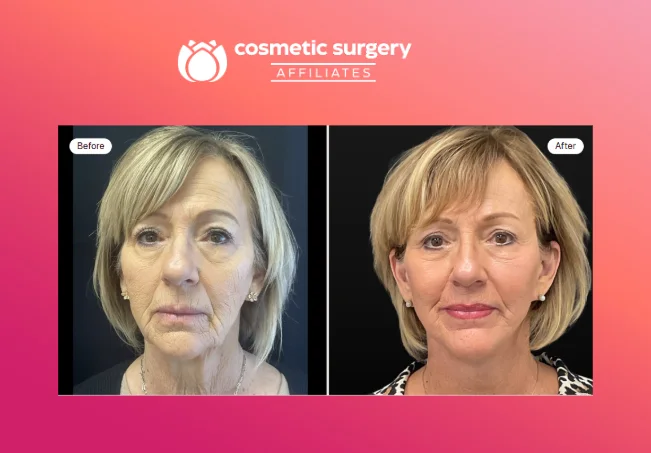
A well-done facelift restores a rested, natural version of your own face. It lifts sagging cheeks, softens the folds from your nose to your mouth, and sharpens a blurred jawline and neck.
What it won’t do is turn you into someone else. The best results are the ones where people notice you look refreshed without being able to say exactly why.
Understanding the risks
The vast majority of facelift patients heal without any trouble. As with any surgery, there are a few things to be aware of, including temporary bruising, swelling, and small areas that feel less sensitive for a few weeks as the nerves settle.
More serious concerns, such as bleeding beneath the skin or slow healing, are genuinely uncommon. Your surgeon reduces the odds even further through careful planning, blood-pressure control during surgery, and clear aftercare instructions.
Spotting a poorly done facelift
You’ve probably seen the results that give facelifts a bad name: an overly pulled, windblown look, earlobes tugged downward, or a hairline that looks shifted. These almost always trace back to technique, specifically skin pulled tight instead of the deeper tissue being repositioned. A skilled surgeon avoids them by lifting the SMAS layer and respecting the natural tension of your face.
Cost and financing
At Cosmetic Surgery Affiliates, a facelift ranges from $9,500 to $12,500, and a full facelift combined with a neck lift runs $14,500 to $17,500. Because a facelift is elective and cosmetic, insurance doesn’t cover it, which makes planning ahead worthwhile. To keep the investment manageable, you can explore flexible financing options through PatientFi and Alphaeon and choose a monthly plan that fits your budget.
Choosing your surgeon
This is the decision that matters most, and it’s worth taking your time. When you’re comparing surgeons, focus on what actually predicts a good outcome:
- Spend real time with before-and-after photos of past facelift patients, looking for results that read as natural and age-appropriate.
- Confirm the surgeon is board-certified in cosmetic or facial surgery and performs facelifts regularly.
- Read patient reviews and, when you can, hear about others’ experiences directly.
- Notice how well the surgeon listens and explains your options.
Keep in mind that your consultation isn’t only the surgeon’s chance to evaluate you. It’s just as much your chance to evaluate them.
You’ll talk through your goals, get an honest assessment of your anatomy, and hear a recommended plan, with time for every question on your mind. Our team offers both in-person visits at the Oklahoma City office and virtual consultations for patients starting from home.
Amy, who had a lower facelift with one of our surgeons, shared her experience:
“I recently had breast augmentation surgery and a few years back I had a lower facelift by Dr Nuveen. He did an amazing job both times, he is so kind and takes extreme care with everything he does. He is an amazing surgeon and I would definitely recommend him to anyone I know.”
Conclusion
A facelift is one of the most reliable ways to address sagging in the lower face and neck. It works best when you understand what it can and can’t do, how the techniques differ, and what recovery really involves.
More than any single technique, your result comes down to the surgeon you choose and the plan built around your own face.
At Cosmetic Surgery Affiliates in Oklahoma City, we believe every patient deserves to feel heard, respected, and confident in their choice. That belief shapes every consultation and every plan we build. Whenever you’re ready, our team is here to help you take that next step.
Frequently asked questions
Can men get a facelift?
Absolutely. Facelifts are increasingly popular among men who want a refreshed, masculine appearance without obvious signs of surgery. Surgeons adjust incision placement and the degree of lift to keep results natural, including around facial hair.
Will a facelift get rid of my forehead wrinkles?
Not directly. A facelift focuses on the lower two-thirds of the face and neck, so forehead lines and heavy brows are usually addressed with a brow lift instead. Many patients combine the two for a balanced result, and our surgeons can map this out during a consultation.
Are facelift scars visible?
Discreet spots are where incisions are placed, typically along the hairline and tucked around and behind the ears. Once healed, they tend to blend into natural creases and the hairline. Following your aftercare instructions closely helps them fade as smoothly as possible.
Is a facelift better than Botox and fillers?
They solve different problems. Botox and fillers soften wrinkles and restore volume, while a facelift lifts skin and tissue that has truly begun to sag. Our board-certified cosmetic surgeons offer both surgical and non-surgical options, so you can match the treatment to what your face actually needs.
What is the best age to get a facelift?
There’s no single right age. Most patients are in their 50s and 60s, but some opt for a mini facelift earlier when sagging first appears, while others wait until later. What matters more than age is your skin quality, your overall health, and your personal goals.
When can I fly after having a facelift?
Many surgeons suggest waiting until early swelling has settled, often around one to two weeks, before flying. Your surgeon will give you specific guidance based on how you’re healing and how far you’re traveling. It’s always best to confirm your travel plans with them first.
Will a facelift make me look like a completely different person?
A good facelift makes you look like a more rested version of yourself, not someone new. The goal is for friends to notice you look refreshed without being able to pinpoint why. Natural results come from repositioning deeper tissue rather than simply pulling the skin tight.
Are there non-surgical alternatives that actually work?
For early aging, yes. Options like injectables and energy-based skin treatments can help. They’re a great fit when sagging is mild and you’re not ready for surgery, though they don’t replace a facelift once tissue has significantly descended. Our team can walk you through where non-surgical care helps and where surgery delivers more.
*Disclaimer: This content is for educational purposes only and does not constitute medical advice. A consultation with a qualified board-certified surgeon is required to determine the best treatment plan for your individual needs and any questions you may have about a medical condition or procedure.