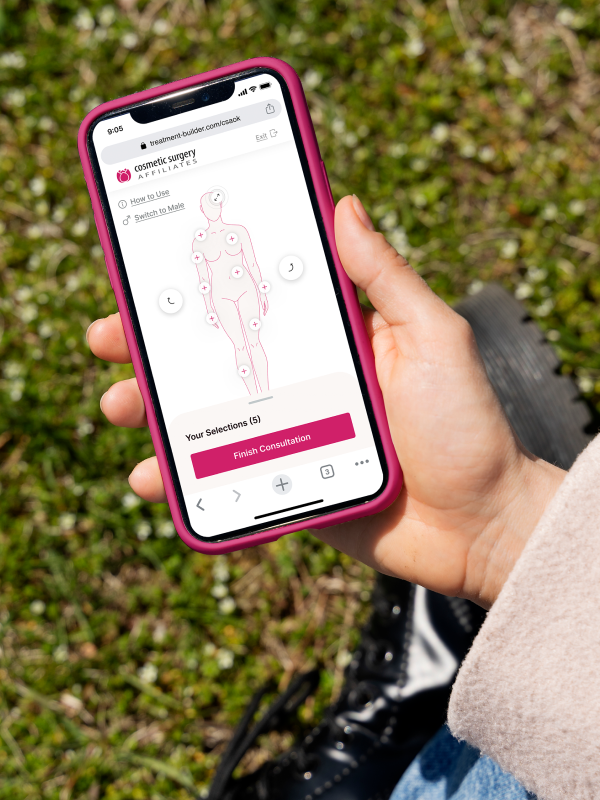

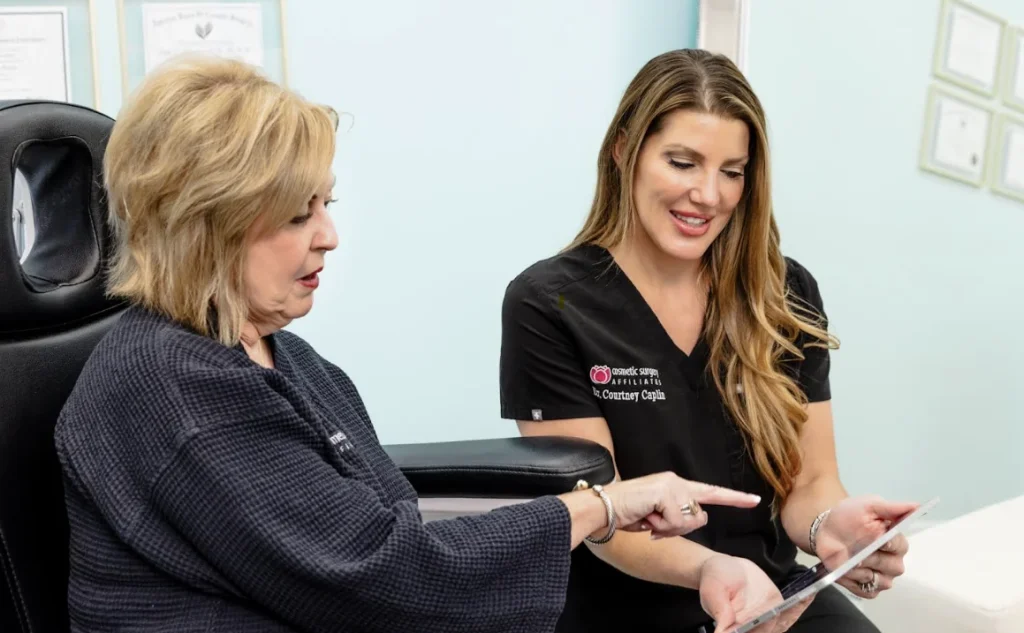
By the time most patients consider booking a breast augmentation consultation, they’ve already spent weeks or months researching galleries, costs, and options. The appointment can feel like a bigger commitment than it is. In practice, a consultation is an information-gathering visit, and knowing what to expect from it makes the time more productive.
Breast augmentation is one of the most trusted cosmetic procedures in the world — ranked the third most popular surgical procedure globally, with over 17.4 million cosmetic surgeries performed in 2024 alone, according to the International Society of Aesthetic Plastic Surgery (ISAPS).
But that confidence doesn’t start in the operating room. It starts in the consultation room, where the right questions and honest answers lay the groundwork for everything that follows.
At Cosmetic Surgery Affiliates in Oklahoma City, we believe every patient deserves to walk into her consultation informed, prepared, and completely in control. Our board-certified surgeons have performed over 26,000 successful cosmetic surgeries since 2003, and the consultation is where that experience shows up the most.
This guide walks you through exactly what to expect: what happens at the appointment, what to bring, what we’ll ask you, and most importantly, the questions you should be asking us.
5 Things to Know Before Your Consultation
- A consultation is an information-gathering appointment, not a commitment to surgery. You’re evaluating us just as much as we’re evaluating you.
- Most consultations run 45–60 minutes and include a physical exam, measurements, a walkthrough of your options, and a price quote.
- It’s smart to consult with two or three board-certified surgeons before making your final decision.
- Bringing photos of results you like, your medical history, and a written list of questions will help you get the most out of the appointment.
- Consultation fees range from free to $250 and may be applied toward your surgery cost if you move forward.
Why Consultation Matters More Than Your Research?
As said by many, everything is available online now. We know it. Online research is a great starting point. You can learn about implant types, recovery timelines, and get a general sense of what results look like. But there’s a real gap between general information and what’s actually achievable for your specific body, and only a consultation can bridge it.
During a consultation, we evaluate your anatomy in detail: chest width, breast measurements, skin quality, existing breast tissue, and nipple placement. Those details determine which implant sizes, shapes, and placements will give you the most natural, proportional results.
The consultation is also your chance to ask questions and get honest, expert answers tailored to you, not to a hypothetical patient on a website. For patients weighing whether they need both augmentation and a lift, our breast augmentation with lift guide walks through the candidacy signals to bring up in that conversation.
If you’re ready to get that conversation started, schedule an in-person or virtual consultation with our team, and we’ll walk you through everything from there.
How to Find the Right Surgeon to Consult With?
Learning how to choose a plastic surgeon in OKC OK starts with two things: their before-and-after results and their board certification. Before-and-after photos are the clearest window into what a surgeon can actually deliver. Then verify their board certification through a reputable board.
Furthermore, look specifically at their experience with breast augmentation, not just cosmetic surgery in general. Consulting with two or three surgeons before deciding gives you a chance to compare approaches, communication styles, and how comfortable you feel in the room. The right surgeon won’t rush you through the appointment, and they won’t mind being compared to others.
What to Bring to Your Breast Augmentation Consultation?
You don’t have to bring everything on this list, but having these items makes the appointment more productive and a lot more personal.
Your Medical Information. Bring a complete list of current medications and supplements, your medical history (including any previous surgeries), recent test results like mammograms, and any information about allergies or conditions. Your surgeon would need this to evaluate candidacy and plan your procedure safely.
Visual References. Save photos of results you admire—from online searches or before-and-after galleries. Focus on size, shape, and proportion, not specific people. These photos are one of the most useful tools to provide for understanding your aesthetic goals.
Your Questions (Written Down). It’s completely normal to forget everything you wanted to ask once you’re sitting in the exam room. Write your questions down beforehand.. The question list later in this article is a great starting point.
A Few Practical Extras. Fitted tops or bras to try on with implant sizers, a trusted friend or family member for support, and your calendar in case you’re ready to discuss surgery dates.
What to Wear to Your Consultation?
This question comes up more than you’d think, and it’s a completely practical one. You’ll need to undress from the waist up for a physical exam. A nurse will be present throughout, so there’s no reason to feel uncomfortable about the process.
Wear comfortable, easy-to-remove clothing. Separates work much better than a dress or jumpsuit. A soft bra without underwire or a sports bra is ideal, since underwire can affect your measurements. Bring an extra fitted top or two if you’d like to try on implant sizers under your own clothing. A medical gown will be provided for the exam, so don’t overthink it.
That comfort doesn’t stop at what you wear, either. From the moment you walk in, our team is focused on making sure you feel safe, informed, and genuinely cared for, no matter how complex your situation is.
Mark Washburn, a patient who came to us with a particularly involved case, put it this way:
“I had a very complex surgery due to an extreme malformation to my body. All physicians involved were not only open and honest about what would happen after the surgery, but were all highly trained and skilled which made the outcome most positive. I am grateful to the medical staff, but I don’t think any medical practice can function without a great nursing staff. The nurses are top professionals and treat me like royalty. I would whole heartedly recommend these fine docs and nurses to anyone in need of cosmetic surgery!”
What Actually Happens During a Breast Augmentation Consultation
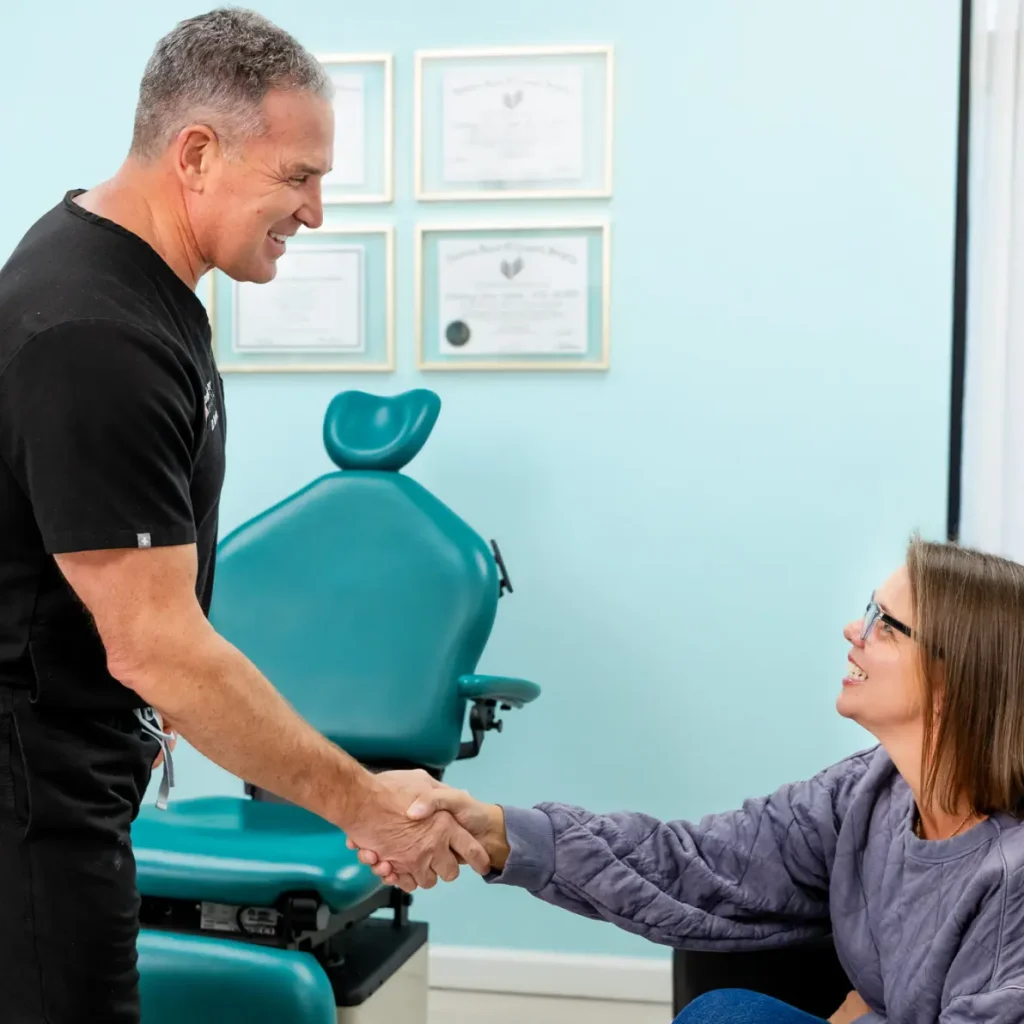
The consultation follows a clear structure, and knowing what to expect takes most of the anxiety out of it. Most appointments run 45–60 minutes and move through several distinct phases.
| Phase | Duration | What Happens |
| Intake & Greeting | 5–10 min | Meet your coordinator, complete paperwork, and discuss initial goals |
| Surgeon Discussion | 15–20 min | Review medical history, discuss goals, learn about implant types, placement, and incision options |
| Physical Examination | 10–15 min | Surgeon examines and measures breasts, assesses skin, takes photos for medical record (nurse present) |
| Implant Sizing | 10–15 min | Try sizers under clothing to visualize different volumes on your frame |
| Before-and-After Review | 5–10 min | View photos of patients with similar frames and goals |
| Q&A Time | 10–15 min | Ask your questions, clarify details, and voice any concerns |
| Pricing & Scheduling | 10–15 min | Receive a cost breakdown, discuss financing, and explore surgery dates if you’re ready |
The physical exam is where your breast augmentation surgeon will assess measurements, chest width, skin elasticity, nipple placement, and any natural asymmetry. Photos are taken for your medical record and surgical planning only. The implant sizing process is often where things start to feel exciting. You’ll actually see how different volumes look on your frame. It might feel new at first, but it’s one of the most helpful parts of the consultation because you can see your options in real time.
Want to see what our consultations typically look like? Browse our before-and-after gallery to get a sense of real results from real patients.
What Questions Can You Expect During the Consultation?
The consultation isn’t one-sided. Your doctors will have questions for you, too, and your honest answers help them build the safest, most effective surgical plan for your body and goals.
About Your Aesthetic Goals. Your surgeon wants to know what specific changes you’re hoping for, what bothers you most about your current size or shape, whether you have photos of results you find appealing, and whether you’re looking for a subtle enhancement or a more dramatic change.
About Your Medical History. Expect questions about previous surgeries (especially anything breast-related), current medications and supplements, mammogram or biopsy history, family history of breast cancer, and any autoimmune conditions or healing disorders.
About Your Lifestyle. Do you smoke or use nicotine? Do you plan to have children or breastfeed in the future? What’s your exercise routine like? What kind of work do you do? These details directly affect your candidacy, your recovery plan, and your long-term results.
About Your Expectations. Your surgeon will also ask about your desired size, though the recommendation will always be guided by your anatomy rather than a number. Expect questions about your timeline, your concerns, and what keeps coming up as you research. Being honest, even about the things that feel a little awkward to say out loud, leads to better outcomes.
The best thing to do is write it all down before you arrive. It sounds simple, but it works. Most people forget half of what they wanted to say once they’re actually sitting in the exam room. A quick notes app list the night before is all it takes.
Questions You Should Ask Your Surgeon
The consultation is also your chance to interview the surgeon. The question list below is a great starting point — bring it with you or save it to your phone so nothing gets missed.
About Qualifications and Experience
- Are you board-certified, and by which board?
- How many breast augmentations do you perform each year?
- Can I see before-and-after photos of patients with a similar frame and anatomy to mine?
- Do you have hospital privileges, and at which facility?
About the Procedure
- Which implant type do you recommend for my body and goals, and why?
- What incision location and implant placement do you recommend for me?
- Will my surgery be performed in an accredited surgical facility?
- How long will the procedure take?
About Results and Expectations
- What size and shape do you think will look the most natural on my frame?
- How will breast implants affect my mammograms or future cancer screenings?
- Will I still be able to breastfeed after augmentation?
- How will my results change over time — in five, ten, or twenty years?
About Risks and Safety
- What are the most common complications you see, and how do you handle them?
- What is your revision rate, and what would revision surgery involve?
- What are the signs of capsular contracture, and how is it treated?
- What does your follow-up and post-operative support look like if I have concerns after surgery?
About Recovery
- What does the typical recovery timeline look like week by week?
- When can I return to work, exercise, and daily activities?
- What kind of follow-up appointments should I expect after surgery?
- What medications will I need during recovery?
About Cost and Logistics
- What is included in the total price — surgeon’s fee, anesthesia, facility, implants, follow-up visits?
- Do you offer financing or monthly payment plans?
- What is your cancellation or rescheduling policy?
- Is there a warranty or guarantee on the implants?
Don’t feel like you need to ask every single question. Focus on whatever matters most to you, and let the conversation flow naturally. The right surgeon will welcome your questions — it shows you’re engaged, informed, and serious about making the best decision for your body.
How Much Does a Consultation Cost, and Is It Applied to Surgery?
Consultation fees vary widely, and it’s one of those things that feels awkward to ask about but really shouldn’t.
| Fee Model | What It Means |
| Free ($0) | Common at high-volume practices. Not a red flag, but ask how much time you’ll have directly with the surgeon. |
| Paid ($50–$250) | The fee is often applied toward the surgery cost if you proceed. |
Regardless of fee structure, your consultation should include dedicated time with the board-certified surgeon, a physical exam and measurements, a detailed surgical plan and recommendations, and a full price quote. Don’t let the fee or lack of one be the deciding factor. What matters most is the quality of time you spend with the surgeon and whether you feel genuinely heard when you leave.
Can I Do a Virtual Consultation Instead of In-Person at CSA?
If getting to the office feels like a barrier, whether because of distance, your schedule, or just wanting to test the waters first, a virtual consultation can be a great starting point.
Virtually, we can cover your goals and expectations, review your medical history, walk through procedure options, give you preliminary pricing, and, in some cases, make initial assessments from photos you submit.
That said, certain steps do require an in-person visit. Physical measurements, trying on implant sizers, final surgical planning, and pre-operative clearance all have to happen face-to-face. We offer both virtual and in-person consultation options to accommodate your schedule and comfort level, and we’ll let you know when you need to come in.
And if you’re coming from out of state? You wouldn’t be the first. Plenty of our patients start the process virtually and travel to Oklahoma City when it’s time for the in-person steps, and they tell us it’s worth every mile.
Emily Cruz, who did exactly that, shared:
“I had a breast augmentation surgery with Dr. Nuveen and Dr. Meyer a month ago. I had done a virtual consultation previously since I was coming from another state. I met Dr. Nuveen and Dr. Meyer the morning of my surgery. Both were wonderful! They both were extremely knowledgeable and made sure that I completely understood what every detail meant. The results from my procedure are exactly what I had envisioned and I couldn’t be happier! Every nurse and staff member I encountered were friendly and ensured that I was as comfortable as possible. I would recommend them to anyone and will be going back for any future procedures.”
What Happens After the Consultation If You Want to Move Forward?
There’s no pressure to decide on the spot. We encourage you to take your time, especially if you’ve only consulted with one practice.
- Review and decide. Take time to process. Compare approaches if you’ve seen multiple surgeons. Talk it through with people you trust.
- Book your surgery. Contact us to select a date. You’ll provide a deposit and receive pre-operative instructions.
- Pre-op appointments. Medical clearance may be required depending on age and health. You’ll have a pre-op visit one to two weeks before surgery for final measurements and plan confirmation.
- Prepare at home. This includes stopping smoking several weeks before surgery, avoiding certain medications (aspirin, anti-inflammatories, some supplements), arranging a driver and caregiver, setting up your recovery space, and filling prescriptions in advance.
Once you’ve decided to move forward with us, our team guides you through every step from scheduling to surgery day logistics. You won’t feel like you’re figuring it out alone.
How to Get a Personalized Cost Estimate?
The total cost of breast augmentation depends on several individual factors. Here’s what influences the pricing.
| Factor | What It Affects |
| Implant type | Saline and silicone implants (including cohesive gel options) each carry different costs |
| Surgical complexity | More complex procedures or combinations require additional time |
| Surgeon’s experience | Your surgeon’s qualifications and specialized training are reflected in the overall cost |
| Geographic location | Costs vary by city and region |
| Facility fees | Where surgery is performed affects the total |
| Anesthesia | IV sedation and general anesthesia have different pricing structures |
We offer flexible financing through Cherry, Alphaeon, and PatientFi. Monthly payment plans are available through our financing partners, and you can check your eligibility with no impact to your credit score.
Conclusion

A thorough consultation with a board-certified surgeon is the single best thing you can do to set yourself up for a successful breast augmentation. Come in with your questions, your photos, and an open mind. Treat the appointment as exactly what it is: a two-way conversation where you’re evaluating us just as much as we’re evaluating you.
You deserve to walk out of that appointment with clarity, not more questions. That’s exactly what we’re here for: honest answers, no pressure, and a plan that’s built around you.
Contact Cosmetic Surgery Affiliates in Oklahoma City to schedule your consultation, and take that first step with the confidence that you’re in expert hands.
Frequently Asked Questions
Do I have to commit to surgery if I schedule a consultation?
Not at all. You’re there to learn, ask questions, and figure out whether the surgeon is the right fit for you. There’s no pressure and no obligation.
How long should I expect my consultation to last?
Most breast augmentation consultations run 45–60 minutes. That includes discussion, a physical exam, implant sizing, and a price quote.
Can I bring someone with me?
Absolutely! A lot of patients find it helpful. A trusted friend or family member can offer support and help you remember what was discussed during the appointment.
Will I get a price quote during my consultation?
Yes. You can expect a cost breakdown based on your specific surgical plan, including implant type, surgical fees, anesthesia, and facility costs.
How many surgeons should I consult with before deciding?
We recommend consulting with two or three board-certified surgeons. It gives you a chance to compare approaches and communication styles. This also makes it much easier to choose with confidence.
*Disclaimer – This content is for educational purposes only and does not constitute medical advice. A consultation with a qualified board-certified surgeon is required to determine the best treatment plan for your individual needs and any questions you may have about a medical condition or procedure.