
Can liposuction hurt you? It’s a fair question. Liposuction is surgery, and all surgery carries risk. Wanting to know the specifics before you commit is smart, and also important for making a well-informed decision.
Liposuction is also one of the most common cosmetic procedures performed anywhere. According to ISAPS, surgeons performed more than 2 million liposuction procedures worldwide in 2024. At that volume, complication rates have been tracked across very large patient populations, which means the safety discussion below runs on documented figures rather than estimates.
At Cosmetic Surgery Affiliates in Oklahoma City, our board-certified cosmetic surgeons believe an informed patient is a confident patient. This article walks through how safe liposuction really is, the common and rare risks, who makes a good candidate, how to lower your personal risk, and what to expect in the long run. No scare tactics, just a clear-eyed look at what the evidence shows.
Key takeaways
- The most common side effects, like swelling, bruising, temporary numbness, and minor unevenness, are part of normal healing and settle over weeks to months.
- Truly serious complications such as blood clots or fat embolism are rare, and most are preventable with proper surgical planning, an accredited facility, and good aftercare.
- The single biggest safety factor is who performs your procedure and where, since complication rates climb sharply outside accredited settings with unqualified providers.
- Good candidates are non-smoking adults near their goal weight with firm skin, and liposuction is a contouring tool, not a weight-loss surgery or a fix for metabolic health.
- The fat cells removed are gone for good, so staying within about 10 percent of your post-surgery weight keeps your results looking the way you and your surgeon planned.
How safe is liposuction overall?
Here’s the reassuring headline: when liposuction is done by certified liposuction surgeons okc in an accredited facility, it has a strong safety record. The procedure has been refined over decades, and modern safety protocols have made it far safer than it was a generation ago.
The risk of a serious event is genuinely low, and it’s lowest in exactly the setting you’d want to be in: an accredited surgical facility with a trained team.
That last part matters more than almost anything else. Complication rates climb several times higher outside accredited settings, which is why where you have your procedure is just as important as the decision to have it at all. Choosing a board certified cosmetic surgeon in OKC puts you in that safer accredited setting from the start. The same goes for how much is done in one sitting, since combining liposuction with other surgeries or removing very large volumes of fat raises the risk.
This is the kind of procedure where the details protect you. At Cosmetic Surgery Affiliates, liposuction is performed in a controlled surgical setting, with treatment times typically running one to four hours depending on the areas involved.
What are the most common risks and side effects of liposuction?
Most of what people call “complications” after liposuction are really just the normal, temporary signs of your body healing. Knowing what’s expected helps you tell the difference between routine recovery and something worth a call to your surgeon. A 2024 review found that once you set aside ordinary bruising and swelling, the rate of actual complications drops to around 6 percent, with most of those being minor.
Swelling, bruising, and fluid buildup
Swelling and bruising are not complications. They’re your body’s normal response to surgery, and they fade over several weeks as everything settles.
Occasionally a small pocket of clear fluid called a seroma collects under the skin, usually a week or so after surgery. Most of these reabsorb on their own, and if one lingers, your surgeon can drain it quickly with a thin needle. Wearing your compression garment as directed helps your tissues settle smoothly and keeps this kind of thing to a minimum.
Contour irregularities
The most commonly reported issue is mild unevenness, a little waviness, a small dent, or a ripple as the swelling goes down. Most smooth out as healing finishes over the following months. An experienced surgeon lowers the odds further with careful, even technique, and in the rare case where unevenness persists, a minor revision can refine it.
Numbness and altered sensation
It’s common for treated areas to feel a little numb or tingly for a while. Nerves are simply settling down after the procedure, and they recover gradually, often at about a millimeter a day.
For most people, sensation returns to normal within a few weeks to six months. Lasting numbness is uncommon and is usually linked to very aggressive fat removal, which is one more reason a measured surgical approach matters.
Skin changes and infection
Some patients notice temporary darkening of the skin near the treated area, which usually fades over time and is more noticeable in deeper skin tones. Tiny entry points heal into marks that are easy to hide.
Genuine infection is uncommon, on the order of 1 percent or less, and your surgeon reduces that risk further with sterile technique and clear aftercare instructions. Following those instructions closely is the simplest, most powerful thing you can do to keep your recovery smooth, which leads naturally to the concerns most people really want answered.
What are the rare but serious complications of liposuction?
These are the complications that understandably scare people the most, and they’re also the rarest. It helps to look at them directly, because once you understand what they are and how surgeons guard against them, they feel a lot less like a shadow over the whole decision.
Serious events are uncommon, and the overall death rate in modern accredited care is about 1 in 11,000. They also fall into a handful of well-documented categories, according to a published review. Most are tied to specific, controllable factors: how much fat is removed, what anesthesia is used, the surgeon’s technique, and how well clotting is prevented. Here’s a clear look at the main ones and what keeps them in check.
| Serious concern | How rare it is | What protects against it |
|---|---|---|
| Blood clots (DVT and pulmonary embolism) | The leading serious risk, but still uncommon | Early walking after surgery, compression devices, and a clotting-risk plan |
| Fat embolism | Rare | Gentle technique and avoiding overly large-volume removal |
| Internal organ injury | Very rare (well under 1 in 1,000) | An experienced surgeon using careful, correct cannula angles |
| Anesthetic (lidocaine) reaction | Rare | Staying within safe dosing limits and proper monitoring |
| Fluid or kidney strain from large volumes | Rare | Keeping fat removal within recommended limits and careful fluid management |
A blood clot in the leg that travels to the lungs is the most serious of these. That’s why surgeons take clot prevention so seriously, getting you up and walking early and assessing your individual risk beforehand. Fat entering the bloodstream, internal injury from the cannula, and anesthetic reactions are all genuinely uncommon, and they’re largely prevented by experience, gentle technique, and sticking to safe limits.
The thread running through all of these is the same: a careful surgeon, an accredited facility, and a sensible surgical plan are what keep rare risks rare. If reading this list has you wondering about your own situation, talking with a board-certified surgeon is the best way to put these numbers into personal context.
Who is, and isn’t, a good candidate for liposuction?
The honest answer to “is liposuction safe?” depends a lot on who’s having it. The procedure is safest for people whose health and goals line up with what it’s designed to do, which is refining stubborn pockets of fat, not losing weight. Thinking through candidacy is really the pros-and-cons conversation in disguise.
The strongest candidates tend to share a few traits. Letting your weight stabilize first and arriving in good health genuinely protects both your safety and your result.
- You’re an adult in good general health, within roughly 30 percent of your goal weight.
- You have firm, elastic skin and good muscle tone in the areas you want treated.
- You don’t smoke, since not smoking supports stronger healing and lowers infection risk.
- You’re targeting specific stubborn areas that haven’t budged with diet and exercise.
- You understand liposuction shapes the body rather than serving as a weight-loss method.
Certain health conditions, like heart disease, poorly controlled blood pressure, clotting disorders, or diabetes, call for extra evaluation, and sometimes a different approach is safer. For patients still weighing who to trust with that evaluation, our how to choose a liposuction surgeon guide walks through the credentials, questions, and red flags that matter. This is also where realistic, specific expectations matter: research shows liposuction doesn’t improve metabolic markers like cholesterol or blood sugar on its own, so it’s a contouring choice, not a heart-health one.
This is exactly the kind of thing a thorough consultation sorts out. Triple board-certified cosmetic surgeon Dr. Erik Nuveen, who has performed more than 26,000 cosmetic surgeries since 2003, evaluates each person’s medical history and goals to confirm the procedure is a safe, sensible fit. That kind of careful, unhurried evaluation is what patients tend to remember most.
Dakota, who found that no question was too small during her visit, shared her experience:
“Dr. Caplin and her nurse, Mindy, are truly the best! From the very first phone call to schedule my consultation, they made me feel comfortable, cared for, and completely heard. Every question I had—no matter how small—was met with patience, honesty, and understanding.”
How can you lower your risks from liposuction?
This is the part that puts you back in the driver’s seat. So much of liposuction’s safety is within your control, mostly through the choices you make before you ever schedule a date. Get these right, and you tilt the odds heavily in your favor.
The biggest lever is who performs your procedure and where. A board-certified surgeon operating in an accredited facility, with the right monitoring and a clear plan for your care, is the foundation of a safe outcome. Beyond that, a few specific things are worth checking before you decide.
| What to look for | Why it protects you |
|---|---|
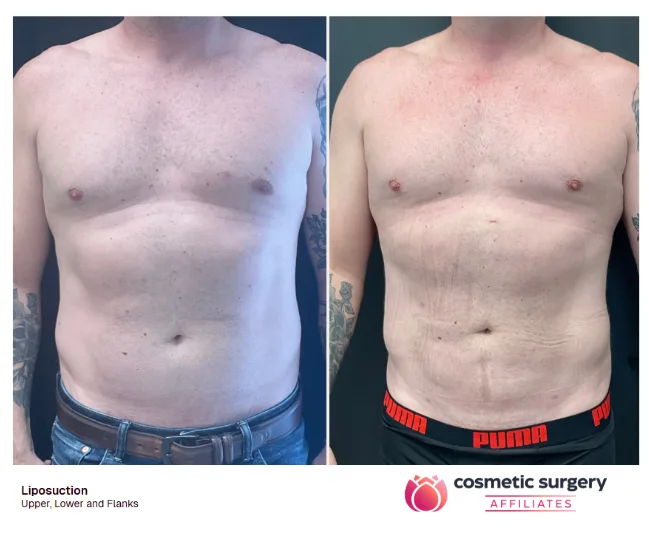
| Before-and-after photos of real patients | Shows the surgeon’s actual results and consistency, your best window into their skill |
| Board certification and real experience | Confirms formal training and a track record with this specific procedure |
| An accredited surgical facility | Accredited settings have far lower complication rates |
| A sensible plan for how much is treated | Keeping volumes within safe limits lowers risk |
| A clear recovery and after-hours care plan | Tells you support is there if you have questions while healing |
Two practical safety details are worth knowing. First, surgeons follow guidelines on how much fat is safe to remove at once. The general limit is about five liters, roughly ten pounds, in a single session, and staying within that protects your safety and your final contour.
Second, preventing blood clots is straightforward and effective. Getting up and moving early, following your surgeon’s guidance on pausing certain medications, and staying hydrated all help. Cost shouldn’t be a barrier to choosing care done the right way, which is why the practice offers flexible financing through PatientFi and Alphaeon so you can plan on your own terms.
A consultation is where these general points become specific to you. Your surgeon reviews your health history and examines the areas you want treated, then explains which risks actually apply in your case and how the plan accounts for them.
You can do this in person at the Oklahoma City office or start with a virtual consultation from home. When you’re ready to talk specifics, you can schedule a consultation with Cosmetic Surgery Affiliates in a relaxed, no-pressure setting.
With the right team in place, the focus shifts from “what could go wrong” to “what to expect down the road.”
What are the long-term side effects of liposuction?
Once you’re through healing, what does liposuction actually mean for your body over the years? This is where the long-term side effects of liposuction get reassuringly boring, in the best possible way.
The fat cells removed during liposuction don’t grow back. Because your body keeps the remaining fat cells, your contour holds steady as long as your weight stays relatively stable. Significant weight gain can still change your shape, since the fat cells you have left can enlarge. Staying within about 10 percent of your post-surgery weight keeps things looking the way you and your surgeon intended. Here’s what to keep in mind for the long haul.
- Sensation returns to normal for the vast majority of people, with permanent numbness being rare.
- Your treated areas resist normal age-related fat gain, though they aren’t immune to major weight changes.
- Skin quality matters, since areas like the arms or neck can show some looseness if skin elasticity is limited.
- Liposuction shapes your body but doesn’t change your cholesterol, blood sugar, or heart-disease risk on its own.
If extra fluid lingers in a treated area, it almost always resolves with time and compression, and lasting swelling is uncommon. The takeaway is steady and encouraging: with a stable weight and good skin support, what you see after healing reflects the contouring you and your surgeon planned.
Nicolette, who stayed supported from her first visit through her final follow-up, shared her experience:
“Absolutely Incredible Experience! I can’t say enough good things about my experience with Cosmetic Surgery Affiliates. From my very first consultation to my final follow-up appointment, every part of the process was smooth, professional, and beyond my expectations.”
Conclusion
So, is liposuction safe? For a healthy, well-chosen candidate treated by a qualified surgeon in an accredited facility, the evidence is genuinely reassuring. Serious complications are rare, the common side effects are temporary parts of healing, and the long-term outlook stays stable when your weight does. The risks are real, but they’re well understood and, in large part, preventable through the choices you make about your surgeon, your facility, and your aftercare.
At Cosmetic Surgery Affiliates in Oklahoma City, we believe every patient deserves to feel heard, respected, and genuinely confident in their decision, never rushed or pressured. Whether you’re ready to move forward or simply want a candid conversation about what’s right for you, you can start the conversation with our team whenever you feel ready.
Frequently asked questions
What is the most common complication of liposuction?
The most commonly reported issue is mild contour unevenness, like small dents, waviness, or ripples, as swelling resolves. It happens in roughly 2 percent of patients and usually smooths out as healing finishes. An experienced surgeon’s careful technique lowers the chance, and a minor revision can refine it in the uncommon cases that persist.
Can liposuction cause blood clots?
It can, though this is uncommon. A clot can form in the leg and, rarely, travel to the lungs, which is the most serious liposuction risk. Surgeons reduce this significantly by getting patients up and walking early, using compression, and reviewing each person’s clotting risk before surgery.
How long does numbness last after liposuction?
Some numbness or tingling in treated areas is normal and usually improves within the first few weeks. Most people regain full sensation within about three to six months as nerves recover. Numbness lasting beyond six months is uncommon and worth mentioning to your surgeon.
What is a fat embolism from liposuction?
A fat embolism is when fat enters the bloodstream and lodges in a blood vessel, a rare but serious event that usually shows up within a day of surgery. It’s most often prevented by gentle surgical technique and avoiding overly large-volume fat removal. Because it’s a medical emergency, surgeons and accredited facilities are trained to recognize and respond to it quickly.
How much fat can be safely removed in one liposuction session?
The general guideline is up to about five liters, roughly ten pounds, in a single session. Removing more than that increases the risk of complications, so surgeons stay within safe limits and may stage larger goals across more than one procedure. Your individual plan depends on your body and overall health.
*Disclaimer: This content is for educational purposes only and does not constitute medical advice. A consultation with a qualified board-certified surgeon is required to determine the best treatment plan for your individual needs and any questions you may have about a medical condition or procedure.