

You’ve decided breast augmentation feels right, but now you’re deep in a different kind of research spiral. Silicone or saline? Round or teardrop? And what exactly is a “gummy bear” implant?
You’ve read forum threads that contradict each other, scrolled through before-and-after photos until they all blur together, and you’re still not sure which option actually fits your body. Here’s the good news. Modern breast implants have come a long way from the options available even a decade ago.
According to the ASPS 2024 Procedural Statistics Report, surgeons performed 306,196 breast augmentation procedures in 2024 alone, making it one of the most studied and refined cosmetic surgeries in the world.
At Cosmetic Surgery Affiliates in Oklahoma City, we believe an informed patient is a confident patient. Our board-certified cosmetic surgeons have performed over 26,000 cosmetic procedures, and they’ll tell you the same thing: the best implant is the one that matches your anatomy, your lifestyle, and your goals.
This article walks you through everything you need to know about saline, silicone, and gummy bear implants, and helps you figure out which one belongs on your wish list. If you’re earlier in the decision process, our what is breast augmentation basics guide covers the foundational overview that comes before implant selection.
5 Quick Facts About Breast Implant Types
- Silicone gel implants are the most popular choice for their natural feel and are FDA-approved for women 22 and older.
- Saline implants offer a smaller incision and easier rupture detection and are FDA-approved for women 18 and older.
- Gummy bear implants are an advanced form of silicone with a highly cohesive gel that holds its shape even if the shell is compromised.
- Your tissue coverage, chest width, and lifestyle matter more than which type you prefer based on photos alone.
- All three types are FDA-approved and backed by decades of safety data.
What Factors Determine Which Implant Is Right for Your Body?
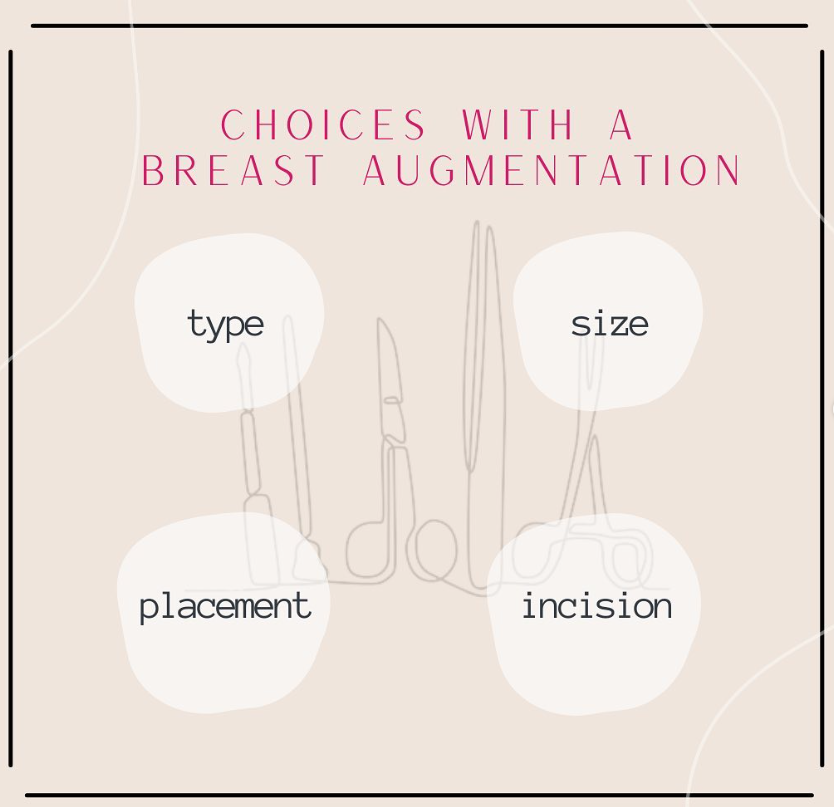
The best breast implant for you isn’t necessarily the one your favorite influencer chose or the one that looked great on your friend. It’s the one that works with your unique anatomy. That might sound obvious, but it’s the piece most patients overlook when they start researching.
Three physical factors drive most of the decision.
First, your tissue coverage, meaning how much natural breast tissue and skin you have over the implant. Thinner tissue increases the chance of visible rippling, which makes silicone or gummy bear implants a better fit than saline for many patients.
Second, your chest width determines the implant’s base diameter, not the CC volume. A wider chest can support a broader implant without looking disproportionate.
Third, your lifestyle matters. If you’re highly athletic, plan to breastfeed in the future, or prefer a low-maintenance option, those factors all influence which material and placement make sense.
During your consultation with our breast augmentation team in OKC, your surgeon measures your chest width to the millimeter to ensure the implant fits within your natural footprint. Think of it like tailoring a suit: off-the-rack might look fine from a distance, but custom-fitted looks and feels like it belongs. That precision is what separates a good result from a great one.
One of our patients, Lauren, shared a similar experience after her augmentation:
“I recently had a breast augmentation there and it exceeded my expectations. The staff is all very kind and welcoming. Dr. Nuveen was very professional and pleasant to speak to. He makes sure to go into depth about exactly how you would like your results to look and does exactly that.”
What Are Saline Implants, and Why Are They Still a Popular Choice?
Saline implants have been around for decades, and they’ve earned their staying power for good reason. These implants consist of a silicone shell filled with sterile saltwater after insertion, which means your surgeon can use a smaller incision than silicone or gummy bear options require.
They’re FDA-approved for women 18 and older, making them accessible to younger patients who qualify.
One of the biggest advantages of saline? Rupture detection is straightforward. If a saline implant develops a leak, the change is easy to detect because the body safely absorbs the sterile saltwater. Though the deflated implant will need to be surgically removed or replaced.
Saline implants are generally less expensive than silicone, which makes them appealing for patients who want reliable results at a lower price point.
The trade-off is how it feels.
Saline implants are firmer and can feel more fluid-like compared to silicone. Patients with thinner tissue coverage may notice more rippling, especially along the edges. For patients with adequate natural breast tissue, though, saline can look and feel excellent, and the peace of mind around rupture detection is a real advantage.
Why Are Silicone Gel Implants Considered the “Gold Standard” for Feel?

If your biggest concern is that your implants might look or feel “fake,” silicone gel is likely where you’ll land. Silicone implants are filled with a cohesive gel that closely mimics the density and movement of natural breast tissue.
That’s why board-certified surgeons often call them the gold standard for feel, and why they account for the majority of breast augmentations performed in the U.S. They’re FDA-approved for women 22 and older for cosmetic augmentation.
The gel filling also means less visible rippling compared to saline, which is especially important for patients with thinner skin or less natural tissue coverage. When placed submuscularly, silicone implants produce some of the most natural-looking results available today.
The one thing to know: silicone ruptures are “silent.”
Unlike saline, a leaking silicone implant won’t visibly deflate. The gel usually stays contained within the scar tissue capsule (called an intracapsular rupture), so you may not notice a rupture without imaging.
The FDA recommends an MRI or ultrasound five to six years after placement and every two to three years after that to screen for silent ruptures. It’s a small commitment for most patients, and the trade-off is an implant that feels remarkably natural.
What Exactly Are “Gummy Bear” Implants, and How Are They Different?
Gummy bear is the nickname for form-stable, highly cohesive silicone gel implants, such as Allergan’s Natrelle line. These represent an evolution in silicone technology — the gel inside is thicker and firmer than traditional silicone, which means the implant holds its shape even if the outer shell is compromised.
These implants often come in a teardrop (anatomical) shape, designed to mimic the natural slope of the breast with more fullness at the bottom. They’re FDA-approved for women 22 and older and tend to require a slightly longer incision because the pre-formed gel can’t be inserted empty and filled later like saline.
One important note: teardrop-shaped gummy bear implants typically use a textured surface to prevent rotation inside the breast pocket, while round gummy bear implants are available with smooth surfaces since rotation doesn’t affect their appearance.
The FDA has identified a very rare condition called BIA-ALCL associated with textured implants. The risk is extremely low, and your surgeon will discuss the specifics based on the implant style that fits your goals.
They will also walk you through the specifics based on the implant style that fits your goals, so don’t let this concern scare you away from an otherwise excellent option. It’s simply worth discussing openly.
Silicone vs. Saline vs. Gummy Bear — Which Is Right for My Goals?
Sometimes the best way to compare your options is side by side. This table breaks down the key differences between all three implant types so you can see how they stack up at a glance.
| Feature | Saline Implants | Traditional Silicone Gel | Gummy Bear (Form-Stable) |
| Fill Material | Sterile saltwater | Cohesive silicone gel | Highly cohesive silicone gel |
| Feel | Firmer, fluid-like | Soft, natural mimic | Firm but natural |
| Incision Size | Smallest | Moderate | Longest |
| Rupture Sign | Visible deflation | Silent (requires imaging) | Silent (requires imaging) |
| FDA Age | 18+ | 22+ | 22+ |
Keep in mind that your results will depend heavily on placement technique, implant size relative to your frame, and your surgeon’s skill. For a deeper dive into sizing, check out our guide to choosing the right implant size and CC.
How Does Implant Material Affect How Natural the Results Look?
“Will it look natural?” is one of the most common questions patients ask, and the answer depends on more than just the implant material. That said, material does play an important role. Silicone and gummy bear implants generally produce the most natural look and feel because their gel density is closer to actual breast tissue.
Saline can show more visible rippling, particularly in patients with thin skin or minimal natural breast tissue.
But here’s the thing. “Natural” is a function of proportion, not just material. An implant that’s perfectly sized for your frame and placed in the right position will look far more natural than an oversized implant made of the most premium material.
Submuscular placement (under the chest muscle) helps soften the edges of any implant type and provides an extra layer of tissue coverage. When volume, projection, and placement are dialed in together, nobody can tell you’ve had work done. They just think you look great.
What Is the Surgical Process and Placement Like?
Breast augmentation is one of the more straightforward cosmetic surgeries, typically taking one to two hours from start to finish. You’ll receive either IV sedation or general anesthesia, depending on your surgeon’s recommendation and your comfort level.
The most common incision site is inframammary, a small cut along the natural crease beneath the breast. It gives the most control over implant placement and typically heals with minimal visible scarring. Some patients may opt for a transaxillary incision (through the armpit), though this is less common.
Your surgeons might recommend placing the implant either above or below the chest muscle, depending on your anatomy and tissue coverage. Submuscular placement (below the muscle) is the more common choice because it provides an extra layer of coverage over the implant, which reduces visible rippling and creates a more natural slope. Over the muscle placement may work for patients with enough natural tissue to conceal the implant edges.
At CSA, our board-certified cosmetic surgeons evaluate your tissue thickness during the consultation to determine which position gives you the most natural looking result.
How Much Does Breast Augmentation Cost in Oklahoma City?
Cost is a practical reality of any cosmetic surgery decision, and it’s worth understanding what drives the numbers.
At Cosmetic Surgery Affiliates, breast augmentation ranges from $6,500–$9,500. Saline implants are generally less expensive than silicone. Gummy bear implants typically cost more than standard silicone, reflecting the advanced gel technology. While cost matters, it shouldn’t be the primary driver of your decision.
A cheaper implant placed by a less experienced surgeon can end up costing more in the long run if revision surgery becomes necessary.
At CSA, we offer flexible financing options through medical lending partners like Cherry, PatientFi, and Alphaeon to help make your procedure more accessible.
Why Does Surgeon Expertise Matter More Than Implant Type?
Here’s a truth most implant comparison articles won’t tell you: working with skilled plastic surgeons in OKC OK means experience and technique become the single most significant factor in your final result. It is often more influential than the specific implant type you choose. A highly skilled surgeon can make saline look incredible, while an inexperienced surgeon can make the most expensive gummy bear implant look off.
What separates an experienced breast surgeon from the rest is pocket creation, the ability to shape the internal space where the implant sits so it looks and feels natural from day one. It’s technique-level work, things like matching the implant’s base width to your chest wall, positioning the inframammary fold precisely, and ensuring symmetry.
At Cosmetic Surgery Affiliates, Dr. Nuveen and Dr. Caplin each hold triple board certifications in cosmetic surgery, facial cosmetic surgery, and oral and maxillofacial surgery, with a combined track record of over 26,000 major cosmetic surgeries. That depth of experience shows up in the details patients notice most: natural movement, balanced proportion, and results that look like they belong to your body.
Kaitlynne, experienced this firsthand, even after needing a second procedure:
“Dr. Nuveen and his staff are absolutely amazing. I had 2 breast augmentations with him. My first surgery had a complication afterwards (no fault of Dr. Nuveen, I am just a difficult case) but he did everything to make it right for me. I’m almost 3 months post op on my second surgery and the results are looking better and better each day. I couldn’t recommend them enough!”
What Should You Expect During Your Consultation?
The most useful consultation is one you come to with questions. A few worth asking: what implant size and profile do my measurements actually support, and what happens if I push past that? Would you recommend placement over or under the muscle in my case, and why? What does my tissue thickness mean for how the implants will look in five or ten years? How likely am I to need a revision at some point, and what usually drives that?
At your consultation, your surgeon will review your medical history, examine your breast anatomy, and measure your chest width, tissue thickness, and skin elasticity. You’ll talk through your goals and look at before-and-after photos of patients with similar builds. From there the conversation moves to implant options, placement, and what recovery looks like. Nothing gets decided until you’re comfortable.
Expert guidance makes the implant selection process so much easier. Our patient Vanessa found this to be true during her experience:
“I am extremely pleased with the results of my breast augmentation. Dr. Nuveen and nurse Olivia made the entire process easy and enjoyable! The front desk women were sweet!” — Vanessa F.
Cosmetic Surgery Affiliates offers both in-person consultations at our Oklahoma City office and virtual consultations to those who want to explore their options from home before coming in. Either way, the first step is just a conversation.
Conclusion
Choosing between saline, silicone, and gummy bear implants comes down to your anatomy, your priorities, and the surgeon guiding you through the process. Each type has genuine strengths, and none of them is universally “the best.” The real key to a result you’ll love is finding a surgeon who takes the time to understand your body and your goals before recommending a specific implant .
At Cosmetic Surgery Affiliates in Oklahoma City, every consultation starts with listening. Whether you’re leaning toward silicone, curious about gummy bear options, or still weighing the basics, we’re here with expert guidance, honest answers, and zero pressure.
Schedule a consultation to talk through your options in person, or take virtual consultations to start planning from home. Either way, you’ll never feel rushed into a decision.
Frequently Asked Questions
Can I breastfeed after breast augmentation?
Yes, most women can breastfeed normally after augmentation, especially when implants are placed beneath the muscle.
How long do breast implants last?
Breast implants aren’t lifetime devices. The average lifespan is 10 to 20 years, though many patients go longer without any issues.
Will breast implants affect mammograms?
Implants can partially obscure breast tissue on imaging. However, specialized displacement views allow radiologists to screen effectively around the implant.
Can I fly or scuba dive with implants?
Absolutely. Pressure changes from flying or diving won’t damage modern FDA-approved implants, so you can travel and explore without concern.
What happens if I lose weight after surgery?
Significant weight loss can cause the surrounding breast tissue to lose volume and sag, though the implant itself stays the same size. Some patients choose to add a breast augmentation without implants approach, like fat transfer, or a customized breast lift procedure later if needed.
Disclaimer – This content is for educational purposes only and does not constitute medical advice. A consultation with a qualified board-certified surgeon is required to determine the best treatment plan for your individual needs and any questions you may have about a medical condition or procedure.